
Uncategorized
Digital Billboard Truck: Boost Your Campaign with Mobile Ads
Picture this: you take the flash and spectacle of a Times Square billboard, slap it on the back of a truck, and send it wherever
So, what is a video wall display? Think of it as a giant, high-tech screen built from a mosaic of smaller, individual displays. These "tiles" are pieced together to create one massive, perfectly seamless visual canvas.
This modular design is the secret sauce. It frees you from the limitations of a single large monitor, letting you build a display of virtually any size or shape imaginable.
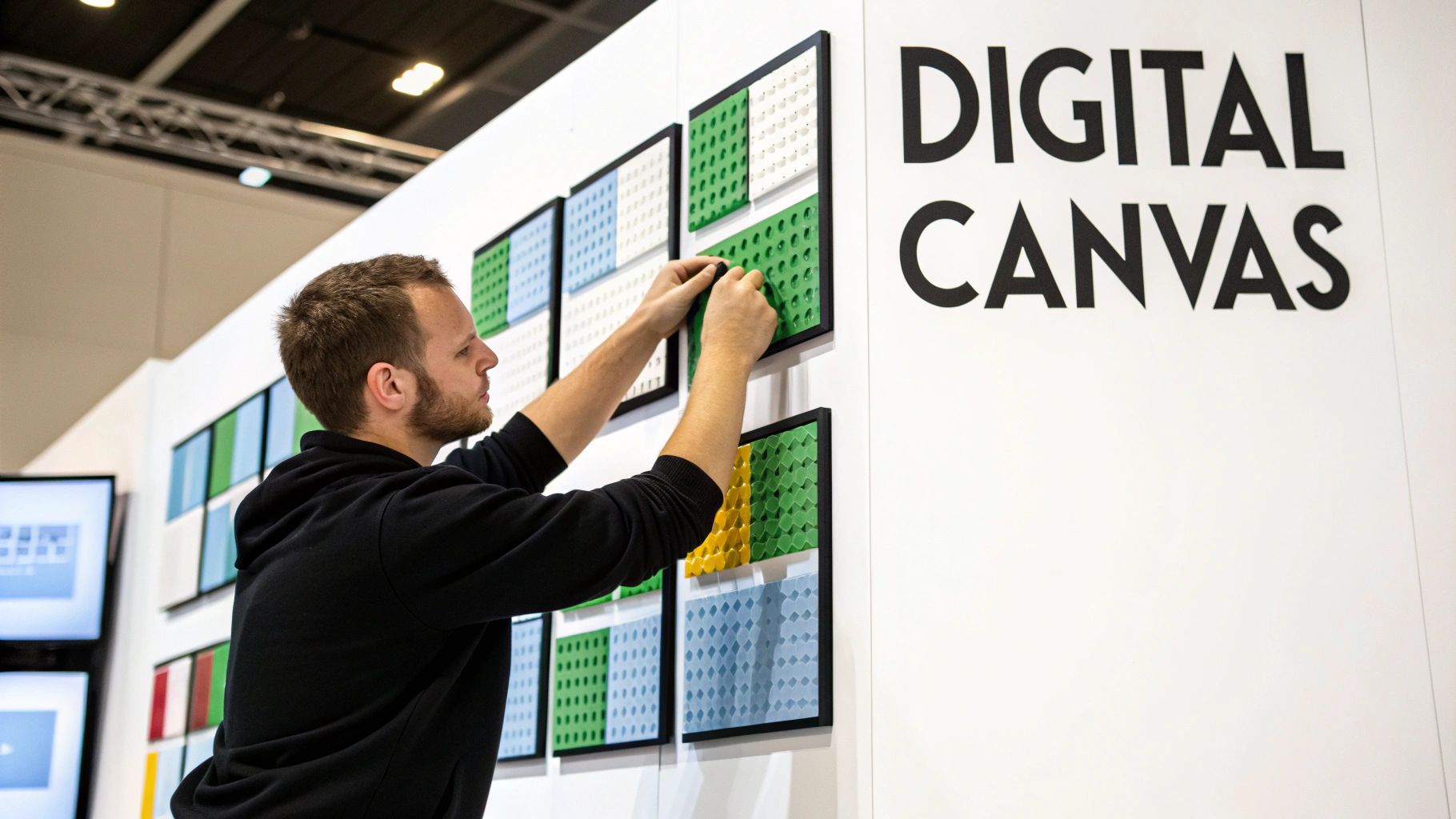
The best way to picture it is to imagine building with digital LEGOs. Each block is its own screen, but when you connect them, they work in perfect harmony to show one cohesive, massive image. This is the magic of a video wall.
It's this flexibility that makes a video wall so powerful. It’s no longer just a screen; it becomes a piece of digital architecture. The technology gives businesses the power to create immersive experiences that stop customers in their tracks, deliver complex data in a control room, or even build a jaw-dropping home cinema.
The "wow factor" is real. You're not just putting up a display; you're transforming a plain wall into a dynamic, unforgettable focal point.
Bringing a video wall to life requires a few key pieces working together. Understanding how they connect helps demystify how these impressive systems pull off such stunning visuals.
It's a surprisingly straightforward setup once you break it down. Think of it like a high-tech home theater system, but on a much grander scale.
| Component | Primary Function | Simple Analogy |
|---|---|---|
| Display Panels | The individual screens or "tiles" that form the visual surface. | The canvas an artist paints on. |
| Video Wall Controller | The "brain" that splits the content signal across all the panels. | The conductor of an orchestra, ensuring every instrument plays in sync. |
| Content Sources | The media you want to display (computer, camera feed, media player). | The sheet music for the orchestra. |
Each part plays a crucial role in delivering that seamless, high-impact final picture.
A video wall is more than just hardware; it's a complete ecosystem. The synergy between the panels, the controller, and your content is what creates a truly impactful visual experience.
This combination of modular panels and a central controller is exactly why you can create displays that wrap around corners, form artistic shapes, or stretch across an entire building. The entire system is built for creative freedom, giving you a level of visual impact that's simply impossible with a traditional single screen.
A modern video wall display is a strategic tool—one designed for powerful communication, branding, and engagement.
Think of picking the right video wall technology like an artist choosing between oil paints and watercolors. Both can create a masterpiece, but the final result—the mood, the texture, the impact—comes down to the environment and the story you want to tell. The two heavyweights in this arena are LCD and Direct View LED (dvLED), and each one is built for a different kind of canvas.
This isn't about which one is "better" in a vacuum. It's about finding the perfect fit for your vision.
Picture a high-stakes corporate boardroom where every number on a financial chart needs to be razor-sharp. Or a mission-critical control room where operators are tracking dozens of data streams with zero room for error. In these close-quarters, detail-oriented environments, LCD video walls are in their element.
LCD (Liquid Crystal Display) technology is all about pixel density. That means it packs more pixels into a smaller space, producing incredibly sharp, high-resolution images that hold up even when you're standing just a few feet away. For any application where fine text and intricate graphics are non-negotiable, an LCD video wall delivers the crispness you need for absolute clarity.
But LCD's greatest strength is tied to its one major limitation: the bezels. Because LCD walls are built from individual monitors tiled together, you'll always have thin black lines where the screens meet. Modern designs have made these seams impressively thin, but they're still there, creating a subtle grid that can break up a continuous image.
Now, let's change the scene. Imagine a sun-drenched retail storefront with a huge, vibrant ad that stops people in their tracks. Or a massive concert stage backdrop that immerses the entire audience. This is where Direct View LED (dvLED) technology absolutely shines.
Unlike LCDs, a dvLED video wall is made of tiny, individual light-emitting diodes mounted directly onto panels. When you join these panels, the image is completely seamless. No bezels, no grid lines—just one massive, uninterrupted digital canvas that feels limitless. It creates a powerful, immersive experience that LCDs just can't match.
On top of that, dvLED displays get incredibly bright, making them the only real choice for outdoor use or indoor spaces flooded with ambient light. An LCD screen would look washed out and weak in direct sunlight, but an LED wall cuts right through the glare with brilliant, punchy colors. The explosive growth of dvLED is proof of its raw power.
The global LED video wall market hit USD 14.98 billion in 2025 and is on track to reach a staggering USD 33.87 billion by 2033. Direct View LED already commands a dominant 51.23% market share, driven by its insane brightness, seamless visuals, and better energy efficiency. You can read more about the market's rapid expansion and what it means for businesses here.
This momentum is all about dvLED's ability to deliver visuals without compromise. From houses of worship creating awe-inspiring backdrops to luxury home cinemas bringing the true commercial theater experience home, the seamless, bright nature of LED is fundamentally changing how we design spaces.
So, how do you decide? It really comes down to what you're trying to achieve. Here’s a quick cheat sheet:
The best part? Advancements in manufacturing have made both technologies more attainable than ever. With factory-direct models, businesses and even homeowners can now get a world-class LED video wall display at a much better price point. You get to cut out the middleman and put your investment right where it belongs: on the screen.
Diving into technical spec sheets can feel like trying to read a foreign language. All that jargon makes it tough to figure out what actually matters for your project. But here’s the secret: understanding just a few key numbers is all it takes to choose a video wall display that brings your vision to life.
Let's break down the most important specs into plain English. Think of them not as confusing numbers, but as the recipe for your perfect visual. Each one plays a critical role in the final image quality, from its sharpness up close to its smoothness in motion. Getting them right is what makes an investment look incredible.
To start, let's look at the two big players in video wall tech: LCD and LED. This chart lays out their core differences.
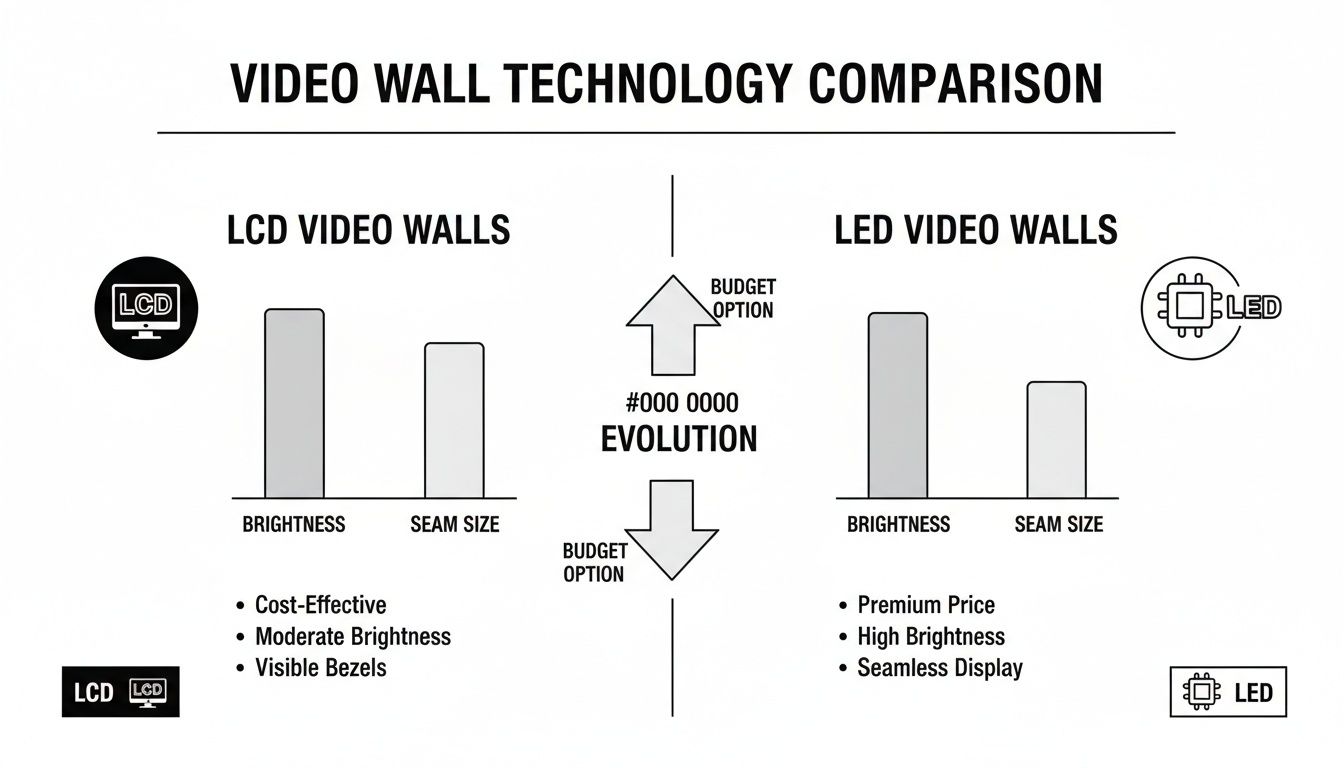
You can see right away how LED pulls ahead with its incredible brightness and truly seamless look, while LCD remains a solid choice for high-resolution needs where a small bezel is acceptable.
If there's one spec to understand for an LED video wall, it's pixel pitch. The concept is simple, though. Imagine a mosaic made from tiny tiles. Pixel pitch is just the distance from the center of one of those tiles to the center of the next.
This directly connects to the ideal viewing distance. For a corporate lobby where people are standing right in front of the screen, a fine pixel pitch is a must for that flawless, high-definition look. But for a massive highway billboard seen from hundreds of feet away? A wider pitch works perfectly and is far more budget-friendly.
Many indoor applications find a sweet spot with products like those in our FX2 2.5mm LED video wall product line announcement, which deliver excellent clarity for common viewing distances.
Choosing the right pixel pitch is all about where your audience will be standing. Use this quick guide to find the perfect match for your space, ensuring your content always looks its best.
| Pixel Pitch (mm) | Optimal Minimum Viewing Distance | Common Applications |
|---|---|---|
| 0.9mm – 1.8mm | 3 – 6 ft | Boardrooms, control rooms, luxury home theaters, high-end retail |
| 1.9mm – 2.9mm | 6 – 10 ft | Corporate lobbies, museums, houses of worship, broadcast studios |
| 3mm – 5mm | 10 – 16 ft | Auditoriums, large event stages, transportation hubs, trade shows |
| 6mm – 10mm | 17 – 33 ft | Arenas, stadiums, billboards, outdoor digital signage |
The closer your viewers, the finer the pixel pitch you'll need. This ensures they see a crisp, cohesive image instead of the individual LED diodes.
These three specs work together to dictate how vibrant, deep, and smooth your content looks. Getting the balance right creates a viewing experience that’s not just compelling but also comfortable for the eyes.
Brightness, measured in nits, is simply the screen's light output. Think of it like the brightness slider on your phone. A typical office monitor puts out around 250-350 nits, which is fine indoors. An outdoor display, however, needs 5,000 nits or more to cut through direct sunlight and stay visible.
Contrast Ratio is the difference between the screen's brightest white and its deepest black. This is what gives an image its punch and sense of depth. LED technology is a natural champion here, producing true, inky blacks that make every other color pop—an absolute must for a home theater trying to capture that authentic cinema feeling.
Refresh Rate, measured in Hertz (Hz), tells you how many times per second the screen updates the image. A higher refresh rate means smoother motion, which is critical for anything with fast action, like live sports or gaming. A rate of 120Hz or higher is what you want for fluid, lifelike video without any frustrating blur or stutter.
Finally, we have color gamut, which is the total range of colors a screen can display. For most business uses, a standard color range is perfectly adequate. But when you’re talking about a high-end home theater or a creative design studio, you need a display that can hit professional cinematic standards.
The DCI-P3 color space is the benchmark used by the film industry. A video wall that can reproduce DCI-P3 shows you colors exactly as the director intended them to be seen. This is what delivers that rich, authentic, and breathtakingly accurate movie experience at home, and it’s what separates a good display from a truly phenomenal one.
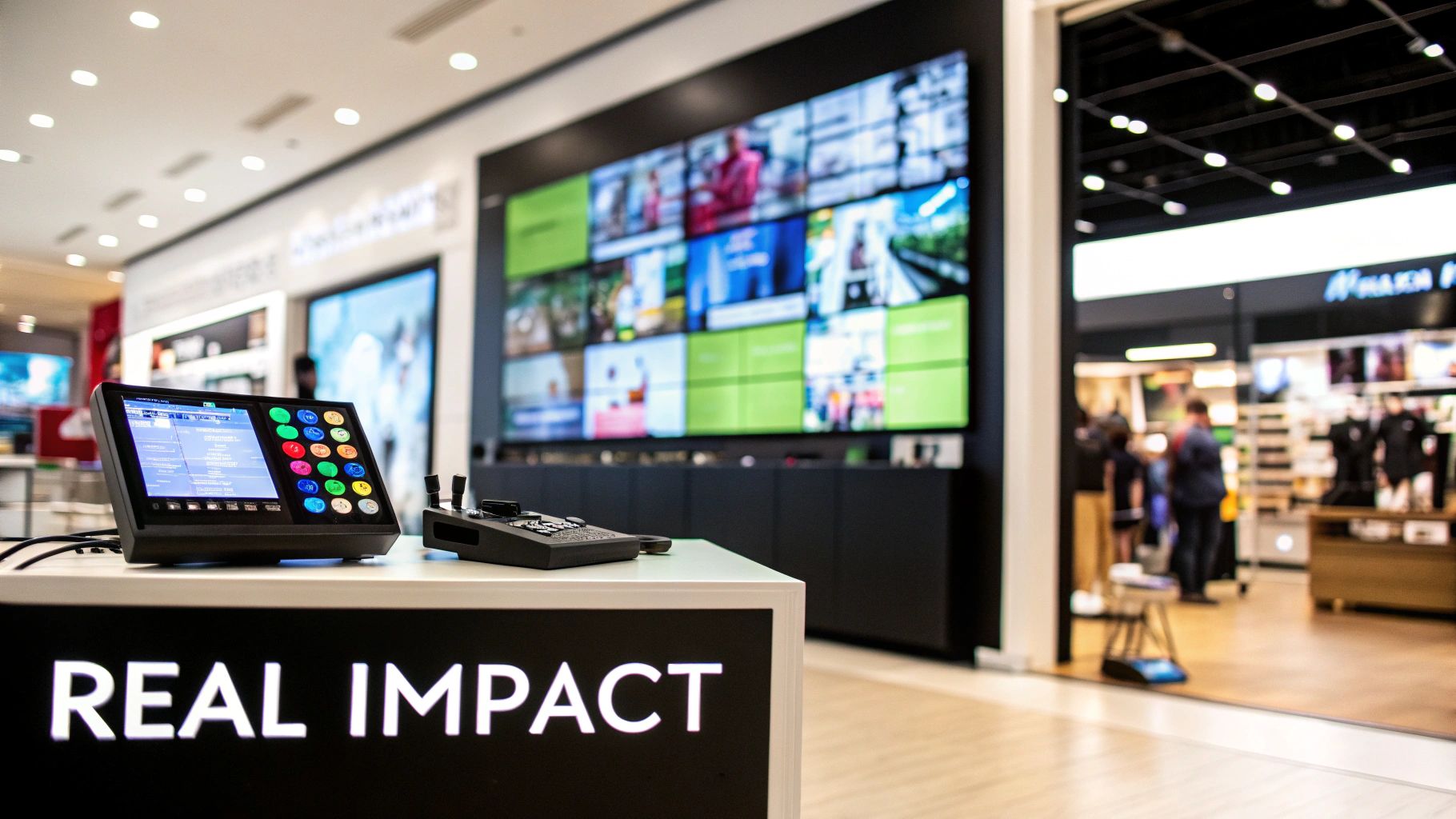
A video wall is so much more than a big screen. It’s a dynamic canvas that completely transforms a space and shapes how people experience it. These systems have broken out of niche uses and are now front-and-center in how industries communicate, operate, and connect with their audiences.
From the sales floor to mission-critical command centers, their impact is undeniable. Let's look at the stories of how this technology is solving real problems and opening up new possibilities across different sectors.
In the cutthroat world of retail, grabbing a customer's attention is half the battle. A simple poster or a small TV? Easy to ignore. But a massive, seamless video wall? That's an event. It turns a store into a destination by creating an atmosphere you can feel.
Here’s how retailers are using them to get an edge:
By making the shopping experience more exciting and memorable, retailers are driving both foot traffic and sales. If you're looking for more on visual communication tools, check out our guide on LED signs for businesses.
When it comes to Digital-Out-of-Home (DOOH) advertising, two things matter most: brightness and durability. An outdoor video wall display has to go head-to-head with direct sunlight and run 24/7, rain or shine. This is where rugged, high-brightness LED technology really shines, delivering vibrant ads that command attention day and night.
These displays offer a powerful return by giving advertisers a flexible, high-impact platform. A single screen can cycle through multiple high-paying advertisers, maximizing the revenue from one physical spot.
Interactive video walls are taking this even further. The global market was valued at USD 24.98 billion in 2026 and is on track to hit a staggering USD 59.78 billion by 2033. LED displays are leading the way, capturing a 51.7% share of that market.
In places where decisions have to be made in a split second, you can't afford any confusion. Control rooms for security, transportation, and energy grids depend on video walls to make sense of huge, complex streams of data. Operators can track dozens of camera feeds, maps, and dashboards at once on a single, sprawling canvas.
This unified view helps teams spot problems, coordinate a response, and make the right call—faster. The seamless nature of an LED video wall is key; it ensures no critical detail gets lost in the bezels between screens, providing a complete and uninterrupted picture of the situation.
The applications don't stop there. Video walls are making their way into spaces built for community and entertainment. Corporate offices install them in lobbies to make a modern first impression or in auditoriums to give presentations real punch. Houses of worship use them as dynamic backdrops for lyrics, scripture, and live video, pulling the whole congregation into the service.
Of course, beyond video walls, other technologies like smart interactive whiteboards also offer dynamic ways to communicate visually.
Finally, a fast-growing frontier is the luxury home theater. An LED video wall brings a true commercial cinema experience right into your home. It delivers DCI-P3 color accuracy and incredible brightness that projectors just can't touch, especially in a room with some light. The result is a breathtaking viewing experience that puts most movie theaters to shame.
Turning a brilliant idea for a video wall into a stunning reality all comes down to the game plan. This is where the vision gets real, and it hinges on two things: a solid budget and a seamless installation. Nail these, and you're not just buying a cool display for day one—you're making a smart investment that pays off for years.
The most successful projects are won long before the first panel ever gets mounted. It all starts with a practical, no-nonsense look at the costs involved, so you can make smart decisions that perfectly match your goals with your resources.
The final price tag on a video wall is way more than just the cost of the screens. Just like building a house, the total investment depends on the size, materials, and bells and whistles you choose. Getting a handle on these moving parts is the key to budgeting accurately.
Here are the main cost drivers you’ll need to account for:
Once you understand these variables, you start to see exactly where your money is going. A well-planned budget isn't about finding the cheapest option. It’s about putting your funds where they’ll make the biggest impact for your specific needs.
This is where a factory-direct model gives you a huge advantage. When you work directly with the manufacturer, you cut out the middlemen—the distributors and resellers who add their own markups along the way. That means more of your budget goes straight into better-quality components, ultimately getting you a superior video wall for your money. You can explore a variety of pre-configured options and see how different sizes affect the cost by checking out these ready-to-install indoor LED wall screen kits.
With a budget locked in, the focus shifts to installation. This isn't a one-step job; it's a careful process designed to turn a collection of panels and wires into a perfectly calibrated masterpiece. From the initial assessment to the final power-on, a professional installation follows a clear path.
The digital video wall market is no small player—it was valued at USD 6.8 billion globally and is expected to rocket to USD 12.9 billion by 2032. North America accounts for over 35% of this market, with huge adoption in retail and education, where smart project management is everything. Discover more insights about the growing digital video wall market.
Think of your video wall as a long-term asset, because that's exactly what it is. Planning for its upkeep is just smart business. While modern LED displays are built like tanks, a good maintenance strategy is your best insurance policy.
This means scheduling regular check-ups, keeping it clean, and having a solid support plan ready to go. When you partner with a provider that offers responsive, nationwide support, you can rest easy knowing that if an issue ever does pop up, you’ll get it fixed fast. That’s how you maximize uptime and keep your display looking incredible for years to come.
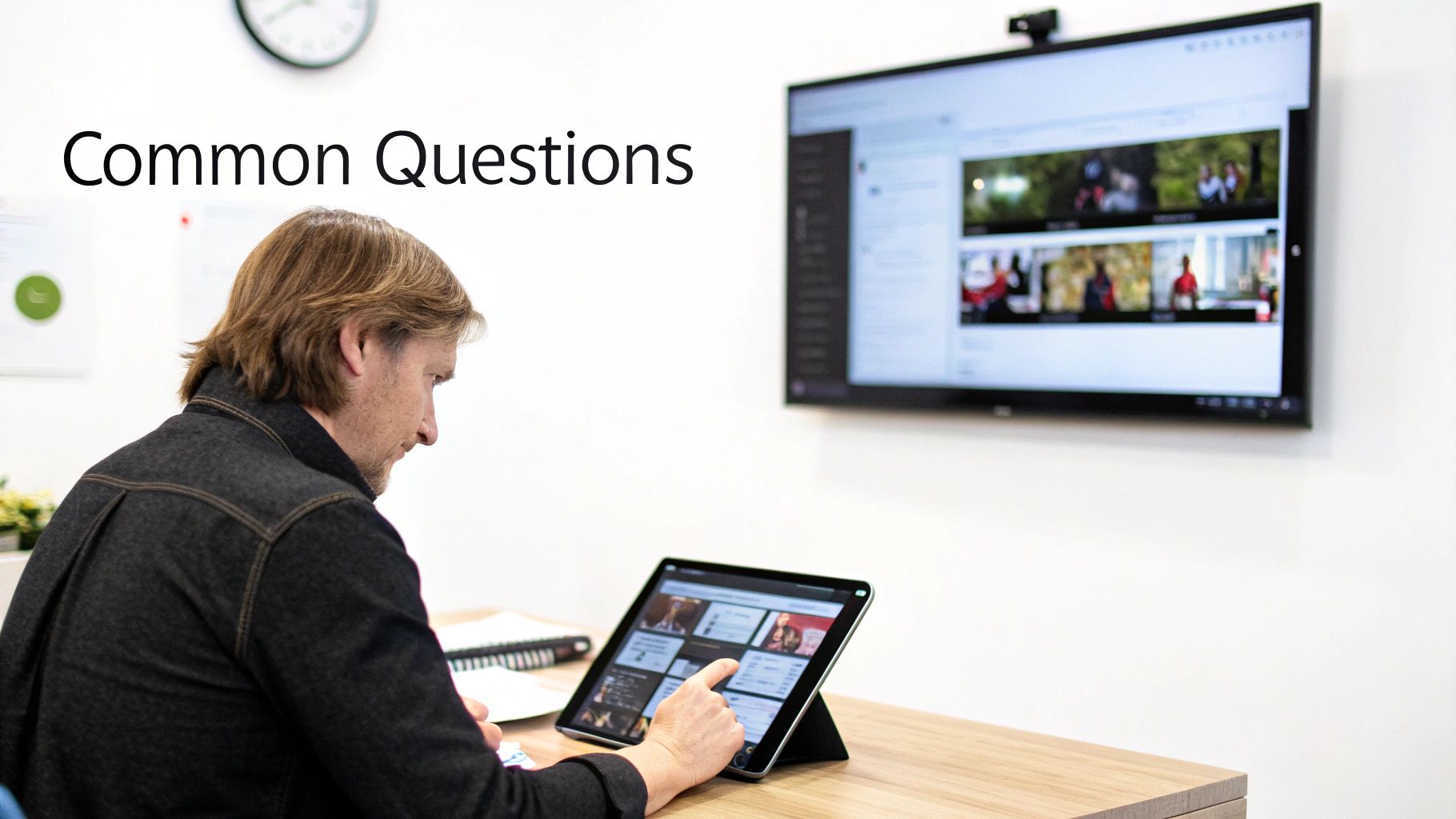
As you get closer to a decision, the practical questions always start to bubble up. We've pulled together the most common things people ask—about the real costs, what you can do with the content, and how different technologies stack up—to give you straight, no-fluff answers.
Think of this as your final checklist before you pull the trigger on a project. Nailing these details ensures your investment doesn't just look amazing on day one but keeps delivering value for years to come.
The price on the hardware quote? That's just the beginning of the story. To get a handle on the true investment, you have to look at the total cost of ownership. This bigger picture includes a few key things beyond just the screen itself.
Your full budget needs to cover:
But it's critical to weigh these costs against long-term value. Modern LED displays are built like tanks, with many panels rated for over 100,000 hours of operation. They’re also far more energy-efficient than older tech, which helps keep the power bills in check.
A factory-direct approach gives you a huge financial edge. By cutting out the distributor and reseller markups on the hardware, you can put more of your budget toward better components. That means a more durable, lower-maintenance system that maximizes your return in the long run.
This direct model is how you get a robust, reliable video wall display that minimizes downtime and just keeps performing, making it a much smarter investment overall.
Absolutely. In fact, that's one of the most powerful things about a professional video wall system. The magic is all in the video controller, which acts like a digital traffic cop for all your content.
A good controller lets you create multiple content "windows" across your digital canvas. You can arrange and resize these windows just like you would on your computer desktop, giving you total freedom to design your layout.
Think about what that means in the real world:
This ability to juggle multiple sources is what turns a video wall from a simple screen into a dynamic communication hub. Our specialists are pros at matching a controller’s power to your exact content goals, so you get exactly what you need.
The days of needing a video production guru to run your display are long gone. Modern video walls are typically managed with an intuitive Content Management Software (CMS) that makes the whole process surprisingly easy.
Most platforms use simple drag-and-drop interfaces. This means anyone on your team can upload new pictures or videos, create playlists for different times of the day, and schedule content weeks or even months out. The learning curve is gentle, letting you keep your display fresh without hiring a dedicated tech team.
Of course, if you're aiming for highly polished, dynamic stuff—like custom animations or interactive experiences—bringing in a creative agency is always a fantastic idea. We make sure our systems play nice with all the popular and pro-grade CMS platforms, so you have the flexibility to use whatever tool best fits your team and your creative vision.
Projectors have been the go-to for home theaters for a long time, but Direct View LED technology delivers a cinematic experience that is worlds apart. The difference isn't just a little better; it's a fundamental leap in visual quality.
First and foremost, an LED wall is an emissive display—it creates its own light. This is a complete game-changer. It produces incredibly vibrant colors, mind-blowing contrast, and true, inky blacks that don't get washed out by a little bit of light in the room. You can enjoy a perfect, punchy picture with the lights on or off, day or night. A projector just can't compete with that.
Beyond that, the technical advantages are crystal clear:
An LED video wall display doesn't just copy the cinema experience; in many ways, it blows it away, bringing unparalleled performance right into your home.
Ready to transform your space with a stunning visual centerpiece? The experts at Smart LED Inc. are here to help you design, source, and install the perfect video wall solution for your business, venue, or home theater. Explore our offerings and get started today at https://smartledinc.com.
Picture this: you take the flash and spectacle of a Times Square billboard, slap it on the back of a truck, and send it wherever
A wall of TV screens is exactly what it sounds like: a big, impressive display made by tiling multiple TVs together so they act like

Picking the right displays for shows can feel like a high-stakes guessing game. Get it right, and you create an immersive world that captivates your
"*" indicates required fields