
Uncategorized
Digital Billboard Truck: Boost Your Campaign with Mobile Ads
Picture this: you take the flash and spectacle of a Times Square billboard, slap it on the back of a truck, and send it wherever
Think about a place where your ideal customers aren't just mindlessly scrolling—they're physically present, relaxed, and actually in the mood to shop. That place is the modern shopping mall, an absolutely critical touchpoint for brands trying to cut through the digital noise. Shopping mall advertising is all about forging a real connection with high-intent shoppers, right at the moment they’re deciding what to buy.
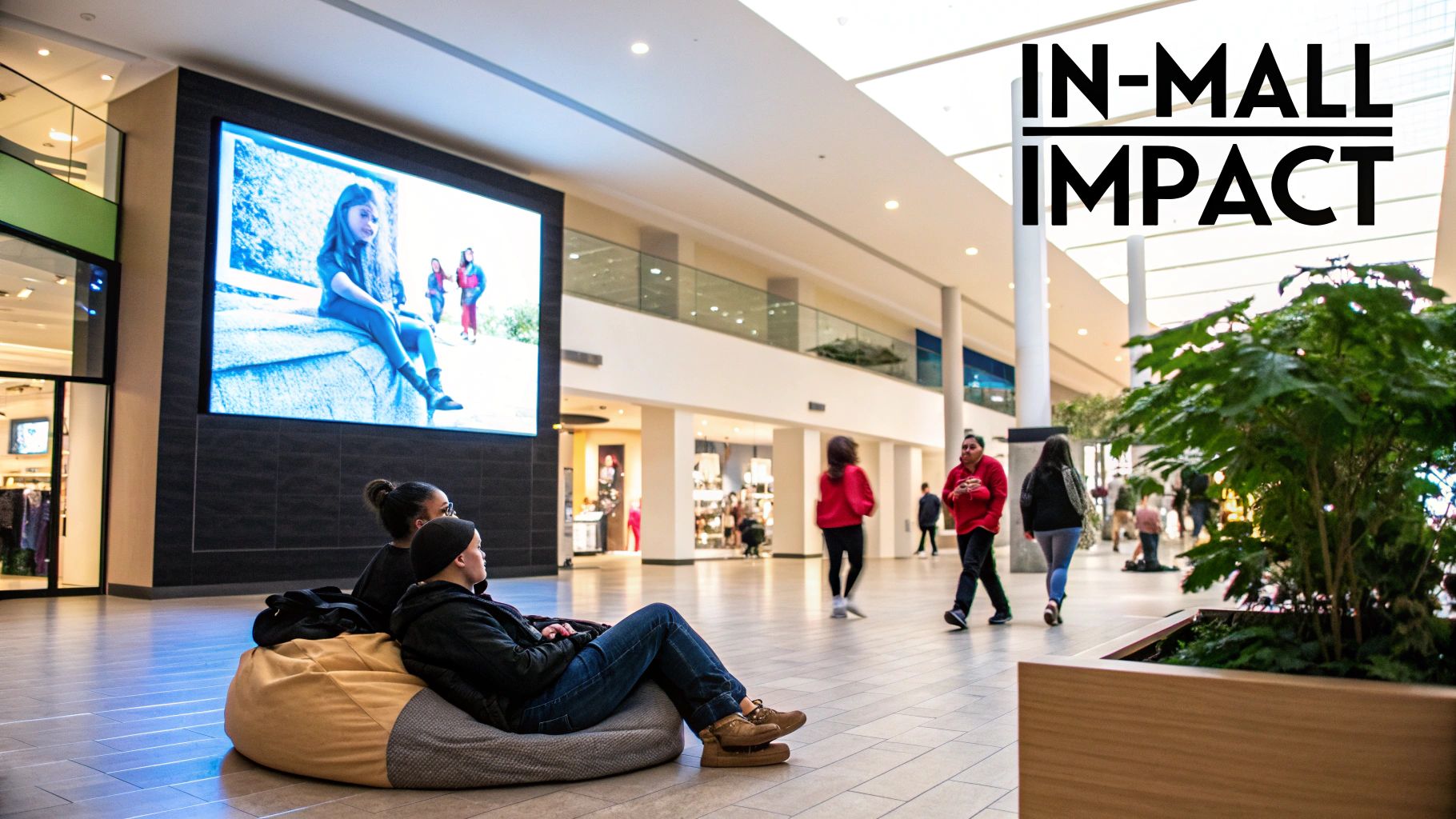
In a world saturated with online ads, the physical presence of a brand can make a huge, memorable impact. Malls aren't just rows of stores anymore; they've become lively hubs where people come for entertainment, food, and to hang out. This unique setting is a goldmine for advertisers.
Unlike a fleeting digital ad that gets skipped or blocked, in-mall advertising grabs the attention of a captive audience. These visitors are already in a "buying" frame of mind, which makes them incredibly receptive to messages that can sway their purchases on the spot.
The days of just slapping up a static poster and calling it a day are long gone. The most effective shopping mall advertising today is built around immersive Digital Out-of-Home (DOOH) experiences, powered by brilliant, dynamic LED displays. These screens don't just show ads; they create engagement.
This evolution is crucial. The retail media world is heavily skewed toward online, with digital-only formats making up about 69% of all ad sales and projected to climb another 9.4% in 2024. This trend, covered in more detail over at Marketing Dive, shows exactly why physical shopping spaces need to step up their game with compelling, integrated digital advertising.
By blending the immediacy of a physical location with the dynamic power of digital content, malls offer a best-of-both-worlds advertising solution. It’s where brand stories come to life, just steps away from the checkout counter.
The table below breaks down the main channels you'll find in a modern mall, giving you a quick snapshot of what works where.
| Channel Type | Primary Benefit | Common Placement | Best For |
|---|---|---|---|
| Large-Format LED Video Walls | Maximum "wow" factor and visual impact | Central atriums, food courts, main entrances | Big brand statements, movie trailers, high-production value commercials |
| Digital Directories/Kiosks | Interactive and helpful, high engagement | Intersections, near escalators/elevators | Store locators, event promotions, interactive product finders |
| Elevator & Escalator Screens | Captive audience with guaranteed dwell time | Inside elevators, alongside escalators | Short, punchy ads, quick promotions, brand awareness reminders |
| In-Store Displays | Point-of-purchase influence | Store entrances, behind cash registers, end caps | Driving immediate sales, highlighting specific products, in-store deals |
| Static Banners & Posters | Cost-effective and wide coverage | Hallways, parking garages, storefront barricades | Foundational brand presence, directional signage, long-term campaigns |
| Experiential Pop-Ups | Deep, memorable brand engagement | High-traffic common areas, event spaces | Product launches, sampling campaigns, creating social media buzz |
Each of these channels plays a different role, but when used together, they create a powerful, cohesive brand experience that follows the shopper from the parking garage to the point of sale.
Truly effective in-mall advertising is all about intercepting consumers at the right moments. A massive video wall in the central atrium grabs their attention when they arrive, while a sleek screen at a store entrance can be the final nudge they need to walk in. This guide is your roadmap to maximizing your brand's impact in this high-value environment.
Here are the key advantages of getting it right:
By understanding these dynamics, brands can deploy smart LED solutions that not only deliver a strong return on investment but also turn casual mall-goers into loyal, repeat customers.
What’s the secret sauce behind advertising in a shopping mall? It all comes down to the audience's mindset. Unlike someone scrolling through their phone at home, a mall visitor has physically chosen to be in a commercial space. They’re actively looking for things to buy, entertainment, and inspiration.
This creates what marketers call a captive audience. Shoppers aren't just passing through; they are present, engaged, and mentally primed to open their wallets. Their reason for being there aligns perfectly with a brand's reason for advertising, making them incredibly receptive to a well-told brand story.
Think about it this way: an online ad often feels like an interruption. A vibrant digital display in a mall, however, is part of the experience itself. It’s a source of discovery in an environment literally built for it. This simple but powerful difference is the foundation of great shopping mall advertising.
The crowd you'll find at a mall today is a fantastic mix for advertisers. You’ve got key consumer groups like families with serious spending power, trend-hungry young adults, and affluent shoppers on the hunt for premium goods. Each group walks in with a different goal.
For instance, families might be there for a kid-friendly event or back-to-school shopping. This makes them a prime audience for ads featuring children's clothing, toys, or a family-friendly restaurant. Young adults, on the other hand, are often there to socialize, making them easy targets for ads promoting the latest fashion, tech gadgets, and entertainment.
The real magic isn't just reaching these groups—it's speaking their language. When you tailor your message on a digital screen to match the time of day, a big mall event, or even the weather outside, a generic ad suddenly becomes a relevant, persuasive conversation.
Smart advertising leans into these details, allowing brands to craft messages that hit home with specific segments of the mall's diverse foot traffic.
While the built-in "shopper mindset" is a massive advantage, let's talk about the reality of modern retail traffic. Recent data shows that even when overall mall traffic dips, individual brands with killer marketing can see explosive growth.
For example, while shopping centers saw a slight 2.3% drop in foot traffic in 2023, some brands completely bucked the trend. Nike stores saw their foot traffic climb by nearly 15% year-over-year, and Abercrombie Kids pulled in a staggering 45% more visitors. These numbers prove that strategic, high-impact advertising and merchandising are incredibly powerful tools for pulling customers right through your doors. You can explore more about these shopping district marketing statistics to see just how well targeted efforts pay off.
This is where high-impact shopping mall advertising becomes your secret weapon. It gives brands the power to cut through the noise and grab the attention of shoppers who are already there, ready to spend.
Here’s how it works to turn a casual passerby into your next customer:
Ultimately, the goal is to make your brand an unmissable part of the shopping journey. By understanding the psychology of the mall-goer and using dynamic visuals to stand out, you can capture that fluctuating foot traffic and guide it right where you want it to go.
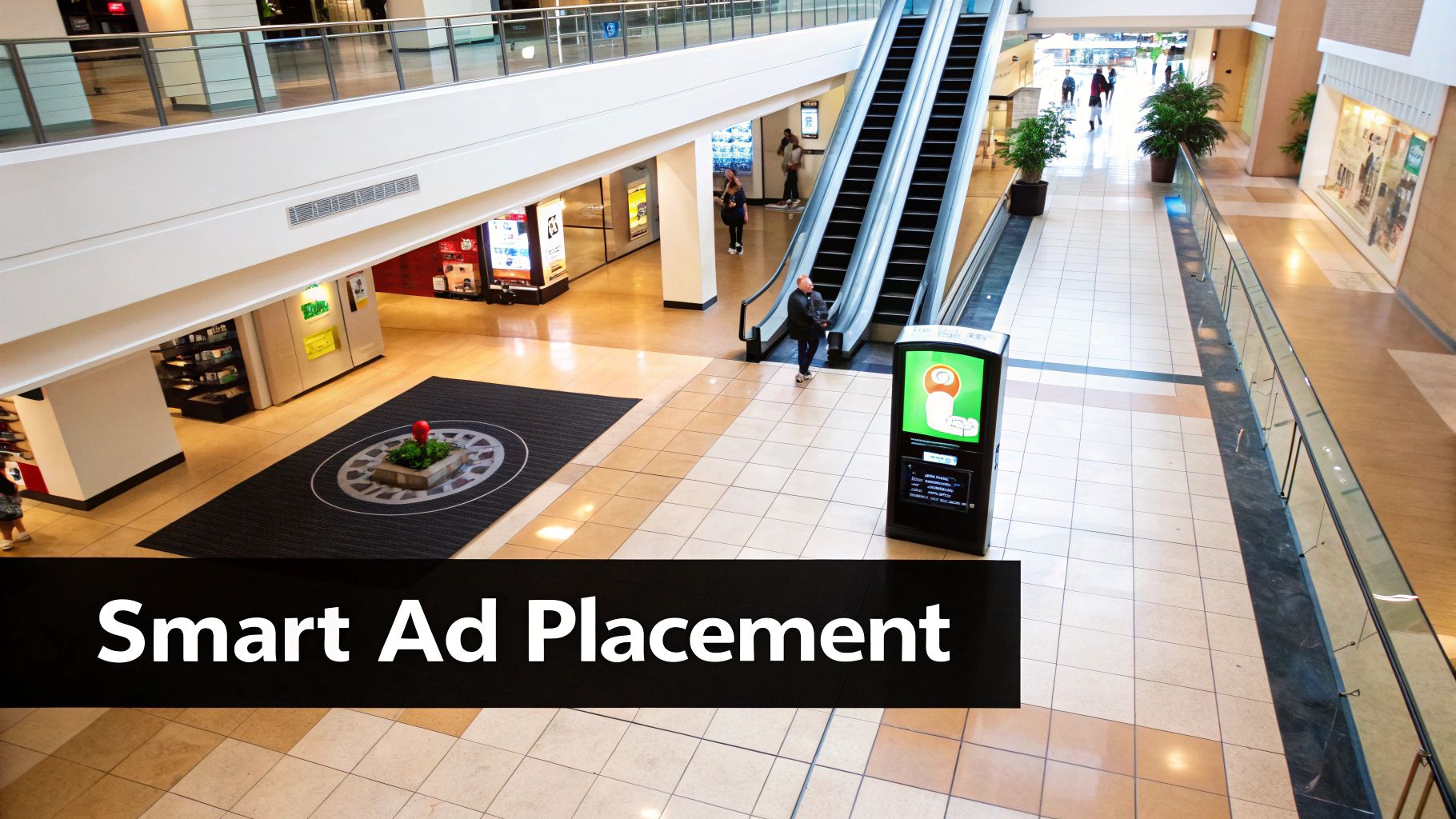
To really grab a shopper's attention, you need to know the lay of the land inside a mall. The advertising options are huge—everything from old-school static posters to massive, dynamic digital screens. Each one plays a different part in guiding a customer from the moment they park their car to when they pull out their wallet.
Think of the mall as a multi-stage theater. The entrance, the main atrium, the food court, and the long corridors are all different scenes. Your ads are the props and backdrops that tell your brand’s story as the audience moves through the space.
Before we get into the high-tech stuff, let's talk about the classics. Static media is the bedrock of any in-mall presence, offering constant visibility that reinforces your message day in and day out. These formats are fantastic for building general brand awareness and pointing people in the right direction.
Some of the most common formats you'll see are:
These placements are the steady drumbeat of your campaign—they're reliable, cost-effective, and do a great job of building your brand over the long haul.
A static banner is like a postcard from your brand—it delivers a clear, singular message. A vibrant LED video wall, however, is the blockbuster movie trailer—it grabs attention with motion, sound, and story, creating an unforgettable experience.
This is where things get exciting. Digital Out-of-Home (DOOH) is the real game-changer in modern shopping mall advertising. These bright, dynamic LED screens turn a passive glance into an active moment of engagement. Unlike a static poster, a DOOH display can run full-motion video, switch up content on the fly, and even interact with people passing by.
The magic of DOOH is its ability to adapt. A coffee shop, for instance, can run ads for hot lattes on a chilly morning and instantly switch to iced mochas when the sun comes out in the afternoon. That kind of contextual relevance makes an ad feel less like an interruption and more like a helpful suggestion. And for brands thinking bigger, exploring the world of digital outdoor signage can offer powerful lessons on creating massive visual campaigns that command attention.
The smartest campaigns don't just place ads randomly; they place them along the natural path a shopper takes through the mall. If you understand this journey, you can deliver the right message at the perfect moment to nudge their behavior.
1. The Arrival (Parking Garage & Entrances)
This is your first handshake. A big digital screen or a massive static banner here creates immediate brand recognition. The goal is simple: plant a seed and make your brand the first thing they think of as their visit begins.
2. The Exploration (Atriums & Main Corridors)
Once shoppers are inside, they're in discovery mode. This is the spot for your showstopper—a giant LED video wall in a central atrium. Use this space for high-impact, story-driven video content that creates a genuine "wow" moment.
3. The Pause (Food Courts & Seating Areas)
When people take a break to eat or rest, their dwell time skyrockets. This makes food courts prime real estate for digital screens. You have a captive audience that's perfect for longer-form content, detailed product demos, or interactive campaigns using QR codes.
4. The Decision (Near Store Entrances)
This is the moment of truth. Smaller, sleeker digital displays right outside your storefront can be the final nudge a customer needs. Use them to flash in-store promotions, show off new arrivals, or deliver a compelling call to action like, "Step inside for 20% off."
By mapping your advertising to these key zones, you build a compelling brand story that follows the shopper from the front door right to the checkout counter.
Figuring out the costs of shopping mall advertising is the first step to getting a great campaign off the ground. The good news? It’s usually much more straightforward than the wild world of online ad bidding. Most in-mall advertising runs on simple pricing models that are easy to forecast and manage.
Once you get a handle on how it works, you can perfectly align your spending with your campaign goals. Whether you're aiming for huge brand awareness or a quick, targeted promotion, it's all about picking the right tool for the job.
When you lease ad space in a mall, you'll almost always run into two main pricing structures: Cost Per Mille (CPM) and Cost Per Time (CPT). Each one is built for a different strategic purpose, so let's break them down.
CPM (Cost Per Mille): This model bills you for every thousand impressions—or views—your ad gets. Think of it as paying for each set of eyeballs that lands on your digital screen. This approach is perfect for campaigns where the main goal is maximizing reach and getting your brand in front of as many people as possible.
CPT (Cost Per Time): This is a simple flat-rate deal. You rent the ad space for a specific period, whether that's a day, a week, or a whole month. It’s a lot like leasing a physical billboard; you pay for exclusive use of that spot for a set time, no matter how many people see it. CPT gives you budget certainty and is ideal for campaigns tied to a fixed timeline, like a weekend sale or a holiday push.
The core difference is simple: with CPM, you pay for potential audience size. With CPT, you pay for a guaranteed timeframe. Your choice depends entirely on whether your goal is mass exposure or consistent presence during a critical period.
To make it even clearer, here’s a quick comparison of the most common pricing structures you’ll encounter.
This table breaks down the common pricing structures, helping you understand what you're paying for and which model best fits your campaign goals.
| Pricing Model | How It Works | Best For | Key Consideration |
|---|---|---|---|
| CPM (Cost Per Mille) | You pay a set price for every 1,000 impressions (views) your ad receives on a digital screen. | Large-scale brand awareness campaigns where maximizing eyeballs is the top priority. | Relies on estimated foot traffic and viewership data, which can vary. |
| CPT (Cost Per Time) | You pay a flat fee to own the ad space for a fixed duration (e.g., a week, a month). | Time-sensitive promotions like holiday sales, event announcements, or new product launches. | Your cost is fixed regardless of actual viewership, which could be a pro or a con depending on traffic. |
Ultimately, choosing between these models comes down to matching the payment structure to your specific marketing objective.
Not all ad spaces are created equal, and a few key variables will shape the final price tag for your shopping mall advertising campaign. Knowing what drives these costs helps you negotiate better deals and put your budget where it will have the most impact.
The biggest cost drivers usually boil down to these four things:
Mall Prestige and Foot Traffic: It’s no surprise that a high-end mall in a major city with millions of annual visitors will command a much higher price than a smaller, local shopping center. You're paying a premium for access to a larger—and often more affluent—audience.
Ad Placement and Visibility: Location, location, location. A massive LED video wall hanging in the central food court will cost significantly more than a smaller screen tucked away near a less-trafficked exit. Prime real estate in high-dwell areas like atriums and main entrances always comes at a premium.
Campaign Duration and Seasonality: Booking a longer campaign often gets you a better rate. On the flip side, expect prices to spike during peak shopping seasons like the winter holidays or back-to-school. When shopper traffic and competition for ad space are at their highest, so are the costs.
Ad Format and Creative Production: Don’t forget about the cost of making the ad itself—it’s a crucial part of your budget. A simple static image is far cheaper to produce than a full-motion video shot by a professional crew. If you're looking at more permanent installations, it also helps to understand the baseline expenses. You can learn more about the factors that influence outdoor LED sign cost to get a clearer financial picture.
Choosing the right digital screen for your shopping mall is like casting the star of a blockbuster movie. The right one delivers an unforgettable, show-stopping performance; the wrong one just fades into the background. A smart decision on LED display hardware is the bedrock of any successful digital out-of-home strategy, guaranteeing your investment pays off for years to come.
This process really boils down to translating a few technical terms into practical, real-world outcomes. Once you get a handle on these core concepts, you'll be able to pick hardware that not only looks brilliant but is perfectly suited to its specific spot and purpose within the mall.
First up, and arguably the most critical spec, is pixel pitch. Think of it as the density of a digital image. Pixel pitch is simply the distance, measured in millimeters, from the center of one tiny LED pixel to the center of the next. A smaller number means the pixels are packed tighter, creating a higher-resolution image that looks razor-sharp even when you're standing right in front of it.
For instance, a sleek screen right outside a luxury storefront—where shoppers might be just a few feet away—would need a very fine pixel pitch (maybe 1.9mm to 2.5mm) to look crisp. On the other hand, a massive video wall hanging high in a food court atrium, viewed from 50 feet away, can get away with a wider pixel pitch (like 4mm to 6mm) and still look spectacular, often at a much friendlier price point.
The rule of thumb is simple: the closer your audience gets to the screen, the smaller the pixel pitch needs to be. Nailing this ensures your content is always clear, seamless, and professional, without any distracting blockiness or pixelation.
This decision tree visualizes how campaign goals can influence your advertising strategy, a key consideration before investing in hardware.
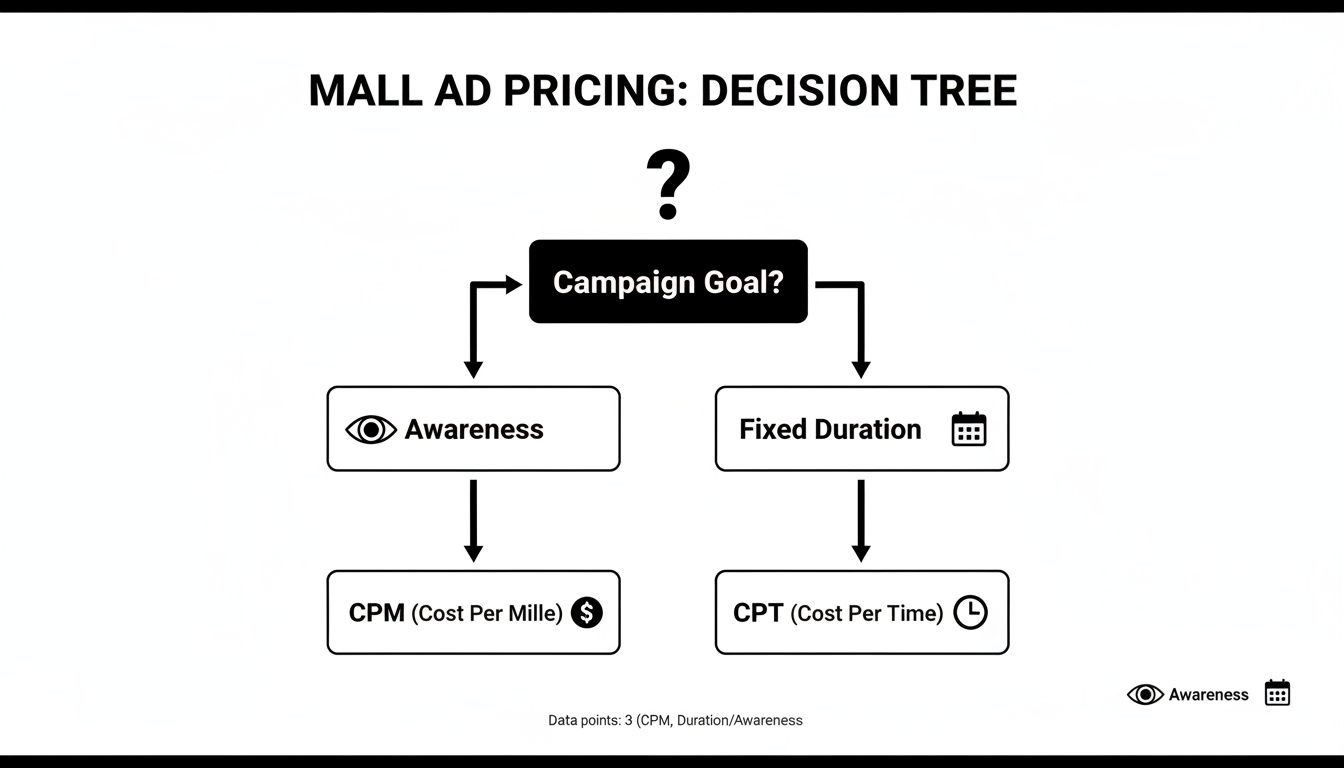
The visual clearly shows that broad awareness campaigns are best suited for CPM pricing, while time-sensitive promotions align perfectly with a fixed-duration CPT model.
Next on the list is brightness, which we measure in a unit called nits. Ever try to read your phone screen in direct sunlight? If the brightness isn't cranked up, the screen gets completely washed out. The exact same principle applies to LED displays in a shopping mall. A screen placed in a dim corridor has totally different brightness needs than one sitting in a glass-roofed atrium that’s flooded with natural light.
An indoor display in a standard hallway might only need around 500-800 nits to look vibrant. But a screen competing with direct sunlight might require 2,000 nits or more to make sure its colors and content truly pop. Choosing a display with weak brightness is one of the most common—and costly—mistakes you can make, as it renders an otherwise great ad totally invisible during peak daylight hours. For anyone thinking about versatile placements, learning about the full range of LED signs for businesses can offer a broader perspective on matching hardware to its environment.
Finally, you have to think about the display’s long-term durability, especially in a high-traffic public space. This is where technical ratings come in, giving you a clear indicator of how well the hardware will hold up over time.
IP Ratings (Ingress Protection): This two-digit number tells you how resistant the screen is to solids (like dust) and liquids (like water from cleaning crews). The first digit rates solid protection, and the second rates liquid protection. A higher number means better protection, which is absolutely crucial for displays in open areas.
Operating Hours and Lifespan: Commercial-grade displays are workhorses, built to run for extended periods and often rated for 18/7 or 24/7 operation. Their lifespan is typically measured in tens of thousands of hours, ensuring a level of reliable performance that a consumer-grade TV just can't touch.
By carefully weighing pixel pitch, brightness, and durability, you can move beyond the spec sheet and make a truly strategic investment. This approach ensures your shopping mall advertising hardware won't just capture attention on day one but will continue to deliver stunning visuals and a strong return for its entire service life.
An incredible LED screen is only half the battle. The other half is the story you tell on it. Inside the bustling, fast-paced world of a shopping mall, your content isn't just an ad—it’s what we call "glance media." You literally have seconds to grab the attention of a shopper who is on the move, juggling bags, and thinking about their next stop.
To win in this environment, you have to design for instant impact. The best shopping mall advertising is built on a foundation of simplicity and raw visual power. It’s not about cramming a ton of information onto the screen; it's about getting a single, powerful idea across in the blink of an eye. This is what turns a passive glance into an active thought, and an active thought into someone walking into a store.
So, how do you create content that works in just a few seconds? It all comes down to a few core principles. The goal is to make your message so clear and compelling that someone can fully understand it without breaking their stride. Think of it less like a magazine ad and more like a highway billboard—bold, direct, and instantly readable.
Here are the essential rules for designing DOOH content that actually works:
The whole game with glance media is communication efficiency. Your ad has to deliver its entire payload—the information and the feeling—in the three to five seconds a shopper might give it. Anything more complicated will just get lost in the shuffle.
Once you've nailed the basics, you can start playing with more advanced tactics that make your shopping mall ads smarter and far more relevant. Modern digital screens offer incredible flexibility, letting you tailor your message to the audience, the time of day, or even the weather outside. This kind of relevance is what takes a good ad and makes it a great one.
These dynamic strategies turn your screen from a simple display into a responsive marketing machine. For anyone looking to get the most out of digital screens, understanding how to create impactful marketing videos is the key to bringing these powerful concepts to life.
Here are a few game-changing techniques:
The explosive growth of retail media shows just how critical these compelling visuals have become. Investment in this space is projected to smash $177.7 billion by 2025, a massive shift that brings marketing dollars closer to the physical point of purchase, right where people are ready to buy. This trend makes it crystal clear: eye-catching, dynamic content isn't a luxury anymore—it's essential for cutting through the noise.
By putting these creative strategies to work, your digital ad can become a truly unforgettable moment in the customer's journey.
Diving into the world of shopping mall advertising for the first time can definitely bring up a few questions. We get it. Below are some straight-to-the-point answers to the most common things people ask, so you can move forward with total confidence.
Measuring the return on your in-mall advertising isn't a one-size-fits-all deal; it really needs a blended approach. For digital campaigns on big, flashy LED screens, you can start with the basics, like impression counts provided by the media owner. But to get the real story, you need to track how shoppers are directly responding.
Here are a few a few tried-and-true techniques:
The real key? Define your goal before the campaign launches. Are you chasing brand awareness, more store visits, or hard sales? Knowing that will tell you which metrics matter most.
Getting your ad live in a shopping mall is a pretty straightforward process. It usually kicks off when you get in touch with the mall's management team or, more often, their dedicated media sales partner. You’ll need to give them the essentials, like your desired campaign dates and where you’d ideally like your ads to be placed.
From there, they'll send over a media kit breaking down all available inventory, creative specs, and pricing. Once you hash out the terms and sign the contract, you send over your creative files for a quick approval. For digital ads, this part is often super fast since the content can be uploaded remotely.
Yes, absolutely. Just about every shopping mall has content guidelines in place to maintain a family-friendly vibe. You'll typically find restrictions against ads from direct competitors who already have a store in that mall. Content related to politics, religion, or other sensitive topics is also a no-go.
Always, always ask for the mall's official advertising content policy before you even think about the creative. To make sure your digital ad really pops on those massive mall displays, it’s worth collaborating with professional advertising video production services. Getting your creative pre-approved can save you a world of headaches, time, and money down the road.
Ready to transform your brand's visibility with stunning, high-impact visuals? Smart LED Inc. offers factory-direct pricing on a wide range of indoor video walls and outdoor LED signs perfect for any shopping mall advertising strategy. Explore our custom solutions at smartledinc.com and see how our expertise can bring your vision to life.
Picture this: you take the flash and spectacle of a Times Square billboard, slap it on the back of a truck, and send it wherever
A wall of TV screens is exactly what it sounds like: a big, impressive display made by tiling multiple TVs together so they act like
Picking the right displays for shows can feel like a high-stakes guessing game. Get it right, and you create an immersive world that captivates your
"*" indicates required fields