
Uncategorized
Digital Billboard Truck: Boost Your Campaign with Mobile Ads
Picture this: you take the flash and spectacle of a Times Square billboard, slap it on the back of a truck, and send it wherever
Outdoor LED sign lighting is so much more than just a way to light up your business name. Think of it as a dynamic, living advertisement that can turn a simple storefront into an unmissable landmark. For any business, this technology is a game-changer—it grabs attention on the spot, pulls in foot traffic, and gives you the power to swap out your message in the blink of an eye. That's something a traditional sign just can't do.
In a marketplace packed with competition, standing out visually is everything. A standard, static sign does its job, but it often fades into the background noise of a busy street. An outdoor LED sign, on the other hand, is a beacon. It broadcasts your brand’s message with stunning color and motion.
It’s the difference between a whisper and a confident announcement.
This technology lets your business move at the speed of the market. You can instantly advertise a flash sale, share some community news, or show off eye-catching graphics without the cost or delay of getting new materials printed. It’s a nimble marketing machine working for you 24/7.
Making the move to digital displays isn't just a fleeting trend; it’s a real shift in how local advertising is done. A static sign says one thing and one thing only until you physically tear it down and put up a new one. An outdoor LED sign, however, can run through an entire campaign's worth of content in just one day.
This kind of adaptability is a massive advantage for:
The real power of outdoor LED sign lighting is its versatility. It's not just a sign; it’s a full-blown communication platform. It gives you total control over your public message, letting you react to what's happening in the market instantly.
The switch to digital signage is also shaking up the financial side of advertising. The global outdoor LED display market was already valued at around USD 9.3 billion in 2023 and is expected to climb much higher. A big part of this growth comes from the move away from old-school static billboards to digital-out-of-home (DOOH) networks. With DOOH, a single LED sign can feature ads from multiple businesses, dramatically increasing the revenue from just one location. You can dig into more data on this market shift over at gminsights.com.
At the end of the day, investing in LED signs for businesses is about giving yourself a serious competitive edge. It gets your storefront ready for the future, making sure your brand stays visible, relevant, and impossible to forget. This guide will walk you through everything you need to know to make a smart investment that will pay off for years to come.
Jumping into an outdoor LED sign’s spec sheet can feel like you've been handed an engineering manual. It’s a sea of technical terms and numbers that don't mean much on their own. But here's the secret: you only need to understand a handful of them to make a smart decision. These core specs are what determine your sign's sharpness, its ability to punch through sunlight, and how well it stands up to Mother Nature.
Getting these right means your investment not only looks incredible on day one but continues to perform for years to come. Think of them less as jargon and more as a recipe for a powerful communication tool. Once you know what they mean for your business and your location, you can pick the perfect sign without wasting money on features you’ll never use.
This simple decision tree helps visualize why moving on from a static sign isn't just an upgrade—it's a critical step toward grabbing attention and growing your business.
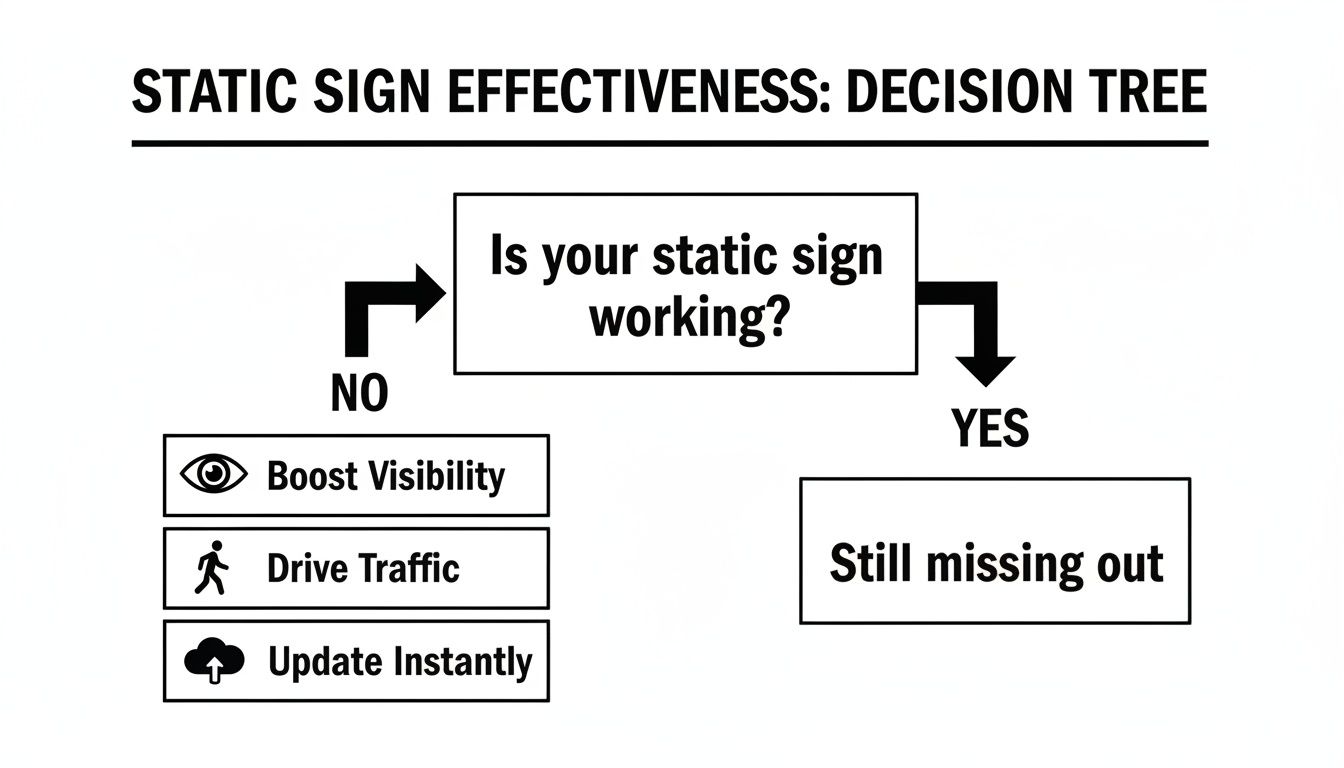
The takeaway is clear. Whether your old sign is doing its job or not, a digital LED display gives you the power to change your message in an instant, drive more foot traffic, and stay relevant in a way static signs just can’t match.
The first and arguably most important spec you’ll see is pixel pitch. It's the same idea as the resolution on your TV at home. A 4K screen looks so much crisper than an old tube TV because it packs millions more pixels into the same space. For an LED sign, pixel pitch is the measurement in millimeters from the center of one pixel to the center of the next.
A smaller number, like 4mm, means the pixels are jammed tightly together. This creates a high-resolution image that looks sharp and clear, even when you’re standing right in front of it. A larger number, like 16mm, means the pixels are spaced further apart—which is perfectly fine for a huge sign on a highway that people only see from a distance.
The entire outdoor LED sign lighting industry is moving toward tighter, more brilliant displays. In fact, signs with a pixel pitch under 4mm are one of the market's fastest-growing segments, with analysts projecting growth over 15% in the coming years. This boom is fueled by demand for sharp, pedestrian-level signs in urban areas. You can see this trend detailed in recent global outdoor LED advertising display forecasts.
Choosing the right pixel pitch is all about balancing your viewing distance with your budget.
When you're shopping around, it's easy to get lost in the numbers. Use this quick reference guide to connect the sign's resolution (pixel pitch) to where your audience will be standing.
| Pixel Pitch (mm) | Minimum Viewing Distance (ft/m) | Optimal Viewing Distance (ft/m) | Best Use Case |
|---|---|---|---|
| 4-6mm | 12-20 ft / 4-6 m | 20-50 ft / 6-15 m | Sidewalks, storefronts, pedestrian zones |
| 8-10mm | 25-35 ft / 8-10 m | 50-100 ft / 15-30 m | Businesses on busy roads, drive-thrus |
| 12-16mm | 40-50 ft / 12-15 m | 100-200 ft / 30-60 m | Shopping centers, pylon signs near traffic |
| 20mm+ | 65 ft+ / 20 m+ | 200 ft+ / 60 m+ | Highway billboards, large venue scoreboards |
Getting this right is crucial. A sign with a pitch that's too wide for its location will look blurry and unprofessional up close, while overpaying for an ultra-fine pitch on a highway sign is just throwing money away.
Next on our list is brightness, which is measured in a unit called nits. The easiest way to think about nits is as your sign's raw power to outshine the sun. For context, a nice indoor TV might have a brightness of 300-500 nits, which is plenty for your living room. An outdoor LED sign, on the other hand, is in a constant battle with direct daylight and needs way more firepower.
A sign that looks brilliant at night but completely washes out in the afternoon sun is a wasted investment. Proper brightness ensures your message is seen clearly at all hours of the day, delivering maximum impact when the most potential customers are out and about.
For any serious outdoor application, you should be looking for a sign with at least 5,000 nits. If your location gets blasted with direct sun for hours on end, you’ll want to step that up to 7,000 nits or higher to make sure your content stays vibrant and easy to read. Most quality signs today come with ambient light sensors that automatically dim the display at night, saving energy and being a good neighbor.
Finally, let's talk about toughness. An IP rating, which stands for Ingress Protection, is basically a report card for how well a sign's casing is sealed against dust and water. It’s always a two-digit number. The first digit (1-6) rates its protection against solids like dirt and dust, and the second (1-8) rates its defense against liquids like rain and snow.
For any piece of tech living outside 24/7, a high IP rating is non-negotiable. At a minimum, you want a sign rated at IP65. The ‘6’ means it’s completely sealed against dust, and the ‘5’ means it can handle powerful jets of water from any direction. That's more than enough to shrug off heavy rain, sleet, and windy days. This weatherproof armor is what protects the sensitive electronics inside, ensuring your sign works reliably for a decade or more.
A state-of-the-art outdoor LED sign is a fantastic start, but it's only half the story. The other half—the part that truly makes your investment pay off—is smart installation and seamless content management. These are the practical details that transform a bright box into a marketing powerhouse.
Getting the physical setup right from day one is non-negotiable. It ensures your sign is secure, stable, and perfectly positioned to grab the most eyeballs. Just as critical is the software that runs the show. The right system gives you the power to update messages, schedule promotions, and launch campaigns from anywhere, making your sign a nimble, responsive part of your business.
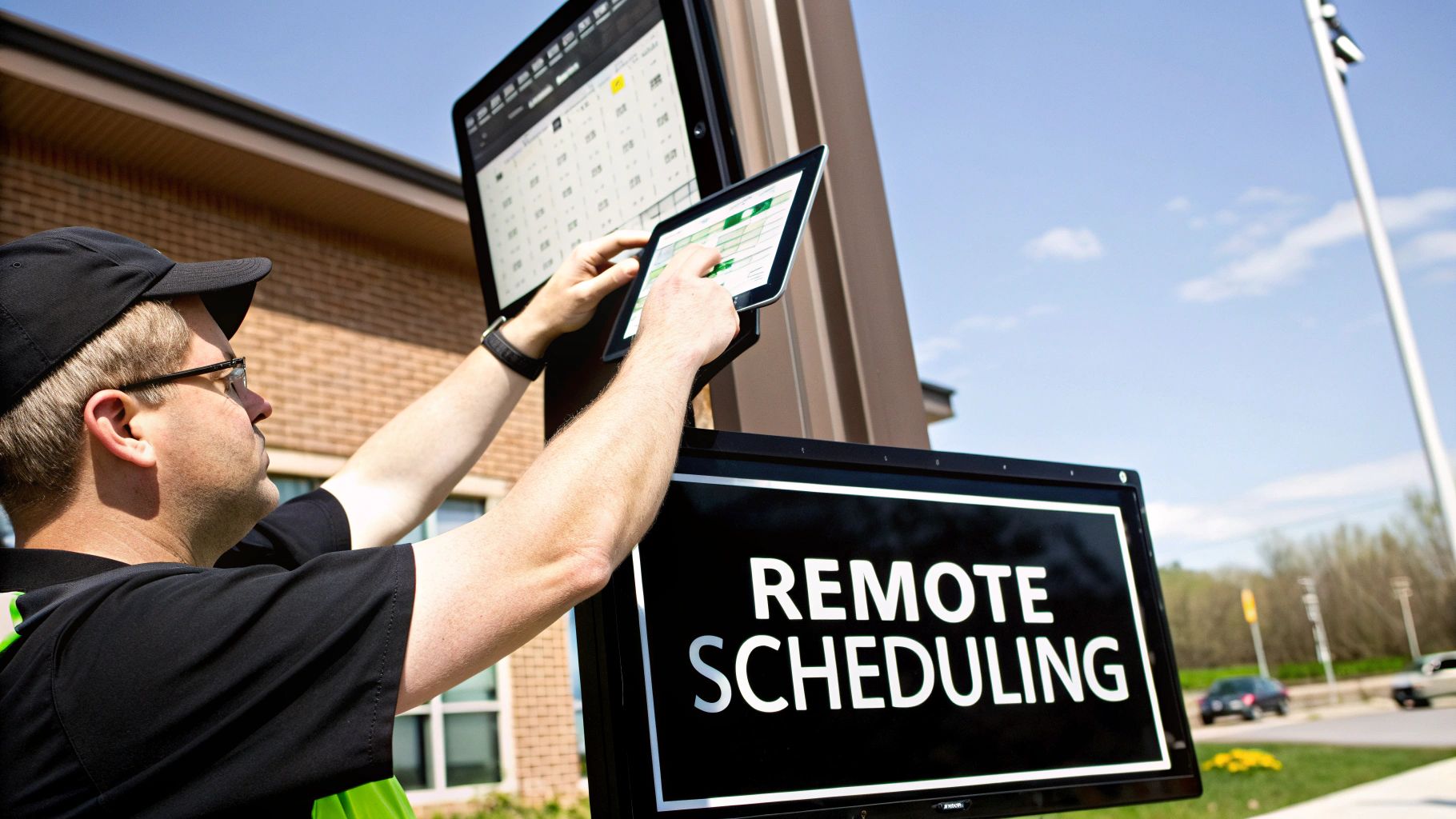
How and where you mount your sign affects everything from its visibility to its long-term structural health. Each method comes with its own set of pros and cons, and the best choice really depends on your location, local rules, and what you’re trying to achieve.
Here are the most common structures you'll see:
Your mounting choice is a foundational decision. It dictates how people first experience your message and must be engineered to handle local wind loads and weather, keeping it safe and effective for years to come.
An outdoor LED sign is a sophisticated piece of electronics, and like any high-tech gear, it needs stable, professionally installed connections to work properly. Flickering screens or random outages? More often than not, the culprit is shoddy power or data wiring, not a bad sign. This is why a pro installation is a must.
A licensed electrician will run dedicated, properly grounded circuits to the sign, which prevents the kind of power dips and surges that can fry sensitive electronics over time. In the same way, a rock-solid data connection—whether it's a wired Ethernet cable or a strong wireless signal—is key for reliable content updates and remote control. Cutting corners here is a recipe for expensive repairs and frustrating downtime.
The real magic of outdoor led sign lighting happens inside the Content Management System (CMS). This is the software that acts as the brain of your display, putting all the control right at your fingertips. No more climbing ladders or calling a technician for every little change.
With a modern cloud-based CMS, you can manage your sign from anywhere you have an internet connection. This capability is what turns your display from a static billboard into a dynamic marketing machine.
Just think about what you could do:
This level of control over your digital outdoor signage is a game-changer. And when it comes to creating that content, don't be afraid to think dynamically; you can even explore AI video generator tools to produce eye-catching visuals. A user-friendly CMS makes it simple to upload everything from basic text to full-motion video, ensuring your message stays fresh and compelling without any technical headaches.
When you invest in high-quality outdoor LED sign lighting, you're not just buying a sign; you're buying resilience. These displays are engineered to be the frontline soldiers for your brand, built to operate flawlessly through blazing summer heat, torrential downpours, and freezing winter nights. Understanding the tech that makes this possible is the key to choosing a sign that delivers year after year, not just for the first few months.
This resilience goes far beyond the basic IP ratings we talked about earlier. Sure, an IP65 rating is a great start for keeping out dust and water, but the best signs are built with multiple layers of defense. It’s the difference between a simple raincoat and a full set of professional-grade gear designed for the harshest conditions imaginable.
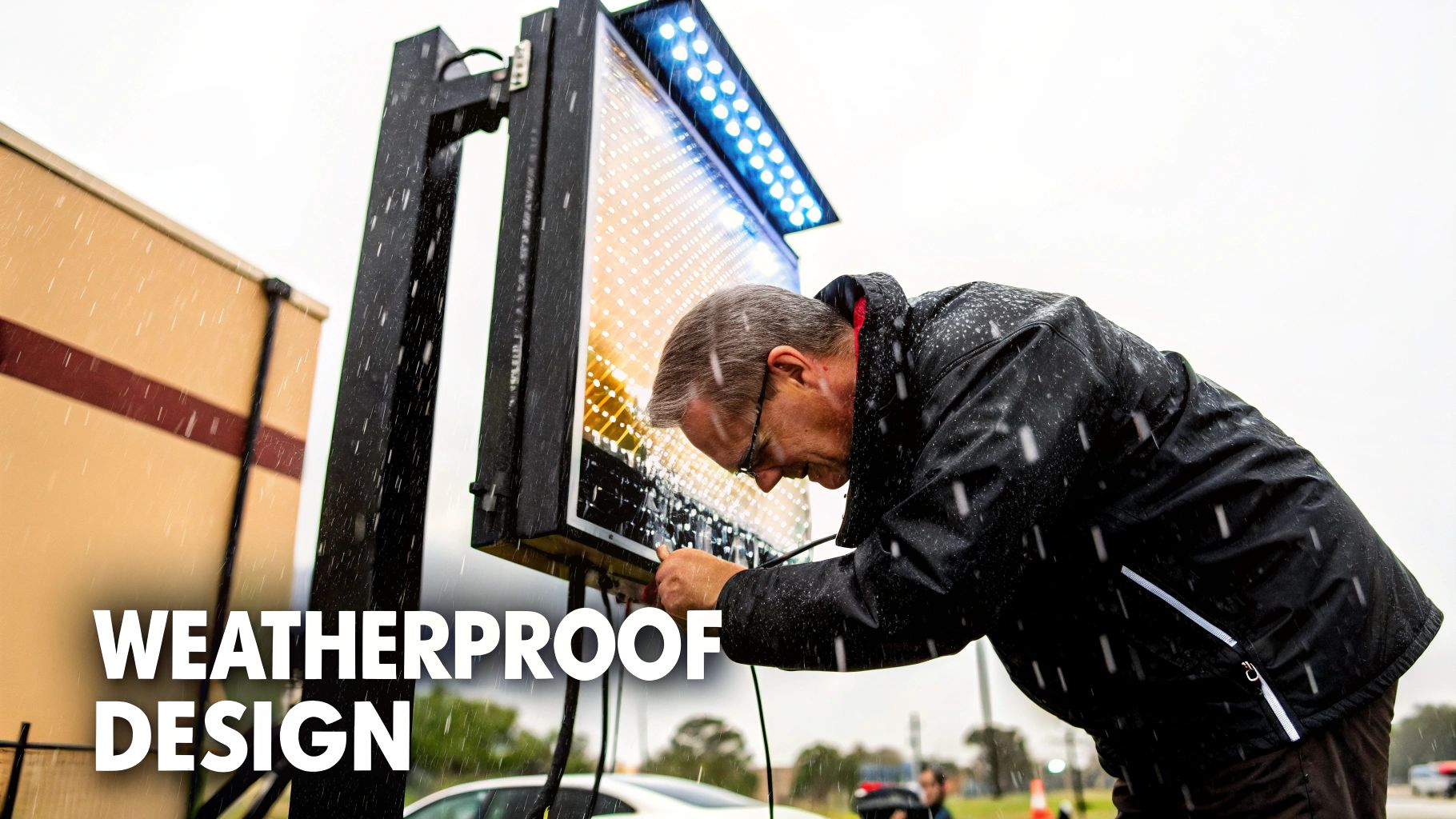
True durability is engineered from the inside out. It's about protecting the sensitive electronics at the heart of your display to ensure a long, productive operational life.
Three critical components of advanced weatherproofing make all the difference:
A truly weatherproof outdoor LED sign isn't just sealed; it's actively engineered to manage its internal environment. This proactive approach to handling heat and moisture is what separates a reliable, decade-long asset from a sign that starts to fail after a few harsh seasons.
While a well-built sign is designed for minimal upkeep, a little routine care goes a long way toward maximizing its lifespan and performance. These simple steps, performed just a few times a year, can prevent common issues and keep your outdoor led sign lighting looking its best.
Following a simple checklist ensures nothing gets missed.
Quarterly Maintenance Tasks:
By making these simple tasks part of your facility's regular maintenance schedule, you ensure your sign remains a powerful and reliable marketing tool. This proactive approach minimizes downtime, protects your investment, and guarantees your message is always displayed with maximum impact, no matter what the weather throws at it.
Before you jump into any major business investment, you have to ask two critical questions: Is it legal, and will it make me money? When it comes to outdoor led sign lighting, those questions aren't just important—they're everything.
Getting these answers right from the start saves you from costly legal headaches and gives you a clear financial roadmap. It turns your sign from a simple expense into a predictable, revenue-generating machine.
First things first: you have to tackle the maze of local rules. Skipping this step can lead to hefty fines or, even worse, an order to tear down your brand-new sign.
Every town, county, and city has its own rulebook for signs. These aren't just suggestions; they are legally binding ordinances that spell out exactly what you can and can't do. You absolutely have to get ahead of this.
Before you even think about getting a quote, your first call should be to your local planning or zoning department. Here’s what you need to nail down:
Failing to get the right permits is one of the most expensive mistakes you can make. It’s so much easier to design a sign that fits the rules from day one than to fight a losing legal battle later on.
Once the legal boxes are checked, it’s time to talk money. An outdoor LED sign is a marketing powerhouse, and its return on investment (ROI) comes from both direct and indirect wins.
The calculation begins with understanding the total cost of ownership, which is more than just the initial price tag. For a deep dive into all the factors, check out our complete guide to understanding outdoor LED sign costs.
Your total cost includes the sign itself, professional installation, and ongoing power usage. This is where modern LED technology really pulls ahead. Behind the stunning visuals of outdoor led sign lighting is an incredible story of efficiency. LED signs can slash power consumption by 30–60% compared to older digital signs, all while delivering brighter, more vibrant images and a much longer lifespan. This massively improves the total cost of ownership for any business.
With your total cost figured out, you can start weighing it against the returns.
Here’s where you’ll see the payoff:
To put it in perspective, let's look at a simplified comparison. A static sign might seem cheaper upfront, but a dynamic LED sign is an active marketing tool that works for you 24/7.
| Metric | Static Sign (Annual) | Outdoor LED Sign (Annual) |
|---|---|---|
| Upfront Investment | Low | High |
| Content Flexibility | None (1 message) | Unlimited (dynamic content) |
| Ongoing Ad Costs | High (printing, labor) | Negligible (software update) |
| Potential Revenue | None (passive branding) | High (ad sales, promotions) |
| Customer Engagement | Low | High |
| Estimated ROI | Slow / Hard to Track | Fast / Measurable |
The takeaway is clear: while a static sign just sits there, an LED sign actively drives business, creates new revenue opportunities, and adapts to your marketing needs in real-time. It’s an investment that keeps on giving.
For a deeper look into quantifying returns, exploring guides on general marketing ROI principles can be a huge help. By mapping out both the rules and the potential profits, you can move forward with your outdoor led sign lighting project knowing it's a smart, strategic, and profitable decision.
Picking the right outdoor LED sign lighting is a big deal, but who you buy it from is just as crucial. The specs and installation plans are only half the story. Real, long-term success comes from working with a team that knows their product inside and out—one that’s invested in your success long after the lights are on.
This is where going factory-direct changes the game completely. Instead of getting tangled in a chain of distributors, resellers, and third-party installers, you’re talking straight to the experts who actually engineer and build the sign. That direct line is the secret to getting more for your money, better support, and a far smoother ride from start to finish.
The first thing you’ll notice about a factory-direct partner is the price. When you cut out the middlemen—who all need to add their own markup—you get top-tier technology without the inflated cost. You’re not paying extra for distributor fees or reseller commissions, which means more of your budget goes directly into the quality of the sign itself.
But the savings are just the beginning. A direct relationship opens up a whole lot more:
Going factory-direct isn't just about saving a few bucks; it's about making the whole process transparent, efficient, and driven by real expertise. You get a partner who understands the technology on a fundamental level and is committed to delivering a perfect fit for your needs.
A great partner doesn't just sell you a sign and wave goodbye. They stick with you, providing a complete support system that makes sure your project is a home run. This end-to-end service is the hallmark of an experienced, factory-direct provider. It's their promise that you'll have an expert in your corner at every stage.
This kind of all-in support usually looks like this:
At the end of the day, choosing a factory-direct expert like Smart LED Inc. means you’re not just buying a product—you're investing in a relationship. It’s about having a dedicated team on your side, making sure your outdoor LED sign becomes a reliable, high-performing asset that brings in business for years to come.
Here are some of the most common questions we hear from folks just before they pull the trigger on a new sign. Even after digging into the tech specs and logistics, these practical, real-world concerns are what matter most. Think of this as the final check-in, clearing up those last few details so you can move forward with total confidence.
We'll cover everything from how long these signs actually last to what it takes to keep them updated day-to-day. Let’s get these questions answered.
This is the big one, and the answer is usually a pleasant surprise. A high-quality outdoor LED sign is built like a tank, typically rated for an incredible 100,000 hours of operation. To put that in perspective, that’s more than 11 years of continuous, 24/7 use.
Of course, not all signs are created equal. A few things will determine whether you get a decade or more out of your investment:
Trying to nail down an exact price for an LED sign is a bit like asking "how much does a car cost?" It really depends on what you need. The cost is a moving target because these signs aren't off-the-shelf products; they're tailored to your specific goals and budget.
The final price tag is driven by three main things: the sign’s physical size, its resolution (that’s the pixel pitch we talked about), and any custom mounting or structural work needed. A modest, lower-resolution sign for a local coffee shop will obviously be a much smaller investment than a massive, ultra-high-res pylon sign for a new shopping center. The key is to see it not as a cost, but as an investment that pays you back.
Absolutely not. If you've ever worried about needing a tech wizard to change your daily specials, you can relax. The days of clunky, complicated sign software are long gone. Modern outdoor LED sign lighting is managed through intuitive, cloud-based platforms that give you all the control.
Think of it like managing a social media profile. If you can post a photo or type a status update, you have all the skills needed to manage your sign's content.
From any computer with an internet connection, you can log right into your sign’s dashboard. In just a few clicks, you can upload new graphics, type out new messages, and even schedule your ads to run at specific times of the day or week. This incredible simplicity is what makes the technology so powerful—it lets you stay agile and keep your marketing fresh without any technical headaches.
Ready to see how a high-performance LED display can transform your business's visibility? At Smart LED Inc., we provide factory-direct pricing and expert guidance to ensure you get the perfect sign for your needs. Explore our solutions at https://smartledinc.com and start your project today.
Picture this: you take the flash and spectacle of a Times Square billboard, slap it on the back of a truck, and send it wherever
A wall of TV screens is exactly what it sounds like: a big, impressive display made by tiling multiple TVs together so they act like
Picking the right displays for shows can feel like a high-stakes guessing game. Get it right, and you create an immersive world that captivates your
"*" indicates required fields