
Uncategorized
Digital Billboard Truck: Boost Your Campaign with Mobile Ads
Picture this: you take the flash and spectacle of a Times Square billboard, slap it on the back of a truck, and send it wherever
At its core, an LED screen for stage is a massive digital canvas built to create jaw-dropping backdrops, show live video, and unleash stunning visual effects for any performance. It’s the secret sauce for concerts, corporate events, and houses of worship, turning a static stage into a truly immersive and captivating environment.
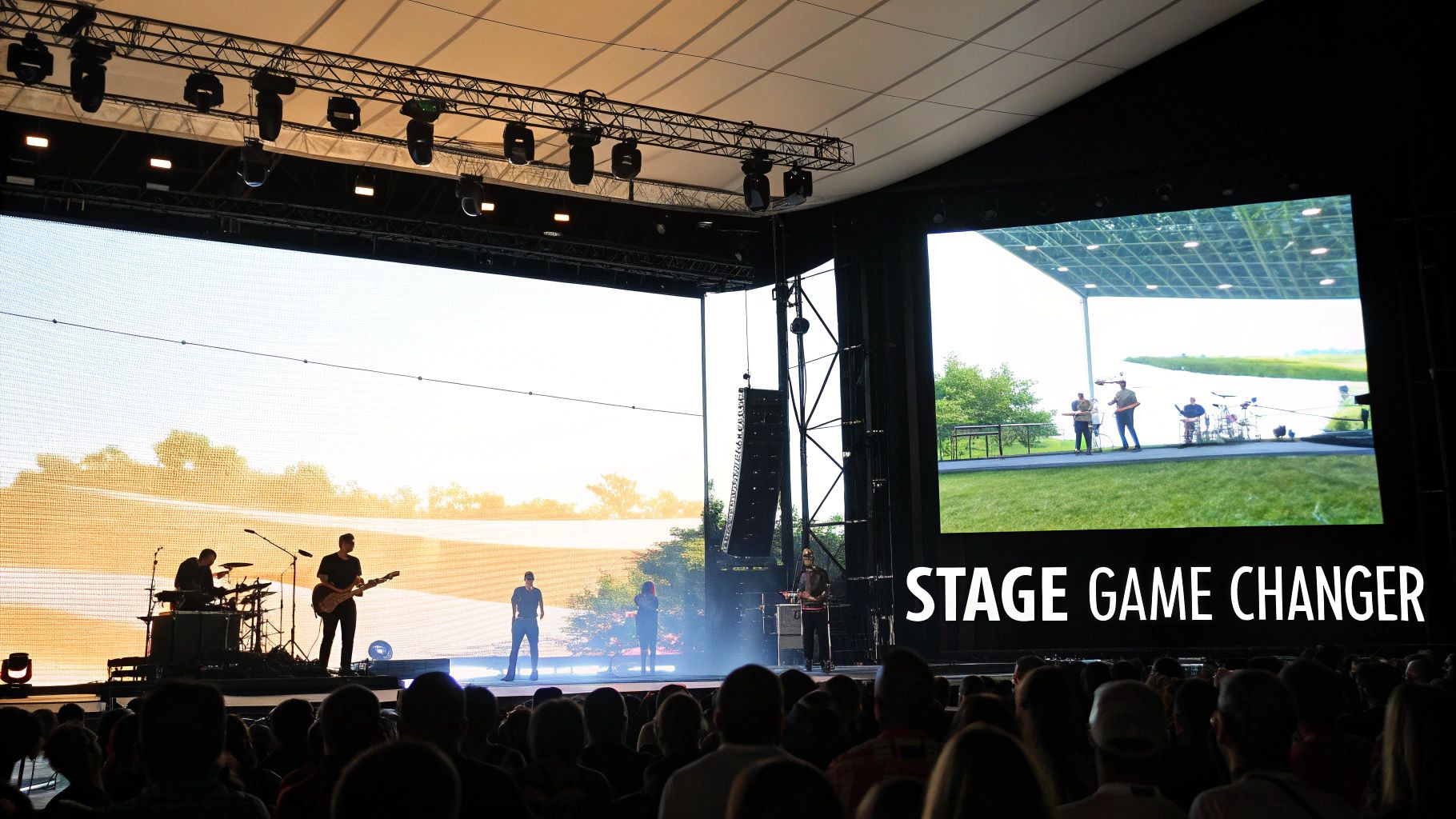
In any live production, the goal is always the same: connect with the audience and leave a mark. While killer sound and a great performance are non-negotiable, the visual element often separates a good event from a truly unforgettable one. This is where a professional LED screen doesn't just support the show—it becomes part of it.
Think of it as the difference between a school play with a painted cardboard backdrop and a Broadway production where the world on stage shifts and breathes with the story. An LED wall gives you a limitless canvas to build worlds, amplify emotions, and guarantee every single person has the best seat in the house.
The whole point of a stage LED screen is to magnify the experience. For a concert, that means larger-than-life close-ups of the artist, graphics pulsing in perfect time with the music, and visuals that completely transport the crowd. In a corporate setting, it’s about making complex data crystal clear and driving home brand messaging with serious impact.
This technology allows you to:
The real power of an LED screen for stage is its chameleon-like ability to adapt. One moment it's a high-definition monitor for a keynote presentation; the next, it's the artistic heart of a performance, defining the entire look and feel of the show.
The hunger for high-impact visuals has lit a fire under this industry. The global market for stage LED screens is exploding, a clear sign of how effective they are. This growth is all about the demand for visuals that can cut through the noise at live events, where these screens deliver unmatched brightness and color.
To see just how powerful these displays can be in transforming a space, check out some successful immersive installation projects. Working with a factory-direct provider like Smart LED Inc. means you get expert guidance from the initial sketch to the final installation, ensuring the solution is perfectly matched to your vision and venue.
Choosing the right LED screen for a stage can feel like learning a new language. You're suddenly hit with terms like pixel pitch, nits, and refresh rates. But these aren't just abstract numbers; they're the DNA of your display, determining whether your visuals look breathtaking or just broken.
Getting a handle on these key specs is the single most important step in making sure your investment pays off. It’s all about translating the tech jargon into a real-world understanding of how the screen will actually perform in your venue, for your audience. Let's break down what truly matters.
Think of an LED screen as a giant digital mosaic made of tiny individual lights called pixels. Pixel pitch is simply the distance between the center of one pixel and the center of its neighbor, measured in millimeters (mm). A smaller pixel pitch number means the pixels are packed tighter together, creating a denser, higher-resolution image.
Imagine two screens that are the exact same size. One with a 2.9mm pixel pitch will look incredibly sharp up close, while one with a 10mm pitch will look blocky. It’s the same difference between a high-resolution photo and a pixelated one. The goal is to choose a pitch fine enough that your audience sees a smooth, seamless picture, not the individual dots of light. This choice is tied directly to how close your audience will be.
The tech is moving fast here. New innovations like Micro-LED are pushing the limits, enabling pixel pitches as fine as 0.4mm while delivering richer colors and serious sustainability gains, cutting power use by 40-60%. This trend is taking off in North America, which dominated the global market with a 37.5% share and generated USD 4.0 billion. You can dig deeper into these market trends and their drivers to see where things are headed.
Brightness, measured in nits, is all about how well your screen’s image holds up against the other light in the room. It’s the same reason you have to crank your phone’s brightness to see it in the sun. An LED screen on a stage needs enough muscle to cut through powerful stage lighting and, for outdoor events, the sun itself.
Here’s a simple rule of thumb:
Choosing a screen that's too dim for its environment is a costly mistake. The image will look washed out and lose all its impact, completely defeating the purpose of having a dynamic visual backdrop in the first place.
Before we dive into the finer points, let's pull these core concepts together. This table breaks down the key specs, what they mean in plain English, and why they should matter to you when planning for a stage.
| Specification | What It Means | Why It Matters for a Stage | Recommended Range |
|---|---|---|---|
| Pixel Pitch | The distance (in mm) between the center of adjacent pixels. Smaller numbers mean higher resolution. | Determines how close the audience can be before the image looks pixelated. Crucial for creating a smooth, "solid" image. | Indoor: 1.9mm – 4.8mm Outdoor: 3.9mm – 10mm+ |
| Brightness (Nits) | The measure of light output. Higher nits mean a brighter screen. | Your screen must be brighter than the ambient light (stage lights, sunlight) to avoid a washed-out image. | Indoor: 1,000 – 3,000 nits Outdoor: 4,000 – 10,000+ nits |
| Refresh Rate (Hz) | How many times per second the screen redraws the image. | Prevents flickering or scan lines on camera. Essential for any event that will be filmed, recorded, or live-streamed. | Standard: 1920Hz For Camera: 3840Hz+ |
| Contrast Ratio | The difference between the brightest white and the darkest black the screen can produce. | High contrast creates depth, richness, and pop. It makes blacks look truly black, not grayish, for a more cinematic feel. | Look for ratios of 3000:1 or higher. |
This table is your cheat sheet. Use it to quickly evaluate if a screen's technical specs align with the demands of your specific production environment.
While pitch and brightness grab the headlines, refresh rate and contrast ratio are the supporting actors that truly make a display look professional. They have a massive impact on the visual experience, especially when cameras enter the picture.
Refresh Rate, measured in Hertz (Hz), tells you how many times per second the screen redraws the entire image. A standard screen might run at 1920Hz, which is fine for the naked eye. But for any production being filmed, you need a high refresh rate—think 3840Hz or more. Anything less can cause ugly flickering or black bands to appear on camera, instantly making your video feed look cheap and amateur.
Contrast Ratio is the difference between the brightest white and the darkest black a screen can display. A high contrast ratio is what gives an image its depth and punch. It ensures the black parts of your content look truly black, not a milky gray, which in turn makes all the other colors pop. Without good contrast, your visuals will look flat, dull, and uninspired.
Picking the size for your stage's LED screen isn't just about what fits. It's about crafting a visual experience that feels intentional and perfectly scaled for the room. The combination of your screen's dimensions and its resolution—which all comes down to pixel pitch—is easily the most important decision you'll make.
Get it right, and you have a sharp, immersive backdrop. Get it wrong, and you're left with a distracting, pixelated mess. The whole process starts not with the screen, but with your audience. Where they're sitting is what tells you exactly what pixel pitch you need for a crisp, seamless image.
Think of pixel pitch as the magic number that makes all those individual dots of light blend together into one solid picture. The rule of thumb here is simple: the closer your audience, the smaller (or finer) the pixel pitch needs to be. A fine pitch lets people stand right up close without the illusion breaking and the image dissolving into a grid of little squares.
To dial in your ideal pitch, you need to grab a tape measure and find two key distances in your venue:
There's a handy guideline in the industry called the "1mm to 1 meter" rule. It basically means that for every 1mm of pixel pitch, the ideal minimum viewing distance is 1 meter (about 3.3 feet). So, a 3mm pitch screen will look its best from 3 meters away or more.
Let’s put this into practice. Imagine a mid-sized concert hall where the front row is 15 feet (roughly 4.5 meters) from the stage. Following the guideline, a pixel pitch of 4mm or 5mm would be a solid choice, ensuring those front-row fans see a flawless image. For these up-close-and-personal stage environments, tighter pixel pitch displays are quickly becoming the standard.
The demand for high-resolution screens has been exploding. In 2023, sales of small pixel pitch displays (P2.5 and below) hit an incredible 15.5 billion RMB. And even though the cost per unit came down, the total shipment area grew by 16.7%—showing just how hungry the market is for these higher-resolution experiences.
This chart breaks down that core decision-making process, showing how everything flows from pixel pitch to brightness and refresh rate.

As you can see, viewing distance is the foundational first step. It influences every other technical choice you'll make for your stage screen.
Once you have your measurements and a target pixel pitch in mind, you can finally figure out the right physical size for your screen. A massive screen in a small club will just feel overwhelming, while a tiny screen in a huge theater will get completely lost. The goal is always balance—a screen big enough to command attention from the back row without overpowering the performers on stage.
For more intimate venues or corporate stages where presenters will be standing right next to the screen, an ultra-fine pixel pitch is non-negotiable. It’s what delivers that stunning, broadcast-level clarity up close. A great example is seeing how a 2.5mm LED video wall performs in these specific applications.
Don’t be afraid to use the tools out there. Online calculators can help you plug in your viewing distances and screen dimensions to see exactly how different pixel pitches will look, empowering you to make a choice backed by real data, not just guesswork.
Once you've got a handle on the technical specs, the next big decision is picking the right type of LED screen for your stage. This choice really comes down to two things: where the screen will live (indoors or outdoors) and how you'll own it (renting versus buying). Get this part right, and you'll have a screen that not only looks incredible but also works reliably and fits your budget and workflow.
Not all stage screens are created equal. The difference between an indoor and an outdoor display is more than just a little weather-sealing—it impacts brightness, durability, and ultimately, your bottom line.
The main difference between indoor and outdoor LED screens comes down to two major battles: fighting the elements and competing with the sun.
Think of an indoor screen as a finely-tuned theater actor, built for a controlled environment. An outdoor screen, on the other hand, is like a rugged action hero—it has to perform flawlessly in the middle of a storm or under the blazing sun.
Here’s where they really differ:
Choosing the wrong type is a rookie mistake you can't afford to make. Putting an indoor screen outside will lead to instant damage from moisture, and the sun will wash out the image so completely it becomes useless. It’s a costly error that tanks both your equipment and your event.
After you’ve sorted out the environment, you need to decide on your ownership plan. Are you going to rent a screen for specific events or invest in a permanent one for your venue? The answer really depends on how often you'll use it, your budget, and whether you need a custom-fit solution.
A rental led screen for stage is a fantastic choice for one-off events, tours, or any organization that only needs a big display a few times a year. The biggest win here is flexibility. You can pick the perfect size and pixel pitch for each unique event without dropping a huge amount of cash upfront. Plus, the rental company handles all the logistics—transport, setup, and teardown—which is a massive headache off your plate.
But if that screen is going to be a core part of your venue's identity, a permanent installation quickly becomes the smarter financial and creative move. For houses of worship, concert halls, and corporate auditoriums, owning the screen pays off big time in the long run.
Comparing the Two Approaches:
| Factor | Rental Solution | Permanent Installation |
|---|---|---|
| Best For | Infrequent events, tours, festivals, trying out different screen types. | Venues with regular events, churches, theaters, corporate HQs. |
| Upfront Cost | Low. Pay-per-event model. | High. Significant capital investment. |
| Long-Term ROI | Lower. Costs add up over many events. | Higher. Becomes more cost-effective over time. |
| Customization | Limited to whatever the rental company has in stock. | Fully customizable to fit the stage design and architecture perfectly. |
| Logistics | Handled by the rental provider. | You have to plan for installation, power, and structural support. |
A permanent installation gives you a level of seamless integration that a temporary setup just can't touch. It becomes part of the room's architecture, giving you a powerful and consistent creative tool for every single event. For those heading down this road, looking into options like specialized Smart LED indoor LED wall panels can really open your eyes to what’s possible with a fully integrated system.
In the end, the right call is all about balancing your immediate needs with your long-term vision.
A brilliant LED screen is only half the battle. Think of it this way: you can have the fastest engine in the world, but it’s useless without the right chassis, fuel lines, and electronics to back it up. The same goes for your LED wall. Without a solid backbone of support, power, and control systems, even the most advanced display will fall flat.
This is where the real-world planning begins. We need to look beyond the screen itself and focus on the environment it's going into. It’s about assessing your venue's structural limits, mapping out how power and signal will get where they need to go, and figuring out how to keep everything from overheating. Nailing these details upfront is the secret to a smooth, reliable installation that pays off for years.
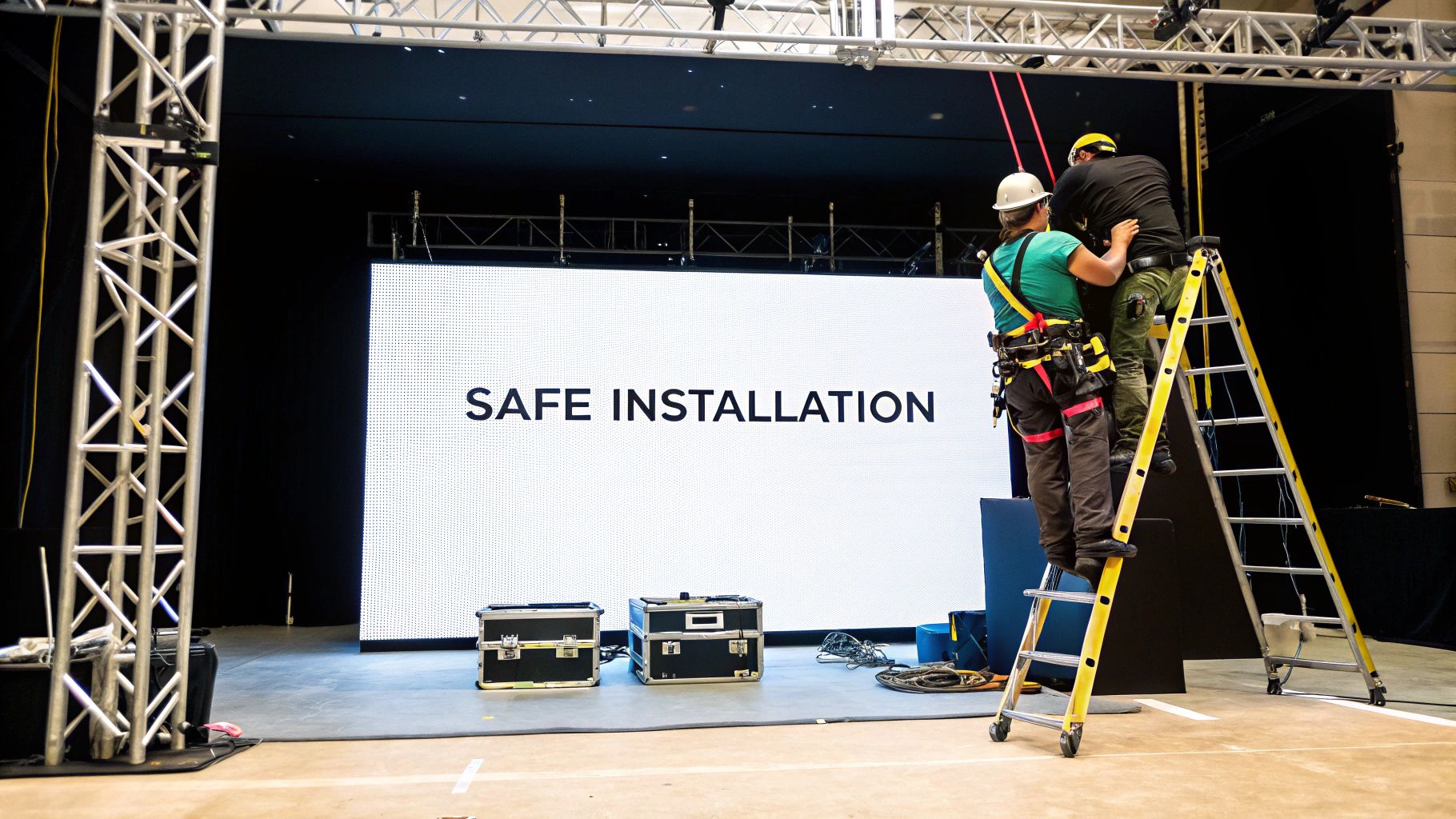
Securing your LED screen for stage isn't just a setup task; it's a serious piece of engineering where safety is everything. There are two main ways to get a screen in place, and the right choice depends on your venue, the screen's weight, and the look you’re going for.
First, there’s ground stacking. This is exactly what it sounds like: building the screen from the ground up on a specialized support frame. It’s often quicker and doesn't require hanging anything from the ceiling, which makes it a fantastic option for venues with low ceilings or places where the roof just can’t support the weight.
The other method is flying the screen. This involves suspending the entire wall from overhead trusses or certified rigging points in the ceiling. A flown screen looks incredibly clean and professional, freeing up valuable stage space below. But—and this is a big but—it absolutely requires a professional structural assessment to make sure the building can safely handle the load.
Never, ever guess when it comes to structural integrity. An LED wall is immensely heavy, and a failure could be catastrophic. Always bring in certified structural engineers and experienced riggers to verify load capacities and ensure every safety standard is met or, better yet, exceeded.
Deciding between stacking and flying is a critical step. Each has its place, and understanding the trade-offs will help you make the right call for your specific event or venue.
| Mounting Type | Best For | Key Considerations | Structural Needs |
|---|---|---|---|
| Ground Stacking | Temporary events, venues with low ceilings or no rigging points, quick setups. | Requires a level surface and a clear footprint on the stage floor. | A solid, level floor capable of supporting the total weight. |
| Flying (Rigging) | Permanent installs, large tours, creating a floating effect, maximizing stage space. | More complex and time-consuming. Requires certified riggers and equipment. | Verified overhead rigging points that can safely support the screen’s weight plus a safety margin. |
Ultimately, the best mounting solution is the one that is safest for your venue and achieves your creative vision without compromise.
Once your screen is physically in place, the next challenge is getting your beautiful content onto it. This happens through a signal chain—think of it as the screen’s nervous system, connecting the brain to the display.
The journey starts with a media source. This could be anything from a laptop running PowerPoint to a high-end media server pushing 4K video, or even a live camera feed from the show.
That signal then travels to a video processor or sending controller. This box is the brain of the whole operation. It takes the incoming video, scales it to the exact pixel dimensions of your wall, and slices it up into manageable data packets that the individual LED panels can understand.
From the processor, data cables (usually Cat6) carry the signal out to the LED panels, which work in perfect sync to create one seamless image. The software controlling all this can be as simple as a basic playback app or as powerful as professional VJ software that lets you mix video, apply effects, and create dynamic visuals on the fly.
LED screens are thirsty for electricity, and underestimating their power needs is a classic rookie mistake. A professional will calculate the total amperage required for your specific screen size and brightness, ensuring you have enough dedicated circuits to handle the load without constantly tripping breakers in the middle of a show.
Getting the power distribution right isn't just about reliability; it's a major safety issue. Using undersized cables or daisy-chaining too many panels on one circuit is a recipe for disaster and a serious fire hazard. This is another area where you absolutely need an expert to sign off on the plan.
Finally, all that power creates a lot of heat. Thermal management is crucial for protecting your investment and making sure your screen lasts. Overheating is the number one enemy of LED panels, causing components to fail early and colors to shift over time. Good planning means ensuring there’s plenty of airflow behind the screen. For permanent installations, this might even mean installing dedicated fans or an active cooling system. Keep it cool, and your screen will reward you with consistent, brilliant performance for years to come.
Alright, let's talk about the part where the vision meets reality: the budget. When you're planning for an LED screen for stage, it's so easy to get fixated on the price of the panels themselves. But trust me, that's just one piece of the puzzle. The true cost of ownership covers everything you need to get that screen running safely and looking spectacular from day one.
A smart budget looks at the whole ecosystem. Thinking through the entire project scope upfront saves you from those "surprise" expenses that can derail a project and helps you see the real investment you're making.
To put together a realistic budget, you have to look beyond the price per square meter for the LED panels. A truly professional and reliable setup has a few other essential line items you can't ignore.
Here are the key costs that should be on your radar:
Getting these elements on paper early on prevents that classic mistake of being "screen rich and system poor." You don't want a Ferrari engine with bicycle wheels.
While the initial check you write is significant, the real conversation should be about the Return on Investment (ROI). An LED screen isn't just another line item expense; it's a powerful asset that generates real, tangible value. What that value looks like will differ from one venue to the next, but the end goal is always the same: creating a deeper, more powerful connection with your audience.
An LED wall transforms a stage from a simple platform into a dynamic storytelling tool. The ROI isn’t just measured in dollars; it’s measured in captured attention, elevated brand perception, and unforgettable shared experiences.
For a concert promoter, the ROI is crystal clear. It means attracting top-tier artists who demand high-end production, which directly leads to more ticket sales and bigger sponsorship deals. For a house of worship, the return is felt in a more engaged congregation, with immersive sermon backdrops and lyrics everyone can see. In a corporate ballroom, it's all about boosting brand prestige and landing high-value clients who want to make a lasting impression.
Working with a factory-direct provider like Smart LED Inc. is one of the best ways to maximize your budget. When you cut out the middlemen, you can pour more of your funds into a higher-resolution screen or a more robust support system, which fast-tracks your return. This same logic applies not just to stages but also to all kinds of LED signs for businesses aiming for a strong visual punch. The principle is the same: a smart investment in your display technology pays for itself by dramatically improving the experience you deliver.
Stepping into the world of LED walls can feel like a big move, and it's totally normal to have a few questions rattling around. After working with countless venues, production managers, and event organizers, we've heard them all.
Here are straight-up answers to the most common questions we get, designed to clear up any confusion and help you move forward with confidence.
Think of a professional stage LED screen as a long-term workhorse, not a disposable piece of tech. A well-made, professional-grade wall is typically rated for 50,000 to 100,000 hours of runtime. For most venues, that shakes out to a solid 6 to 12 years of reliable, high-impact performance before you'd even start thinking about a replacement.
Of course, hitting that upper range depends on how you treat it. Just like any high-performance gear, a little care goes a long way. The keys to a long life are simple:
This is a big one, but the answer is way simpler than you might think. How complex your content workflow gets really just depends on your ambitions.
If you’re just looking to display static images, logos, or maybe some presentation slides, you can often get the job done with nothing more than a standard laptop. It’s that easy.
When you're ready to step up to a more professional show with live camera feeds, slick video transitions, and dynamic graphics, you'll want to use dedicated media servers and specialized software. These systems sound intimidating, but they're built to be surprisingly intuitive. With a little training, your team will be switching between sources and creating seamless visual experiences like seasoned pros.
The best part about modern control systems is that they grow with you. You can start with the basics and gradually explore more advanced features as your productions get bigger and your team gets more comfortable. It’s a tool that scales to your needs, not the other way around.
I get why people ask this, but the answer is a hard and fast no. Please, don't do it. Taking an indoor-rated LED screen outside is more than just a bad idea—it’s a surefire way to destroy expensive equipment and create a serious safety risk.
There are two massive differences between indoor and outdoor screens. First, indoor screens just aren't bright enough to compete with the sun; your image will look washed-out and weak, if you can see it at all.
More importantly, indoor screens have zero protection against the elements. They lack the IP-rated weatherproofing that shields the sensitive electronics inside from rain, humidity, and dust. Even a little bit of moisture can cause catastrophic, irreversible damage and introduce the risk of electrical shock. It's just not worth it.
Ready to transform your stage with a stunning visual centerpiece? The experts at Smart LED Inc. offer factory-direct pricing and nationwide support to bring your vision to life. Explore our high-impact LED solutions today!
Picture this: you take the flash and spectacle of a Times Square billboard, slap it on the back of a truck, and send it wherever
A wall of TV screens is exactly what it sounds like: a big, impressive display made by tiling multiple TVs together so they act like
Picking the right displays for shows can feel like a high-stakes guessing game. Get it right, and you create an immersive world that captivates your
"*" indicates required fields