
Uncategorized
Digital Billboard Truck: Boost Your Campaign with Mobile Ads
Picture this: you take the flash and spectacle of a Times Square billboard, slap it on the back of a truck, and send it wherever
Think about the walls around you. For most of history, they’ve been static, passive surfaces. But what if a wall could come alive? What if it could be a dynamic canvas for art, a powerful source of information, or a tool to shape the entire mood of a room?
That’s exactly what LED light wall panels do. They’re a technology that takes ordinary spaces and turns them into something truly extraordinary by making the walls themselves the main attraction.
At its simplest, an LED wall is a screen built from many individual light-emitting diodes (LEDs). Picture a giant TV, but instead of being one solid piece, it's made of smaller, seamless tiles that click together.
This modular design is its real superpower. It lets you build a digital display of almost any size or shape you can dream up—from a small, eye-catching accent in a hotel lobby to a colossal video wall wrapping the side of a building.
These panels have really taken off for a few simple reasons. They produce incredibly bright, vibrant visuals that look sharp even in direct sunlight. And unlike a painted mural or a printed sign, you can change the content in an instant. This gives you unbelievable flexibility for advertising, branding, or just setting the perfect vibe.
This isn't just a niche trend; it's a massive market force. The global market for LED panel lights recently hit a value somewhere between USD 25.18 billion and USD 28.71 billion. Experts are forecasting a compound annual growth rate (CAGR) of about 14.0% over the next decade, all thanks to the growing demand for smarter, more energy-efficient lighting. You can dig into the specifics in this LED panel light market report. This kind of growth shows a clear move away from old-school visuals toward something far more dynamic.
An LED wall panel isn’t just a screen; it’s an architectural element that merges digital content with physical space. It makes the wall itself the message.
Understanding this is the first step. Here’s a quick rundown of why they’re becoming so popular:
To really get what LED light wall panels can do, it helps to peek under the hood. The tech might sound intimidating, but the core ideas are surprisingly simple once you break them down. Getting these fundamentals right is what separates a jaw-dropping display from a pixelated mess.
Think of an LED panel like a massive digital mosaic, built from thousands of tiny light bulbs called pixels. Each individual pixel is actually a tiny cluster of red, green, and blue (RGB) LEDs. By mixing the intensity of these three colors, a single pixel can create over 16 million different hues. The real magic happens when all these pixels fire up in perfect harmony to paint one giant, seamless picture.
If there's one spec you absolutely need to understand, it's pixel pitch. This is just a fancy term for the distance, measured in millimeters, from the center of one pixel to the center of its neighbor.
A smaller pixel pitch means the pixels are packed tighter together. This creates a denser, higher-resolution image. It’s the difference between a crystal-clear photo and a blurry, blocky one from the early days of the internet.
For instance, a panel with a P2.5 rating has just 2.5mm between each pixel, while a P10 panel has 10mm. This single number is the key to figuring out the ideal viewing distance. A P2.5 wall looks sharp and flawless even from a few feet away, which is why it's a great fit for a corporate boardroom or a high-end retail display.
On the other hand, that massive P10 billboard you see on the highway looks perfect from hundreds of feet away, because your eyes can't distinguish the wider gaps between pixels at that distance. Putting an expensive, tight-pitch panel on a highway would be a total waste of money.
This simple concept map shows how everything ties together—great visuals are a direct result of the technology's efficiency and durability.

The map makes it clear: the stunning visuals you see are built on a foundation of smart, efficient, and long-lasting engineering.
To make this even easier, here's a quick cheat sheet for matching pixel pitch to how far away your audience will be. Getting this right is crucial for ensuring your image looks smooth and not like a grid of dots.
| Pixel Pitch (mm) | Minimum Viewing Distance (Meters) | Minimum Viewing Distance (Feet) | Common Application |
|---|---|---|---|
| P1.2 – P1.9 | 1.2 – 1.9 m | 4 – 6 ft | Boardrooms, control rooms, home theaters, broadcast |
| P2.0 – P2.9 | 2.0 – 2.9 m | 7 – 10 ft | High-end retail, corporate lobbies, museums, auditoriums |
| P3.0 – P4.9 | 3.0 – 4.9 m | 10 – 16 ft | Houses of worship, large event stages, trade shows |
| P5.0 – P10 | 5.0 – 10 m | 16 – 33 ft | Outdoor advertising (DOOH), stadiums, large venues |
Think of this table as a starting point. It helps you avoid overspending on a pitch that's too tight for your needs or, worse, choosing one that's too wide and gives your audience a pixelated view.
Next on the list is brightness, which we measure in nits. It’s a simple metric: one nit is about the same amount of light produced by a single candle in a one-square-meter area. An indoor screen in a mall might only need 500-1,000 nits to look bright and punchy. But take that screen outside and put it in direct sunlight? It’ll get washed out completely. Outdoor signs need some serious power—often 5,000 nits or more—to cut through the glare.
Finally, you have the IP rating (Ingress Protection), which is basically a durability score. It tells you how well the panel is sealed against solids (like dust) and liquids (like rain). The rating has two numbers. The first tells you its protection against solids, and the second is for liquids. A common outdoor rating like IP65 means the panel is totally sealed against dust and can handle being sprayed with jets of water from any direction. This is what gives you peace of mind that your investment won't fail during the first big storm.
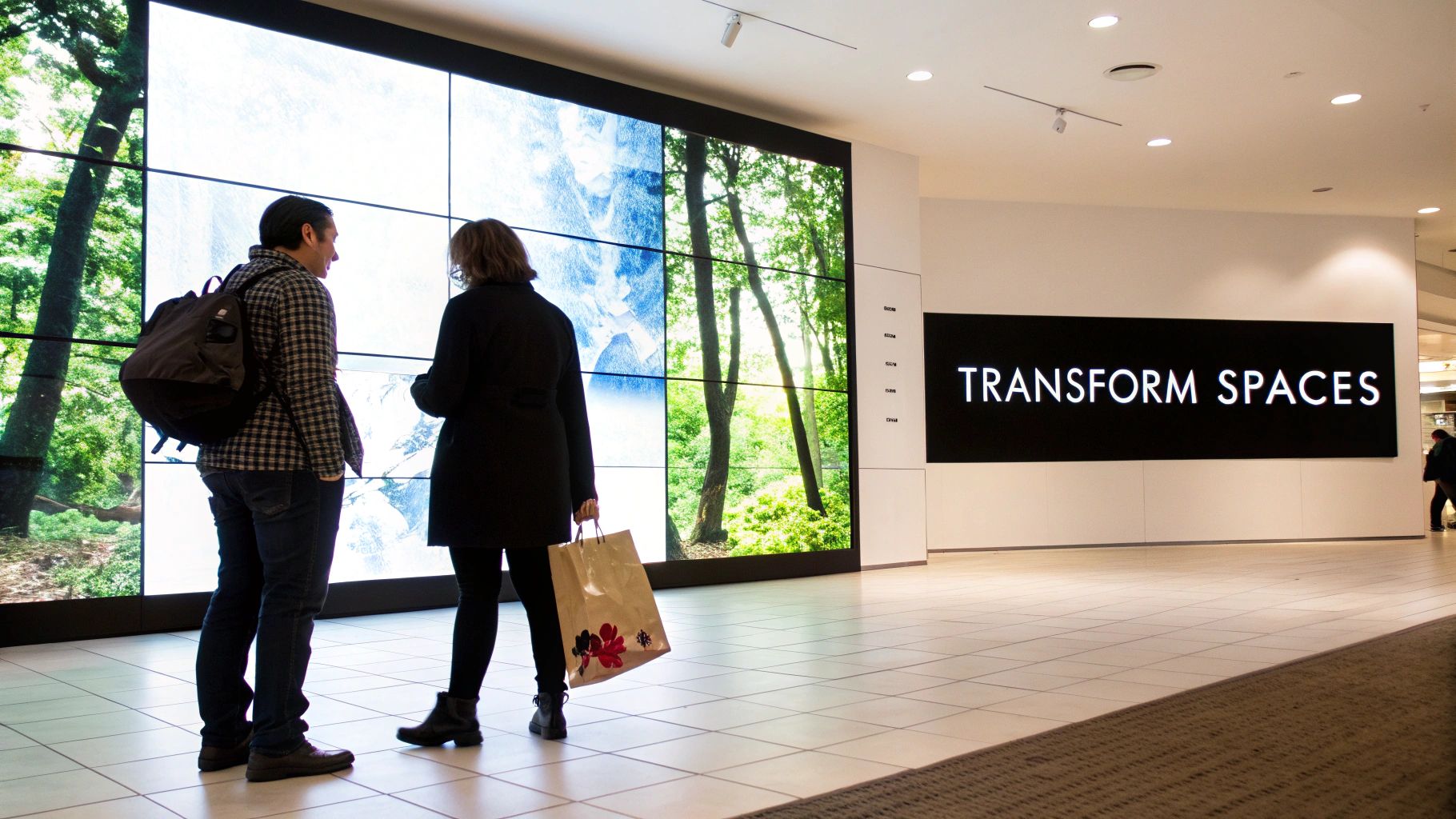
The tech specs for led light wall panels are one thing, but their true power comes alive when you see them out in the wild. These displays are far more than just screens; they’re architectural tools that solve real problems and create tangible value across dozens of industries. It’s time to move from specs to spectacle and see how businesses are using this technology to completely reshape their physical environments.
In the cutthroat world of retail, grabbing a shopper's attention is everything. Brick-and-mortar stores are deploying massive LED walls to create immersive in-store experiences that literally stop foot traffic cold. Forget static posters. A fashion retailer can now run a full-motion video of a runway show, instantly connecting the clothes on the rack with a high-end, aspirational lifestyle.
This approach turns a simple shopping trip into a memorable brand interaction. By cycling through dynamic promotions, new arrivals, or even user-generated content, retailers can dramatically increase how long shoppers stick around and influence buying decisions right at the point of sale. For a deeper dive, check out our guide to powerful LED signs for businesses.
A corporate lobby is the very first impression a company makes. An LED video wall transforms this often-ignored space from a stuffy waiting area into a vibrant, modern communication hub. Companies are using them to display welcome messages, share brand stories, showcase real-time data visualizations, and broadcast company news, setting an engaging and professional tone from the second someone walks in.
An LED wall in a corporate setting does more than just look good—it reinforces brand identity and communicates a forward-thinking culture from the moment someone walks through the door.
This technology is fast becoming a cornerstone of modern corporate design. The global LED video wall market is expected to more than double, exploding from USD 6.85 billion to about USD 15.0 billion by 2032. This meteoric rise is being fueled by adoption in corporate and control-room applications across North America and Europe.
In mission-critical environments like network operations centers or emergency dispatch rooms, clarity is non-negotiable. LED walls provide a vast, seamless canvas perfect for displaying complex data streams, multiple surveillance feeds, and intricate logistical maps all at once. Their incredible brightness and contrast ensure every piece of information is perfectly legible from any angle, empowering teams to make the right call in seconds.
It’s not just the commercial world getting an upgrade; LED walls are making a huge splash in high-end homes. Discerning homeowners are installing them to create unparalleled home theater experiences, with the kind of deep blacks and vibrant colors that leave traditional projectors in the dust. And when the movie is over? These walls can display breathtaking digital art, turning a living room into a private gallery.
Visualizing the final look is key. Advanced tools like 3D rendering for interior design can help you see exactly how these panels will redefine a space before a single one is installed.
Diving into the world of LED light wall panels can feel like swimming in a sea of technical jargon. To keep from getting lost, the best approach is to start with your goals, not the technology. If you know exactly what you want to achieve, every decision that follows becomes clearer, ensuring you invest in a solution that actually works for you.
This isn't just about buying a screen; it's about creating an experience. The perfect panel for a massive outdoor billboard would be a terrible choice for an intimate corporate lobby. This checklist is built to help you ask the right questions and focus on what truly matters for your project, so you can avoid expensive mistakes.
Before you even glance at a spec sheet, ask yourself one simple question: What is this wall’s main job? The answer will instantly shrink your list of options.
Next up, you have to think about where the panels will actually live. The environment itself will dictate critical technical needs like brightness and durability.
A classic mistake is falling in love with a panel during an indoor demo without thinking about its final home. An indoor-rated panel will get completely washed out by sunlight, and an overly bright outdoor panel can feel blindingly aggressive in a small indoor space.
Ask yourself these crucial questions about the location:
For a deeper dive into making these choices, our article on how to buy an LED sign offers a ton of additional insights. A successful installation starts with a solid plan, and this checklist is your roadmap to getting it right.
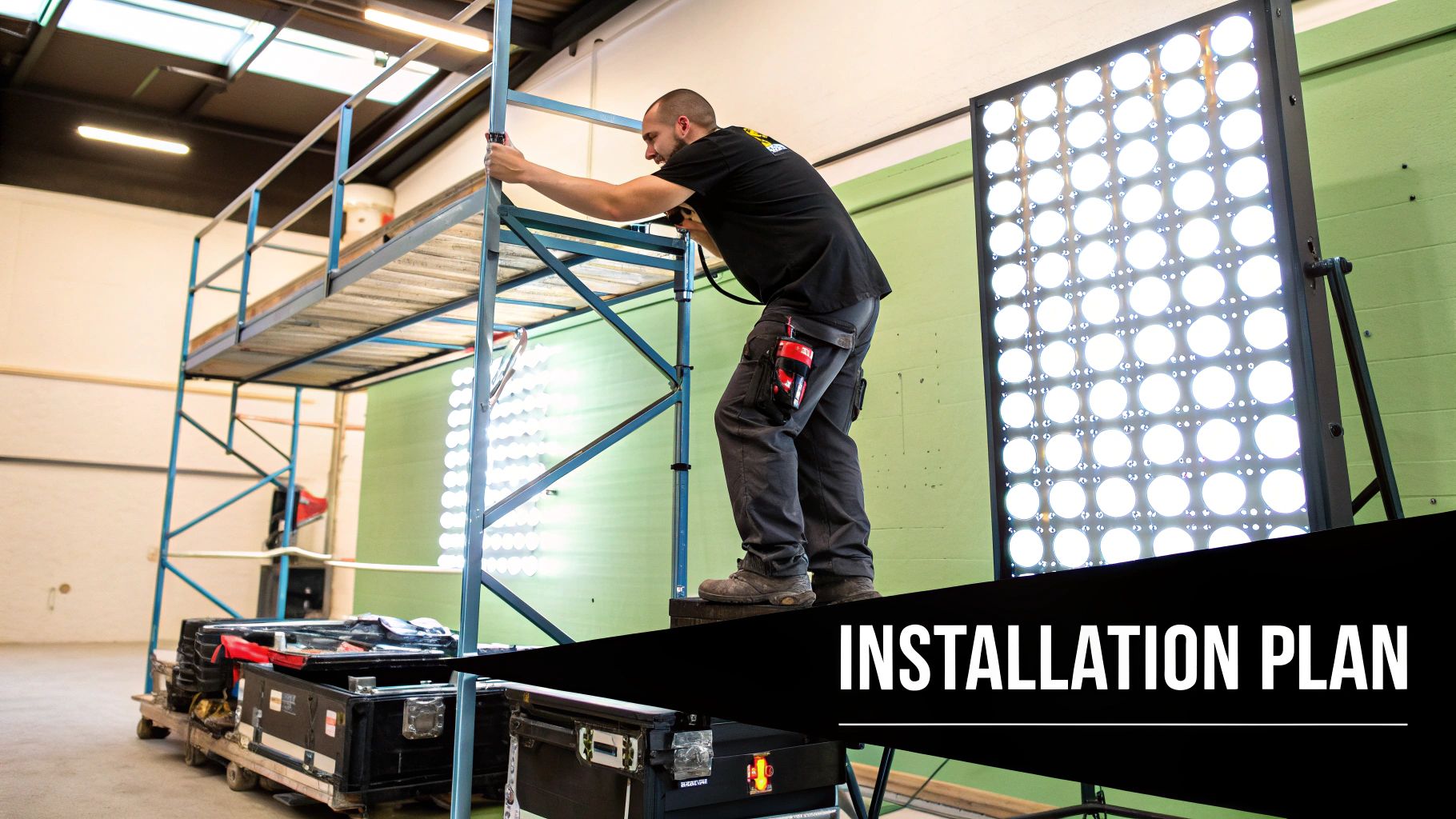
A killer LED wall install is about so much more than just hanging screens. It’s a complete ecosystem where every single piece has to play nice. Proper planning is what separates a display that looks fantastic on day one from one that performs reliably for years to come.
Thinking through the nitty-gritty of mounting, power, and control ahead of time is how you sidestep the common traps that lead to costly rework or a disappointing final product. This is where the pros really shine.
First things first: the physical structure. How are these panels actually going to be supported? A simple, flat wall mount is the go-to for many, but the beauty of these modular panels is their creative potential. We're talking massive curved video walls, displays suspended from the ceiling, and all sorts of other unique arrangements.
No matter the design, the wall or structure behind it has to be up to the task. These panels have some serious heft when you add them all up. That’s why a professional structural assessment is non-negotiable for any big installation. It’s the only way to be certain the mounting surface is sound and the hardware you’ve chosen can handle the load without issue.
Think of your LED wall's backend hardware as its central nervous system. The panels may be the face, but the controller is the brain, the power supplies are the heart, and the cooling system is the lungs. If any one of them fails, the whole system suffers.
Beyond just getting the panels on the wall, you have to plan for the gear that actually brings your display to life. These are the unsung heroes of your system.
When you're budgeting for LED light wall panels, looking only at the sticker price is like judging a car by its paint job. It tells you almost nothing about the real cost. The full financial picture only comes into focus when you consider the total cost of ownership (TCO) and, more importantly, the return on your investment (ROI). This is how you build a rock-solid business case for what is a significant—but incredibly valuable—capital expense.
The initial purchase of the panels is just the starting line. A complete budget has to account for several other critical expenses to avoid nasty surprises down the road. You’ll need to factor in professional installation, content management software (CMS), and a plan for ongoing maintenance. For a detailed look at these factors, especially for outdoor displays, check out our analysis of outdoor LED sign costs.
Figuring out your ROI isn’t just about crunching numbers; it’s about defining what success looks like for you.
For a retail store, the ROI from a dynamic LED wall could be a tangible 15% increase in foot traffic or a direct lift in sales for whatever you’re promoting. For a corporate lobby, the return might be less direct but just as powerful—think enhanced brand perception during client visits or a noticeable boost in employee morale.
Your LED wall isn't just a cost center; it's a value-generating asset. The key is to measure what matters most to your organization, whether that’s sales, brand image, or operational efficiency.
One of the biggest long-term financial wins comes from energy savings. There's a reason everyone is switching to LED technology, and it boils down to massive efficiency gains. In 2021, LEDs already accounted for about 71% of all lighting sales, and their adoption is projected to save hundreds of terawatt-hours of energy every year.
With lifespans that often exceed 50,000 hours, these panels drastically cut down on replacement and energy costs compared to older, clunkier technologies.
Finally, a complete cost analysis looks at the entire product lifecycle. It’s smart to think beyond the initial expenses and understand what happens at the end of the road, including what electronic waste recycling entails for these advanced panels. This kind of forward-thinking ensures your investment is not only impactful but also responsible.
To wrap things up, let's tackle a few of the most common questions that pop up when people start thinking about bringing an LED light wall into their space. Getting clear, straightforward answers is the best way to move forward with confidence.
A high-quality LED wall is absolutely built for the long haul. Most are rated for a seriously impressive 50,000 to 100,000 hours of operation.
What does that mean in the real world? It translates to roughly 6 to 11 years of continuous, 24/7 use before the brightness naturally fades to about half its original punch. Of course, the final lifespan always comes down to the panel's build quality, how hard you run it, and the environment it lives in.
Think of an LED wall's lifespan like a car's mileage. It has a theoretical limit, but consistent care and proper usage are what truly determine how long it will perform reliably.
The short answer is: almost anything you can dream up. Modern LED walls are incredibly versatile media players, not just simple screens.
You can throw a massive range of content at them, including:
Content is typically fed to the wall through a dedicated controller that understands all the standard video and image formats, making it a breeze to get your message up on the big screen.
You might be surprised to hear that maintaining LED light wall panels is refreshingly straightforward. The modular design is the real hero here.
If a single section of the display ever has an issue, you can usually just swap out that specific module in minutes. There's no need to take the entire wall apart. Routine care is even simpler—mostly just occasional light cleaning and checking to make sure all connections are snug. The real key? Choosing a partner with a solid warranty and responsive support to ensure any potential hiccups are smoothed out fast.
Ready to transform your space with a stunning and reliable LED display? Smart LED Inc. offers factory-direct pricing on indoor and outdoor solutions, backed by expert support from design all the way through to installation.
Picture this: you take the flash and spectacle of a Times Square billboard, slap it on the back of a truck, and send it wherever
A wall of TV screens is exactly what it sounds like: a big, impressive display made by tiling multiple TVs together so they act like

Picking the right displays for shows can feel like a high-stakes guessing game. Get it right, and you create an immersive world that captivates your
"*" indicates required fields