
Uncategorized
Digital Billboard Truck: Boost Your Campaign with Mobile Ads
Picture this: you take the flash and spectacle of a Times Square billboard, slap it on the back of a truck, and send it wherever
Imagine taking a regular poster and turning it into something impossible to ignore—a vibrant, glowing display that seems to light up from within. That’s the magic of LED light boxes. They’re sleek, modern frames with built-in, energy-efficient lighting that makes any graphic look brighter, sharper, and far more professional.
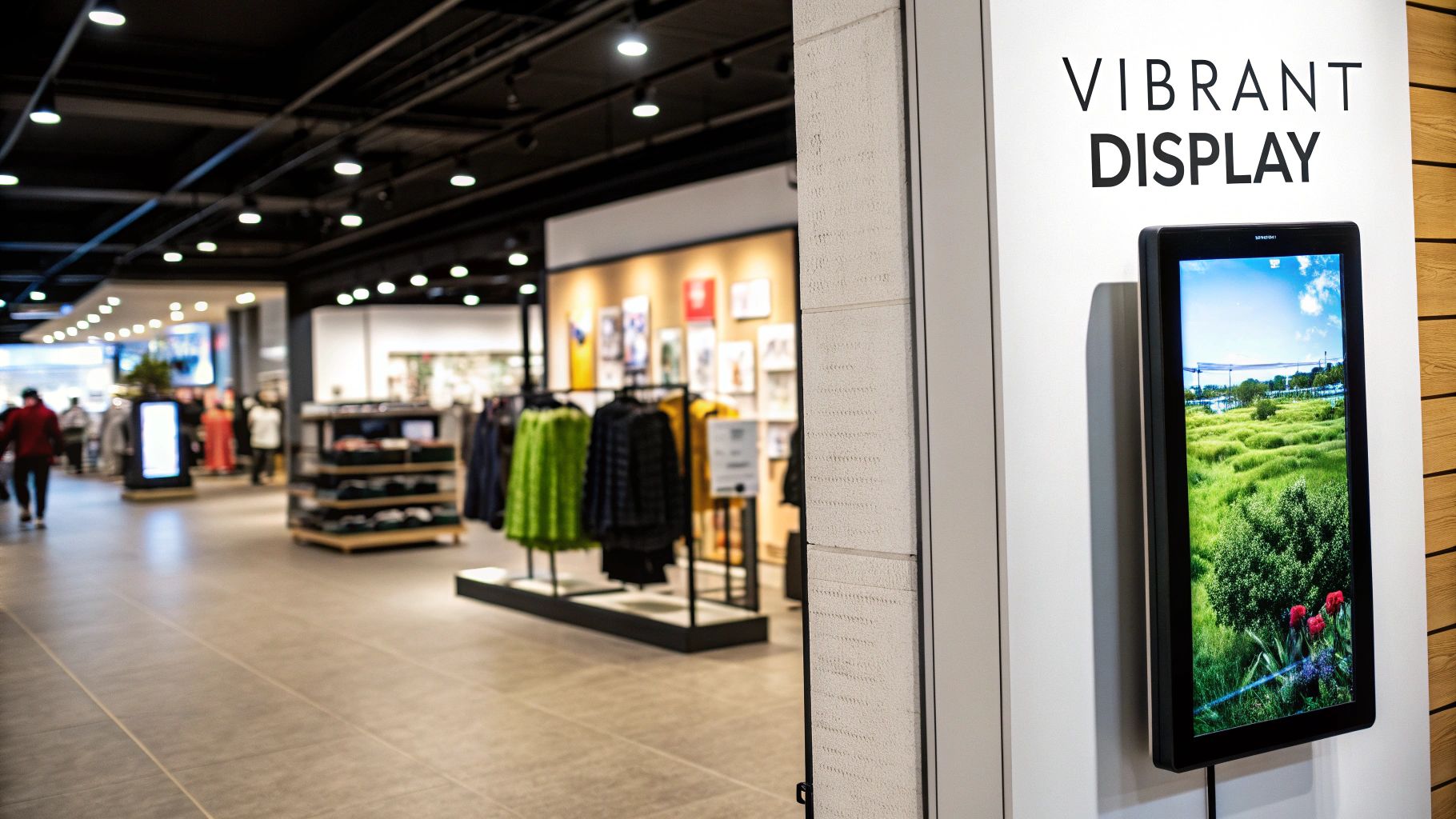
At its core, an LED light box is a display case that uses internal light-emitting diodes (LEDs) to illuminate a graphic from behind. It sounds simple, but the effect is powerful. It’s the difference between a forgotten flyer on a bulletin board and a brilliant advertisement that stops customers right in their tracks.
These illuminated displays are quickly taking the place of older, clunky fluorescent signs for a few very good reasons. This isn't just a minor upgrade; it's a huge step forward in visual communication, blending great aesthetics with down-to-earth practicality.
The real draw of LED light boxes is their ability to make graphics pop. The even backlighting gets rid of shadows and hot spots, so the entire image is perfectly and consistently lit. This brings out sharper details, richer colors, and gives off a high-end feel that instantly elevates how people see your brand.
But it’s not just about looks. The practical benefits are just as impressive.
In a crowded environment, visibility is everything. An illuminated display acts like a beacon, naturally drawing the human eye and ensuring your message is not just seen, but noticed. It's an essential tool for cutting through the visual noise.
From busy retail stores and restaurants to sophisticated corporate offices and trade show booths, these displays are incredibly versatile. They can be used to highlight promotions, showcase products, guide visitors with wayfinding signs, or even display personal art at home with a gallery-quality touch.
This guide will walk you through everything you need to know—from choosing the right type and understanding the tech specs to installation and long-term care—to help you find the perfect solution for your goals.
Not all LED light boxes are created equal. Getting that stunning visual pop starts with picking the right one for your space and your goal. It really boils down to two things: how the light is projected and how people are going to see your display.
Think of it like lighting a room. Sometimes you want a soft, ambient glow for a sophisticated mood. Other times, you need a bright, direct spotlight to make a centerpiece impossible to ignore. LED light boxes work on the same principle, with different designs engineered for very different effects.
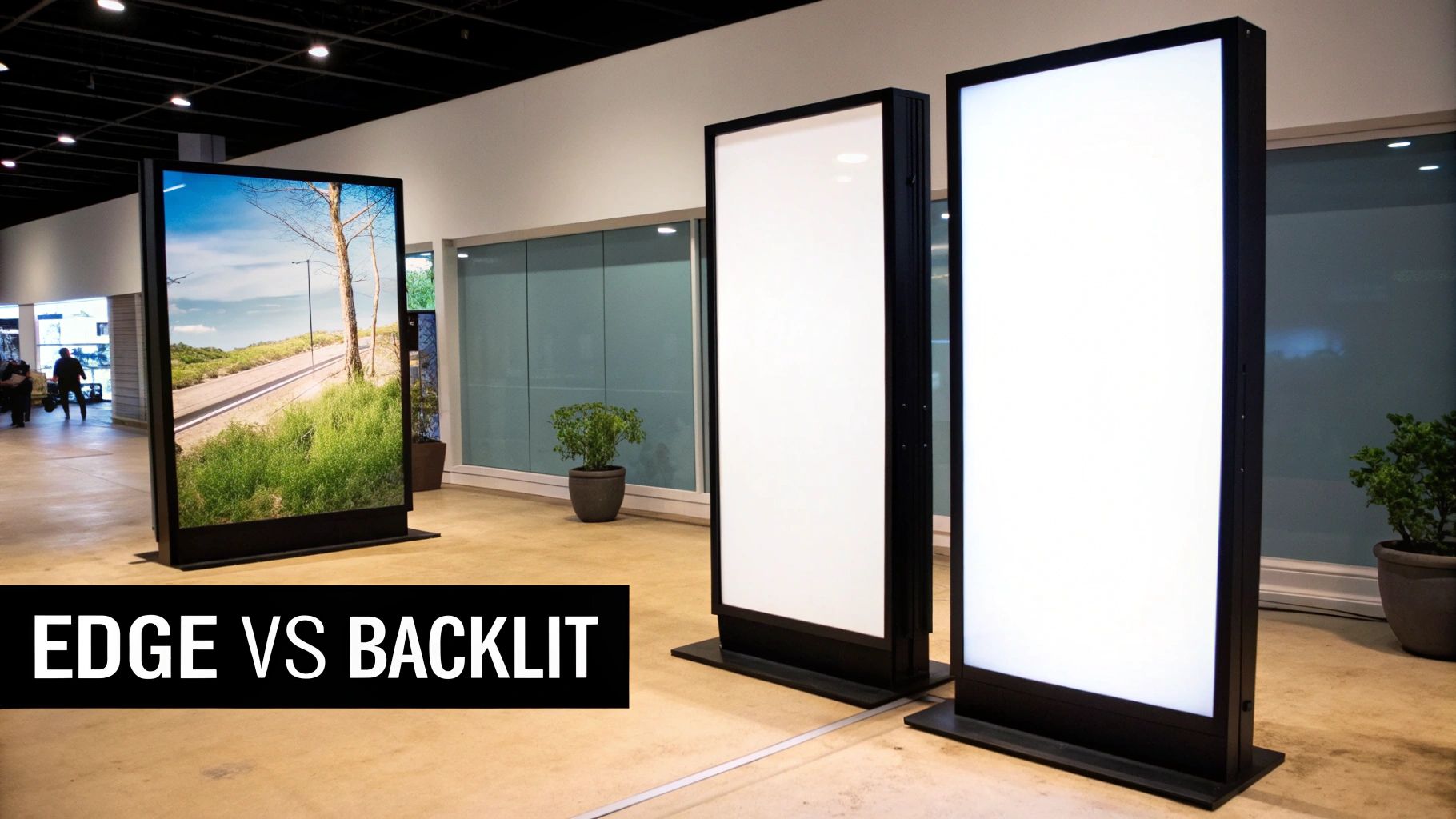
To make things simple, let's break down the most common types.
This table gives you a quick snapshot of the main options, helping you match the light box to your specific needs.
| Light Box Type | Best For | Key Characteristic |
|---|---|---|
| Edge-Lit | Sleek, modern spaces like retail stores, galleries, and corporate offices. | Incredibly thin and lightweight profile for an elegant, minimalist look. |
| Backlit | High-traffic, bright environments like trade shows, airports, and malls. | Maximum brightness and visual impact, ensuring the graphic can't be missed. |
| Single-Sided | Wall-mounted applications such as posters, menus, and feature displays. | Displays a graphic on one side, designed to be viewed from the front. |
| Double-Sided | Open areas where it can be seen from all directions, like aisles or windows. | Suspended or free-standing, it shows graphics on both the front and back. |
Each type has its own strengths, so let's dig a little deeper into what makes them tick.
Edge-lit LED light boxes are the champions of minimalist design. Imagine a picture frame where the lights are cleverly tucked away along the inside edges, pointing inward. A special light-guiding panel grabs that light and spreads it perfectly evenly across your graphic, making it glow from within.
This slick design is what allows for an incredibly thin and lightweight profile. They're perfect for sophisticated spaces where you want the graphic to shine without a bulky frame getting in the way.
On the other end of the spectrum, you have backlit LED light boxes. Often called direct-lit, these units prioritize raw power and brightness over everything else. Instead of lights at the edges, they have a full grid of LEDs sitting directly behind the graphic. This setup floods the display with intense, uniform light from corner to corner.
Think of a high-end TV screen; that direct backlighting ensures there are zero dim spots and the colors are as vibrant as possible. This approach does require a deeper frame to house the LED grid and properly diffuse the light, but the result is an unmissable, high-impact display. These are the go-to for grabbing attention in bright, busy places.
Backlit displays are built for pure visual punch. When your message absolutely has to be seen—even from across a brightly lit trade show floor—the uncompromising brightness of a backlit box is your best friend.
Finally, you need to think about your audience's point of view. Will they see the display from one direction, or from all angles?
Understanding these core differences is the first step. An edge-lit box might look stunning in a quiet gallery, while a powerful backlit unit is a must-have for a bustling trade show. Marrying this knowledge with the broader strategy behind LED signs for businesses will help you make a choice that truly makes your visuals shine.
Diving into the technical side of LED light boxes can feel like trying to learn a new language. You’ll see terms like lumens, Kelvin, and CRI thrown around, and it's easy to get overwhelmed. But these aren't just buzzwords; they’re the keys to figuring out how a display will actually perform in the real world.
Once you know what they mean, you can look at a product sheet and know exactly what you're getting. No more guesswork. You’ll be able to confidently pick a light box that brings your graphics to life with the perfect brightness, color, and clarity. Let's break down the jargon into something that actually makes sense.
The number one job of an LED light box is to get noticed. The metric that tells you how well it does that job is brightness, which you'll usually see measured in lumens or lux. Think of it as the power dial on your display—the higher the number, the more it’s going to pop.
Lumens measure the total light shooting out of the LEDs, while lux tells you how intense that light is over a certain area. For all practical purposes, a bigger number for either one means a more powerful, attention-grabbing display.
This is where context is everything. A light box sitting in a sunny storefront window has to fight against direct sunlight, so it needs some serious punch—often 2,000 lux or more. On the other hand, a display in a moody art gallery or a sleek corporate lobby can get away with a much softer glow without looking harsh or out of place.
Ever notice how sunlight feels different throughout the day? The warm, golden glow of sunrise is a world away from the bright, almost blue light of noon. That quality is called color temperature, and it's measured in Kelvin (K). It’s what sets the entire mood for your display.
Lower Kelvin numbers give you a warm, inviting light. Higher numbers produce a cooler, crisper light.
Warm White (2700K – 3000K): This is that soft, yellowish glow you get from an old-school incandescent bulb. It’s perfect for creating a cozy, welcoming vibe in places like restaurants, spas, or high-end boutiques.
Neutral White (4000K – 5000K): This is your middle-of-the-road, clean white light that’s pretty close to natural daylight. It’s a workhorse for most commercial settings because it shows colors accurately without leaning too warm or too cool.
Cool White (6000K – 6500K): This light has a noticeable blueish tint, giving off a sharp, modern, high-energy feel. You’ll often see it in electronics stores, hospitals, or anywhere you want a very clean, almost clinical look.
Choosing the right color temperature is all about matching the light to your brand’s personality. A warm glow feels classic and comfortable. A cool white feels sharp, clean, and contemporary.
The Color Rendering Index (CRI) is a simple 0-to-100 scale that tells you how accurately a light source shows off the true colors of an object compared to natural sunlight. If you sell anything visual—from food to fashion to art—this might be the most important spec on the list.
A low CRI can completely sabotage your visuals. Colors will look dull, washed out, or just plain wrong. Imagine a restaurant menu where the juicy red tomatoes in your photos look brown and unappetizing, or a clothing display where a navy blue sweater looks black. That's what bad color rendering does.
For any serious commercial use, you should be looking for a CRI of 90 or higher. This ensures your product photos, brand logos, and artwork are seen exactly as you intended, with rich, vibrant, and accurate colors. It’s all about protecting your brand’s integrity and making sure your visuals look their absolute best.
So what’s the secret behind that perfectly smooth, even glow? It’s the diffusion panel. This is a layer of material, usually acrylic, that sits between the LED lights and your graphic. Its one and only job is to scatter the light so you don't see any distracting "hot spots" or the individual dots of the LEDs.
Without a good diffusion panel, the lighting would look patchy and amateurish, ruining the entire effect. It’s the unsung hero of the light box, transforming a grid of bright little bulbs into a flawless, seamless canvas of light. It’s what guarantees your graphic is lit perfectly from one edge to the other.
Forget the technical specs for a moment. The real magic of an LED light box is what it can do for a business, a brand, or even a living room. These aren't just illuminated signs; they're strategic tools designed to grab attention, create an atmosphere, and drive actual growth. From the buzz of a retail floor to the quiet professionalism of a corporate lobby, their impact is immediate and undeniable.
This incredible adaptability is why they're popping up everywhere. The demand for these displays is exploding, with the global LED thin light box market valued at USD 1,250.75 million and projected to more than double to USD 2,650.50 million by 2032. That's not just a trend; it's a clear signal that businesses are investing heavily in technology that simply works to capture attention.
In the cut-throat world of retail, an LED light box is the difference between a potential customer walking right past your store or stopping in their tracks. When used as a feature display, they wrap products in a perfect halo of light, making colors burst and fine details stand out. It gives merchandise a premium feel that can directly influence a customer's decision to buy.
Restaurants and cafes see a similar boost. Picture a sleek, backlit menu board that’s crystal clear from across the room, even during a chaotic lunch rush. This not only makes ordering easier for customers but also allows for vibrant food photography that gets stomachs rumbling. It’s a simple switch that replaces dated, static signs with a look that’s both dynamic and polished.
The impact doesn't stop at the storefront. In a corporate setting, an LED light box becomes a sophisticated welcome sign in the lobby, reinforcing your brand identity the second a client walks through the door. They also work brilliantly as elegant wayfinding tools, guiding visitors with illuminated maps or directories that are impossible to miss.
And at trade shows? Visibility is everything. A portable LED backdrop is like a beacon in a crowded convention hall, pulling attendees toward your booth with bright, crisp graphics. Because they’re modular and lightweight, setup is a breeze, and the powerful glow ensures your brand outshines competitors still relying on old-school, non-lit displays.
An illuminated display transforms a simple graphic into an experience. It creates a focal point that naturally draws the eye, ensuring your message isn't just seen—it's remembered long after the encounter.
For event planners looking to create a truly memorable atmosphere, these light boxes offer endless possibilities, including some breathtaking wedding reception lighting ideas.
The incredible versatility of LED light boxes has also made them a hit for personal use. In home decor, they can turn a family portrait, a favorite travel photo, or a piece of digital art into a gallery-quality centerpiece. The backlighting adds a depth and vibrancy that a traditional print just can't touch, creating a custom art piece with a modern, sophisticated flair.
Here’s a quick look at how they’re being used in different settings:
Whether it’s boosting sales in a shop or making a lasting impression at a conference, the return is clear. They deliver stronger brand visibility, better customer engagement, and long-term savings thanks to their incredible energy efficiency.
Choosing the right LED light box is about more than just picking a size that fits. To get it right, you need to step back and think through your goals and the environment it'll live in. This is about making a smart investment that pays off.
Think of it like designing a custom solution from the ground up. By answering a few key questions about your space, your message, and your long-term needs, you can cut through the noise and find the perfect product for your project.
First things first: where is this light box going? Is it for a dimly lit interior hallway, or will it be competing with the sun in a storefront window? The ambient light in the space will tell you how much brightness you need, which is measured in lumens or lux. A display trying to outshine direct sunlight needs a lot more power to grab attention.
Just as important is figuring out what you want the light box to do. Are you trying to drive sales for a specific product, build up your brand’s image, or just get critical information to people? Nailing down your main goal is key to choosing the right type of display and the best spot to put it.
To give you a better idea, here's a simple decision tree that maps common goals to potential light box solutions.
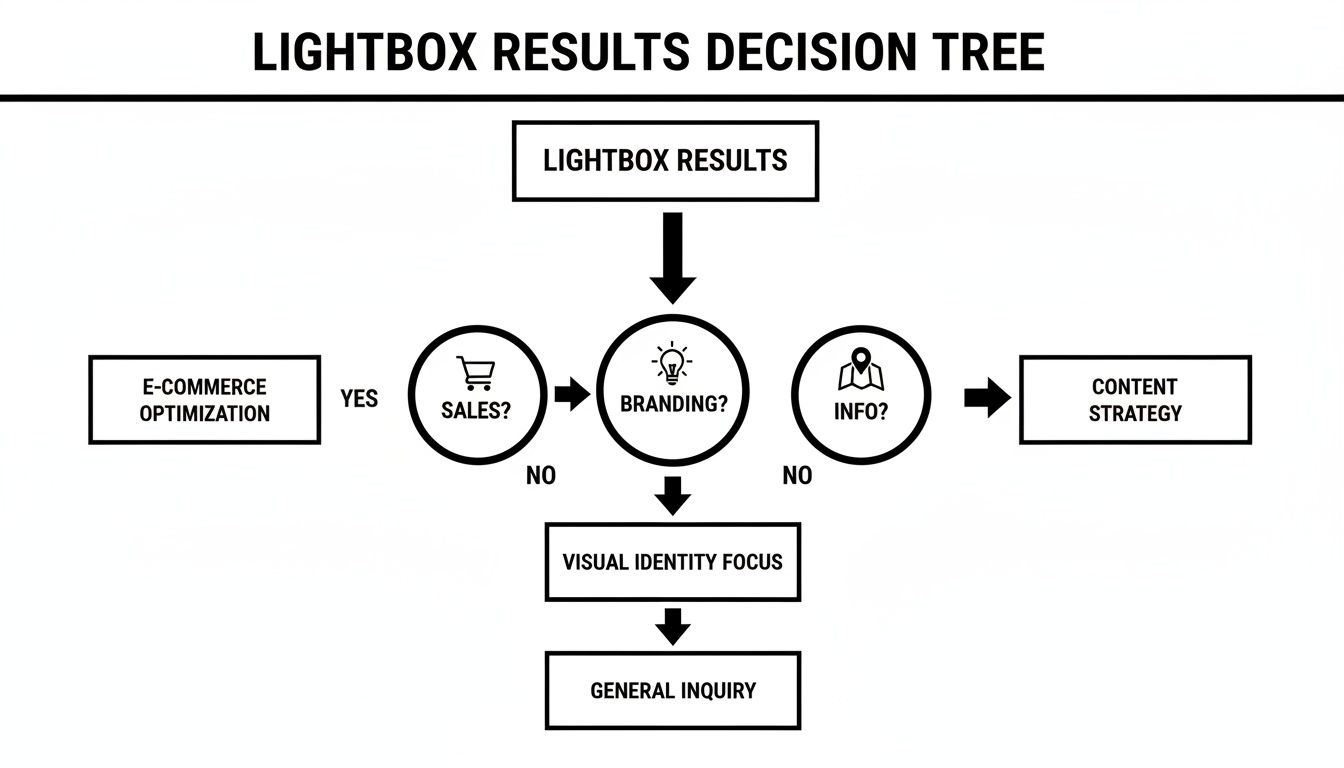
As you can see, different business goals—whether it's boosting sales, building brand recognition, or providing information—naturally lead to different display strategies and choices.
Next up, let's talk about the graphic itself. The material you print on makes a huge difference in the final look and feel.
The graphic material you pick will often point you toward a specific type of frame, like a snap frame for quickly swapping out film prints or a silicone edge graphic (SEG) frame for that taut, clean fabric look. You also have to think about the practical side of installation. Can you get away with a simple wall-mounted unit, or do you need something more complex like a ceiling-hung or freestanding system? Always plan for how you'll get power to it and make sure the wall or ceiling can handle the display's weight.
Finally, you have to look beyond the sticker price and think about the total cost of ownership. While your budget is obviously a big deal, the cheapest option upfront isn't always the smartest move in the long run. There's a reason the LED light box market is projected to grow at a CAGR of 8.2% from 2024 to 2032. It’s part of a huge shift in the global LED lighting market, which was already valued at USD 81.77 billion and is still climbing. People are investing in durable, efficient solutions.
When you're looking at the cost, remember that a quality LED light box is an asset, not just an expense. Its energy efficiency, low maintenance, and long lifespan all add up to a strong return on your investment over time.
Factor in the real energy savings you’ll get from efficient LEDs and the fact that you won’t be spending much time or money on maintenance. A well-built light box with a solid frame and quality parts will work reliably for years, giving you continuous value. If you want to get a clearer picture of long-term value, our guide on understanding outdoor LED sign costs can help you plan your budget.
Your LED light box is a powerful visual asset, and like any valuable tool, a little care goes a long way. Protecting your investment isn’t complicated, but proper installation and a bit of routine maintenance are the keys to making sure your display looks brilliant for years.
While the specifics will change depending on your model—a wall-mounted snap frame installs differently than a double-sided unit hung from the ceiling—the golden rule is simple: always follow the manufacturer’s instructions. This is about more than just getting it to work right; it’s about safety. Make sure your mounting surface can handle the weight and that all the electrical connections are secure.
Keeping your light box in pristine condition is easier than you think. You don’t need a specialized toolkit, just a few good habits.
The real value of your light box comes from using it as a living, breathing part of your marketing, not just a static sign. Its proven impact is why the global light box market is already valued at USD 5.3 billion and is on track to hit USD 8.9 billion by 2033. This boom is fueled by a new generation of advanced LEDs that slash energy use by up to 75%. You can dive deeper into this market expansion and the technology behind it on verifiedmarketreports.com.
A well-placed and well-managed LED light box is more than a sign; it's a continuous conversation with your audience. Strategic updates keep that conversation fresh, relevant, and profitable.
Think strategically. Where is the foot traffic heaviest? That’s where your light box goes. Plan your graphic updates around seasonal promotions, new product launches, or special events. This keeps your messaging current and gives people a reason to stop and look again.
When you treat your display as an active piece of your strategy, it will deliver continuous value. For larger-scale visual communications, these displays can be a fantastic component of a broader digital outdoor signage strategy.
Even after you've got a handle on the technology, a few practical questions always pop up. It's totally normal. Let's run through the most common things people ask right before they're ready to pull the trigger, so you can move forward feeling confident.
We'll get into the nitty-gritty—from how long these things actually last to whether you can stick one outside.
You’re going to be impressed. The LEDs in a well-made light box are built to last, typically rated for 50,000 hours or more.
To put that into real-world terms, if you had your display running for 12 hours every single day, it could go for over 11 years before you’d even need to think about a replacement. It's a huge step up from old-school fluorescent bulbs that burn out, flicker, and just become a maintenance headache. With LEDs, you're investing in a set-it-and-forget-it asset for the long haul.
Not at all. In fact, most modern LED light boxes are designed so that anyone on your team can swap out the graphics in a minute or two, no special tools needed. This is a massive plus for any business that needs to keep its marketing fresh.
You’ll typically see two dead-simple systems:
This is a total game-changer for dynamic marketing. It means you can roll out a new promotion, highlight seasonal products, or update your branding with almost zero downtime. Your displays stay current, and you stay relevant.
This is a big one, and it's all about safety. You can only use a light box outside if it is specifically built and rated for outdoor use. An indoor model just won't cut it. It isn't sealed to protect against rain, humidity, or dust.
Putting an indoor-rated box outside—even somewhere that seems covered, like a porch—is a serious electrical hazard. It will also instantly void your warranty and the unit will fail, guaranteed. If you need an outdoor display, you have to look for a model with a proper IP (Ingress Protection) rating. It’s the only way to ensure it’s safe, durable, and built to withstand the elements.
Ready to light up your brand with a display that actually gets results? The team at Smart LED Inc. can help you design, source, and install the perfect LED light box for your space. Explore our custom options and get a quote today.
Picture this: you take the flash and spectacle of a Times Square billboard, slap it on the back of a truck, and send it wherever
A wall of TV screens is exactly what it sounds like: a big, impressive display made by tiling multiple TVs together so they act like

Picking the right displays for shows can feel like a high-stakes guessing game. Get it right, and you create an immersive world that captivates your
"*" indicates required fields