Uncategorized
Digital Billboard Truck: Boost Your Campaign with Mobile Ads
Picture this: you take the flash and spectacle of a Times Square billboard, slap it on the back of a truck, and send it wherever
When you start looking into LED signs, the first question is always about the price. The honest answer? It varies—a lot. You could spend under $1,000 for a simple sign to hang in your window or over $200,000 for a massive digital billboard that stops traffic.
For most businesses looking for a solid outdoor display, the sweet spot is usually between $15,000 and $45,000. That initial investment is shaped by a few key things: the sign's size, its picture clarity, and whether it’s built to live indoors or brave the elements outside.

Trying to nail down the cost of an LED sign can feel like you're chasing a moving target, but it really comes down to a few core principles. I always tell people to think of it like buying a car. A basic sedan will get you where you need to go just fine, but a high-performance sports car with every upgrade is in a completely different league—and price bracket. They're both cars, but what’s under the hood and inside the cabin makes all the difference.
It's the same with LED signs. Every display is a custom assembly of technology chosen to do a specific job. The final price tag is a direct reflection of those choices. We’ll break down all the details in this guide, but let's start with a high-level look at what really moves the needle on price.
At its heart, the cost of any LED display comes down to three big factors. Get these, and you're already halfway to making a smart investment.
The question I hear most often is, "Why does this sign cost so much more than another one of the same size?" The answer, almost every single time, is in the resolution and brightness—the hidden specs that truly define how well a sign performs in the real world.
To give you a practical starting point, here’s a breakdown of what you can expect to invest for different types of signs. This table outlines the typical hardware-only price ranges for the most common applications. Think of these as a starting point to help you find the category that best fits your vision.
| Sign Type | Common Use Case | Estimated Price Range (Hardware Only) |
|---|---|---|
| Small Storefront Signs | Retail shops, cafes, local services | $500 – $5,000 |
| Medium Monument Signs | Business parks, churches, schools | $15,000 – $45,000 |
| Large Digital Billboards | Highway advertising, major venues | $100,000 – $300,000+ |
| Indoor Video Walls | Corporate lobbies, event stages | $10,000 – $75,000+ |
Remember, these are just estimates for the display hardware itself. The final price will shift based on the specific features you choose, like resolution and control systems.
Figuring out what an LED sign costs is a lot like shopping for a new TV. You can get a basic, smaller screen that does the job for a reasonable price, or you can invest in a massive 8K display with mind-blowing color and detail. The same logic applies to LED signs—it’s the technology packed inside that really dictates the final price tag.
Let’s break down the essential specs that influence the cost of an LED sign. These aren't just line items on a quote; they're the building blocks that determine your sign's performance, clarity, and overall impact.
This one’s pretty straightforward. A larger sign needs more of everything: more LED modules to make up the screen, a bigger aluminum cabinet to house it all, and more power supplies to bring it to life.
But size isn’t just a simple cost multiplier. A bigger display commands a more powerful presence, grabbing attention from much farther away. A small sign might be perfect for foot traffic on a sidewalk, but you’ll need something much larger to get noticed from a busy highway. The trick is to find the sweet spot between the visibility you need and the budget you have, because every extra square foot adds to the cost.
If size is the sign's body, then pixel pitch is its soul. Think of it like the thread count in a set of luxury sheets—a higher count means the threads are woven tighter, creating a smoother, richer feel.
In the LED world, pixel pitch is the distance (in millimeters) from the center of one LED to the center of the next. A smaller number, like a 6mm pitch, means the LEDs are packed incredibly close together. This gives you a high-resolution image that looks tack-sharp, even when people are standing right in front of it. On the other hand, a larger pitch like 20mm means the LEDs are spaced further apart, which is perfectly fine for signs meant to be seen from a distance, like a billboard on the interstate.
The rule of thumb is simple: the smaller the pixel pitch, the more LEDs are needed to cover the same area, which drives up the cost of materials and labor. In fact, a sign with a 5mm pitch can have four times as many LEDs as a sign of the exact same size with a 10mm pitch.
This choice is absolutely critical. A retail shop with a ton of window shoppers needs a tight pixel pitch for crisp, easy-to-read text. A business on a fast-moving road can get away with a larger pitch to save a significant amount of money without losing any effectiveness.
An indoor sign and an outdoor sign might look similar, but they’re built for completely different worlds. The single biggest difference is brightness, which we measure in nits. To put it simply, one nit is about the same amount of light as a single candle.
Getting that kind of power requires specialized, high-intensity LEDs and beefier power systems, which naturally adds to the cost. It’s why our guide to digital outdoor signage puts so much emphasis on rugged, weatherproof construction—these signs are true workhorses built for the long haul.
Finally, the color capabilities of your sign play a huge role in its cost. A single-color or monochrome sign—the kind that displays text and basic shapes in one color like red or amber—is your most budget-friendly option. They are fantastic for getting essential information across, like the time, temperature, or simple alerts.
Full-color signs, however, are a different beast entirely. They use a cluster of red, green, and blue (RGB) LEDs for each pixel to create millions of different shades. This opens the door to running dynamic video, displaying vibrant photos, and creating slick, eye-catching animations. While they cost more upfront, their ability to truly engage an audience with rich media makes them a far more powerful marketing tool for most businesses.
The good news? The technology has become much more affordable.
In fact, the average cost for a mid-range LED display has dropped from around $1,500 per square meter back in 2015 to roughly $800 per square meter by 2024. This nearly 47% reduction is thanks to better manufacturing and soaring demand, putting high-impact digital signs within reach for more organizations than ever. You can dig deeper into these trends in the latest digital signage market analysis.
Alright, let's get down to brass tacks. We've talked about the tech—pixel pitch, nits, all that good stuff. But what does it all mean for your wallet?
Knowing the theory is one thing, but seeing how those numbers translate to real-world business signs is what really matters. This is where we connect the dots between the specs and the actual price tags for signs you see every day, from the local coffee shop to the massive billboard on the interstate.
Every business has a different mission for its sign. A retail boutique needs to grab the attention of someone walking right by, while a church wants to clearly broadcast service times to cars zipping down the road. Those different jobs require different tools, and each comes with its own price range.
Let's break down the most common types of signs and what you can realistically expect to budget for them.
For a small, local business, a storefront LED sign is often that first big leap into the world of dynamic advertising. These signs are all about capturing immediate attention from foot traffic and slow-moving cars right outside your door.
Think of monument and pylon signs as the workhorses of roadside advertising, especially for businesses set back from the main drag. They’re freestanding, professional-looking structures that plant a flag for your location and are impossible for drivers to miss.
A well-placed monument sign becomes a landmark for your business. It's more than an ad; it’s a beacon telling customers, "You've arrived." This is exactly why getting the size and clarity right for the viewing distance is so critical.
The price tag jumps here because you're not just buying a screen. You're paying for structural engineering, a concrete foundation, and hardware built to laugh off bad weather for years.
This graphic really shows how the three key ingredients—size, resolution, and brightness—mix together to determine the final price.
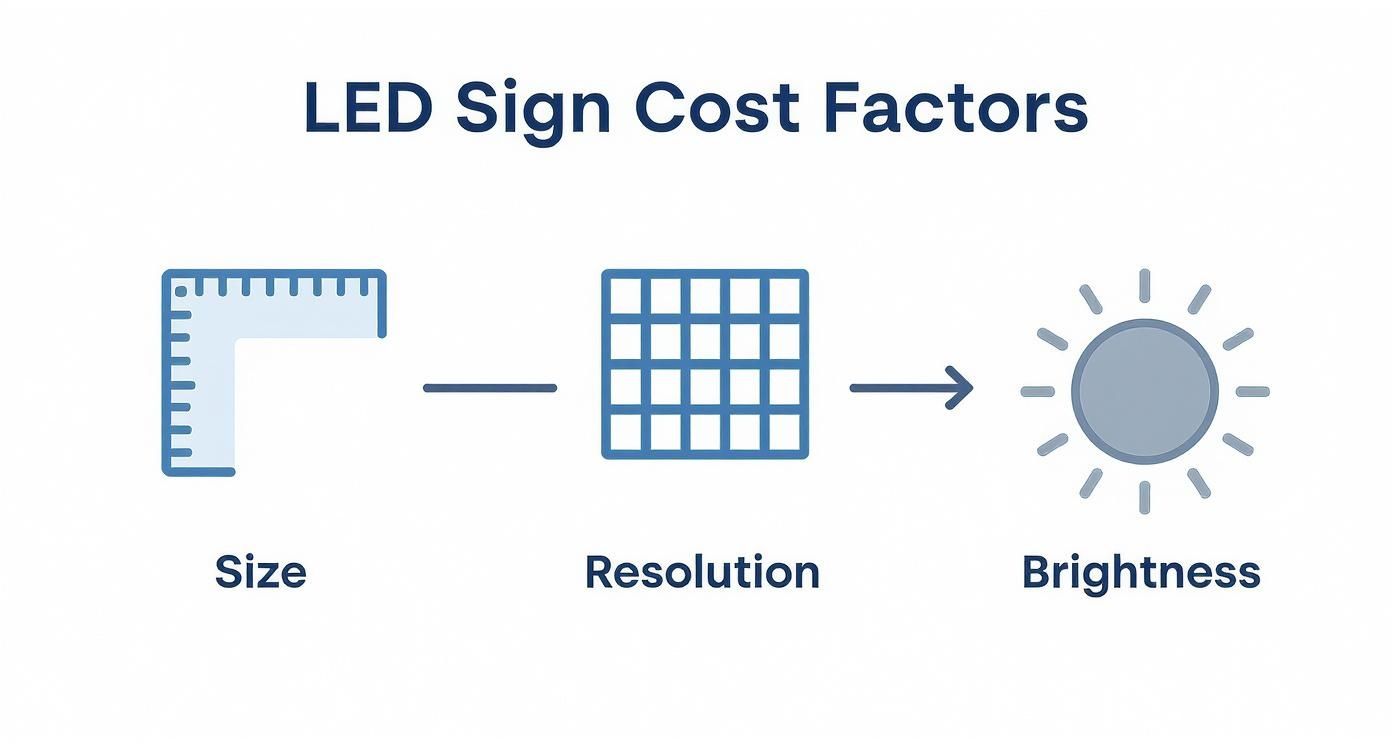
As you can see, it's the constant balancing act between these three factors that ultimately shapes the cost of any LED sign.
Welcome to the big leagues. Digital billboards are the giants of the LED world, engineered for maximum impact along highways and busy city arteries. These are serious investments, typically made by media companies or massive venues like stadiums.
Indoor LED video walls are completely changing the game for interior spaces. They create stunning, dynamic backdrops in corporate lobbies, high-end retail stores, and event venues. Because they don't need to be weatherproof or blindingly bright, their cost comes down to two main things: size and pixel pitch.
The smart indoor signage market is exploding for a reason. Valued at $3.8 billion in 2023, it's projected to hit $8.4 billion by 2030. A typical unit in a retail setting can run anywhere from $1,000 to $5,000, depending heavily on its features and how crisp you need the image to be.
To help you visualize where your project might fit, here's a quick-glance table comparing these common sign types. This should give you a solid starting point for budget planning.
| Application | Typical Size | Common Pixel Pitch | Estimated Total Cost (inc. basic install) |
|---|---|---|---|
| Small Storefront | 2' x 4' to 3' x 6' | P10 – P6 | $2,000 – $8,000 |
| Medium Monument | 4' x 8' to 6' x 12' | P10 – P8 | $15,000 – $45,000 |
| Large Billboard | 14' x 48' | P16 – P10 | $100,000 – $300,000+ |
| Indoor Video Wall | 5' x 8' to 10' x 16' | P4 – P1.8 | $10,000 – $75,000+ |
| Home Theater Wall | 110" to 165" diagonal | P1.8 – P1.2 | $25,000 – $100,000+ |
Remember, these are ballpark figures. The final cost will always depend on your specific needs, the complexity of the installation, and the resolution you choose.
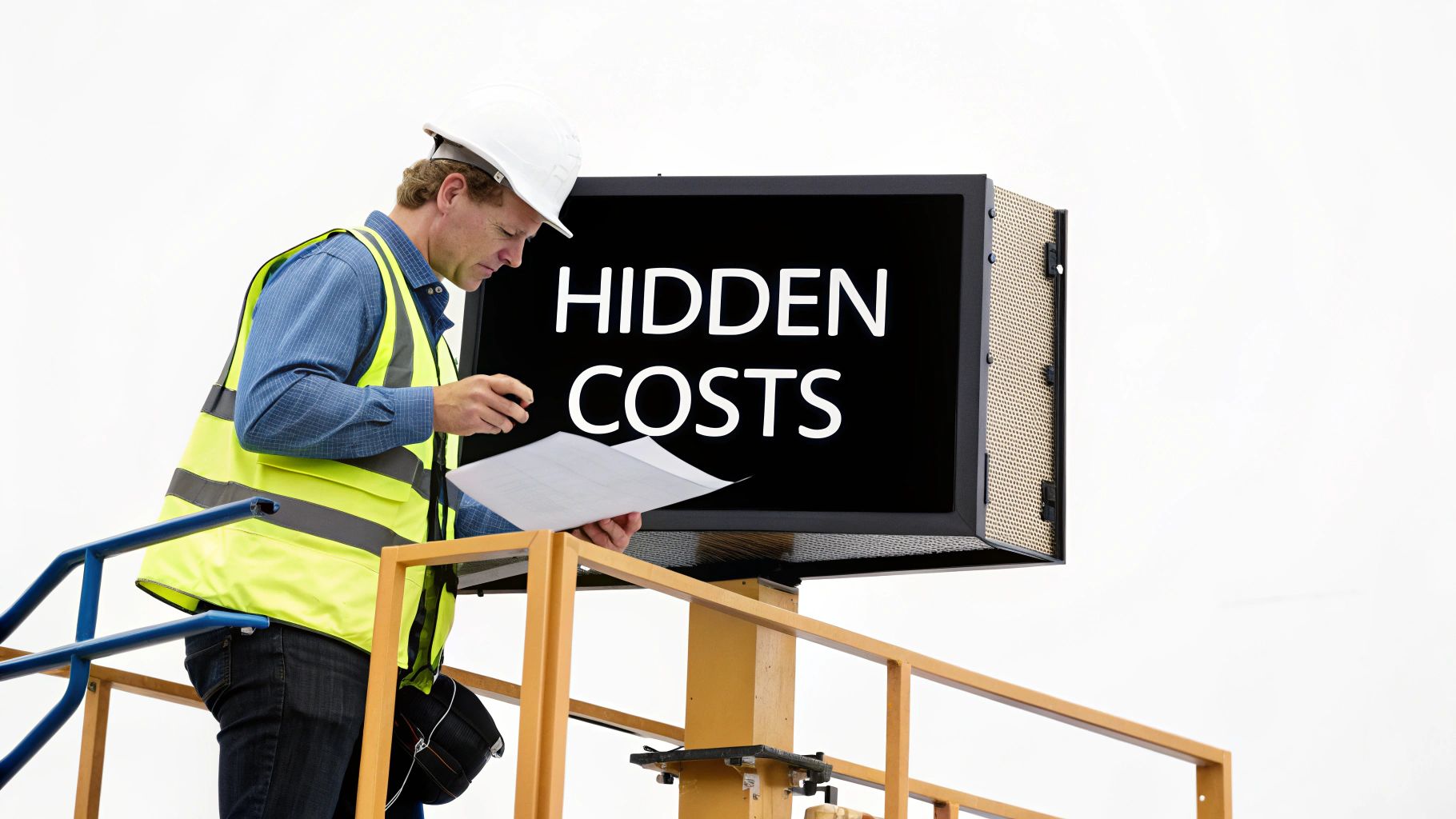
The price on your LED sign quote is a huge piece of the puzzle, but it’s almost never the final number. To really wrap your head around what an LED sign costs, you have to look beyond the screen itself and account for all the essential services and long-term expenses that bring your vision to life—and keep it running smoothly for years to come.
Lots of people call these "hidden costs," but that's not quite right. It's better to think of them as part of the total investment in a powerful marketing asset. From the moment the sign arrives to its daily operation for the next decade, several key factors will shape your real-world budget.
Installation isn't just about bolting a sign to a wall and plugging it in. Far from it. It's a complex process that often involves structural engineering, heavy-duty electrical work, and specialized equipment like cranes. Naturally, the cost can vary dramatically.
For a simple wall-mounted sign on your storefront, you might budget around $2,000 to $5,000 for a professional crew to get it done right. But if you’re looking at a large monument sign that needs a new concrete base and masonry work, or a towering pylon sign that requires a crane, installation costs can easily jump to $10,000 or more. These figures cover the labor, equipment, and critical expertise needed to ensure your sign is secure, weatherproof, and wired perfectly to code.
Before a single bolt gets turned, you'll need to get the green light from your city. Most municipalities require permits for permanent outdoor signs to make sure they meet local safety, zoning, and even aesthetic standards. This process isn't just paperwork; it often comes with its own set of expenses.
Here’s a quick breakdown of what you can expect to budget for:
Trying to skip this step is a recipe for disaster. It can lead to hefty fines and even orders to tear the sign down, making it an absolutely critical part of your initial budget.
A common mistake we see is assuming the sign company just rolls all the permit costs into their quote. Always clarify whether permit fees and engineering drawings are included or if they are a separate line item you need to budget for.
Your sign’s hardware is a one-time purchase, but its day-to-day operation carries ongoing costs. These are crucial for calculating the true total cost of ownership over the sign's lifespan. An equipment financing loan is often the most direct way to fund the purchase of your LED sign, covering a significant aspect of budgeting beyond just the hardware.
The two main ongoing expenses you’ll face are software and electricity. The content management software (CMS) is your command center, letting you control everything your sign displays. Some companies include basic software for free, while others offer advanced platforms with subscription fees for premium features, cloud access, and dedicated support.
Finally, there’s electricity. While modern LEDs are incredibly energy-efficient, a large, bright outdoor sign running 24/7 will definitely add to your monthly utility bill. A medium-sized outdoor sign might add $50 to $150 per month—a pretty manageable cost when you weigh it against its advertising power. Factoring these predictable expenses into your analysis gives you a complete and honest picture of your investment.
Thinking of your new LED sign as just another expense is like calling a delivery truck "just a vehicle"—you're completely missing the point. An LED sign isn't just a piece of hardware; it’s your most dedicated employee, out there working 24/7 to grab attention and pull customers through your door. Let's stop talking about cost and start focusing on value. It's time to see how this powerful tool actually makes you money.
The most obvious way an LED sign pays for itself is by driving more foot traffic and boosting sales. It's that simple.
Picture a local restaurant running a "Taco Tuesday" special on its new sign. By tracking taco sales on Tuesdays before and after the sign went live, the owner can see the direct impact. A 15-20% increase in sales for a promoted item isn't just possible; it's a common, achievable result we see all the time.
This ability to talk directly to your community completely changes your marketing game. Forget paying for a newspaper ad that runs for one day and then disappears. Your sign is broadcasting your message to thousands of potential customers, day in and day out, for years to come.
Figuring out your sign’s ROI doesn’t require an advanced finance degree. A key part of this is assessing the payback period so you know exactly when the sign has paid for itself through new profits. It all starts with a simple question: how many new customers do you need to cover the cost of the sign?
Here’s a quick and easy way to think about it:
Let's use a real-world example. Say a boutique with an average profit of $30 per customer invests $15,000 in a new sign. They would need to attract 500 new customers over the sign's lifespan just to break even. Every single customer after that is pure profit generated by the sign. This is one of the most powerful benefits of using LED signs for your business.
An LED sign gives you a direct, measurable connection to your local market. It’s not just about brand awareness; it's a dynamic tool for testing offers, promoting high-margin products, and driving immediate customer action.
But the ROI of an LED sign isn't just about the immediate sales you can count. It also completely elevates your brand's image, making your business look more modern, professional, and successful. That enhanced perception builds trust and can attract a higher-spending clientele over time.
And this technology isn't just for storefronts. Its value is clear even in more specialized fields. For instance, the cost of LED digital speed limit signs can range from $5,000 to $15,000 per unit in North America, depending on the tech and location. While their ROI is measured in public safety instead of dollars, it proves just how versatile and valuable LED technology really is. You can discover more insights about the global market for these specialized signs if you're curious.
At the end of the day, your sign becomes a powerful marketing engine that pays for itself many times over.
Now that you have a solid grasp on what goes into LED sign pricing, it’s time to make a smart buy. Getting the best value isn’t just about hunting for the lowest price tag; it's about securing quality, support, and long-term reliability without paying a cent more than you have to.
So, what's the single most effective way to do that? Go straight to the source and work directly with a manufacturer.
Think about it: local sign shops are almost always resellers. They buy signs from a manufacturer like us, tack on a hefty markup, and then sell them to you. That middleman layer can easily inflate your final cost by 20-40%—sometimes even more—for the exact same piece of hardware. When you buy factory-direct, you completely sidestep that extra cost.
But this is about more than just savings. You also get a direct line to the engineers who actually designed and built the sign. This is huge. It means any technical questions you have get answered by true experts, not just a salesperson. That direct connection is priceless, both for the initial setup and for any troubleshooting you might need years down the road.
Going straight to the manufacturer gives you a handful of key advantages that local resellers just can't compete with. These are the things that protect your investment and guarantee a smoother, headache-free ownership experience from day one.
Buying factory-direct is the clearest path to maximizing your return on investment. You get a better product, superior support, and a more competitive price, ensuring every dollar you spend goes directly into the quality of your sign.
Once you have a few quotes in hand, it’s time to compare them intelligently. Don't just glance at the final number at the bottom of the page.
Dig into the warranty details. A strong warranty should cover parts, labor, and onsite service for several years, giving you total peace of mind. A weak or limited warranty is a red flag that can leave you footing the bill for unexpected and costly repairs.
Finally, look at your payment options. Most manufacturers offer flexible financing plans that can make even a massive, high-impact sign affordable for any budget. These plans let you get the sign you need now and pay for it over time as it brings in new customers and revenue. By combining factory-direct pricing with smart financing, you can confidently invest in a powerful marketing tool that will deliver serious value for years to come.
As you get closer to a decision, a few final questions always seem to pop up. Think of these as the last pieces of the puzzle. Getting them sorted out will help you feel confident you're making a smart, informed investment in your business’s future.
A well-made LED sign isn't a temporary fix; it's a long-term asset. Most quality signs are rated for around 100,000 hours of use. To put that in perspective, that’s more than 11 years of running 24 hours a day, 7 days a week.
The real secret to hitting that decade-plus mark comes down to what’s inside. Reputable manufacturers don't cut corners. They use premium LED diodes, heavy-duty power supplies, and rugged, weatherproof cabinets that protect the electronics from the elements. That's what ensures your sign will be shining bright for years to come.
It’s tempting to think about a DIY installation to shave a little off the top of the budget, but for anything more complex than a small indoor window sign, it's a bad idea. We strongly advise against it. Professional installation is absolutely critical, and here’s why:
An improper installation can create serious safety hazards and may violate municipal regulations, potentially resulting in fines or even an order to take the sign down. It’s just not worth the risk.
Absolutely. Buying factory-direct nearly always saves you a significant amount of money. Think about it: local sign shops are usually resellers. They buy a sign from a manufacturer like us, add their own markup to it, and then sell it to you.
Going straight to the source cuts out that expensive middleman. But it's not just about the initial price. You also get direct access to expert technical support and better warranty service from the people who actually built your sign. For a deeper dive into other common questions, check out our comprehensive LED sign FAQ. It’s the clearest path to getting the best value and support for your investment.
Ready to stop guessing and see what a high-quality LED sign will cost for your business? Our free tool gives you an instant, no-obligation price estimate. At Smart LED Inc., we provide factory-direct pricing to make sure you get the most for your money.
Picture this: you take the flash and spectacle of a Times Square billboard, slap it on the back of a truck, and send it wherever
A wall of TV screens is exactly what it sounds like: a big, impressive display made by tiling multiple TVs together so they act like
Picking the right displays for shows can feel like a high-stakes guessing game. Get it right, and you create an immersive world that captivates your
"*" indicates required fields