
Uncategorized
Digital Billboard Truck: Boost Your Campaign with Mobile Ads
Picture this: you take the flash and spectacle of a Times Square billboard, slap it on the back of a truck, and send it wherever
Picture a digital screen that isn't trapped in a flat, rectangular box. That's the core idea behind a flexible LED panel. It’s a display that can bend, curve, and wrap around almost any surface imaginable, from a wavy retail wall to a massive structural column.
Unlike the rigid TVs we're all used to, flexible LED panels are built differently. They are made of individual LED modules mounted onto a pliable material—think rubber or silicone. This unique construction is what gives them their signature "bendability" and allows them to break free from the traditional flat-screen format.
It helps to think of it like the difference between a solid wooden fence and a chain-link one. The wooden fence is stiff and unyielding. The chain-link fence, on the other hand, can easily curve around corners and follow the contours of the landscape. Flexible LED panels work the same way, using interconnected yet independent modules to create smooth, flowing visual surfaces where a rigid screen just wouldn't work.
Getting a screen to curve without breaking relies on a few clever components working together:
The sheer creative freedom these displays offer is driving huge market growth. The global flexible display market is on track to explode from USD 15.46 billion in 2023 to an incredible USD 123.49 billion by 2030. This boom is happening because more and more industries are adopting them for high-impact environments where standard flat screens just fall short.
This trend shows a clear demand for displays that are woven directly into the architecture of a space. For business owners, understanding the potential of various LED signs for businesses is the first step toward creating more memorable customer experiences. And if you really want to get into the nuts and bolts, learning about the fundamentals of digital sign LED technology provides a great foundation for how these vibrant screens actually work.
By breaking free from flat surfaces, flexible LED panels give designers and businesses the power to turn ordinary architecture into an extraordinary visual canvas.
Jumping into the world of flexible LED panels can feel like trying to learn a new language. You’ll see spec sheets loaded with technical terms, but they don’t have to be so intimidating. Getting a handle on these key metrics is the first real step toward picking the perfect display for your project.
Think of it like buying a new camera. You wouldn't just grab the biggest one off the shelf; you'd dig into the specs—megapixels, lens type, and sensor size—to make sure it actually fits what you need to shoot. The same exact logic applies here. A few core numbers will tell you everything you need to know about a panel's visual quality, flexibility, and toughness.
If there’s one number that dictates image clarity, it’s pixel pitch. Put simply, this is the distance in millimeters from the center of one tiny LED pixel to the center of the one next to it. A smaller number means the pixels are packed tighter together. The result? A higher-resolution image that looks crisp and clean, even when you're standing right in front of it.
For instance, an indoor retail display meant for up-close viewing needs a tight pixel pitch—think 1.9mm or 2.5mm. On the flip side, a massive backdrop for a concert stage can get away with a much wider pitch, like 6mm or even 10mm, and still look fantastic to the crowd hundreds of feet away. Plus, it’s usually easier on the budget.
The rule of thumb is simple: the closer your audience, the smaller your pixel pitch needs to be. Get this wrong, and you risk a blurry, pixelated image that completely undermines your content.
This spec tells you the minimum radius a panel can curve without being damaged. Imagine wrapping a sheet of paper around a coffee mug—the mug’s radius is essentially the curvature radius. A smaller number here means the panel is more pliable and can hug tighter surfaces, like a narrow column in a hotel lobby.
A panel with a 500mm curvature radius, for example, could create a full circle with a one-meter diameter, making it perfect for dramatic, tight curves. But a panel with a larger radius, say 1500mm, is better suited for gentle, sweeping arcs across a wide architectural wall. Knowing your design’s curves is critical to avoid accidentally breaking the display.
The image below breaks down the key components that give these panels their unique capabilities.
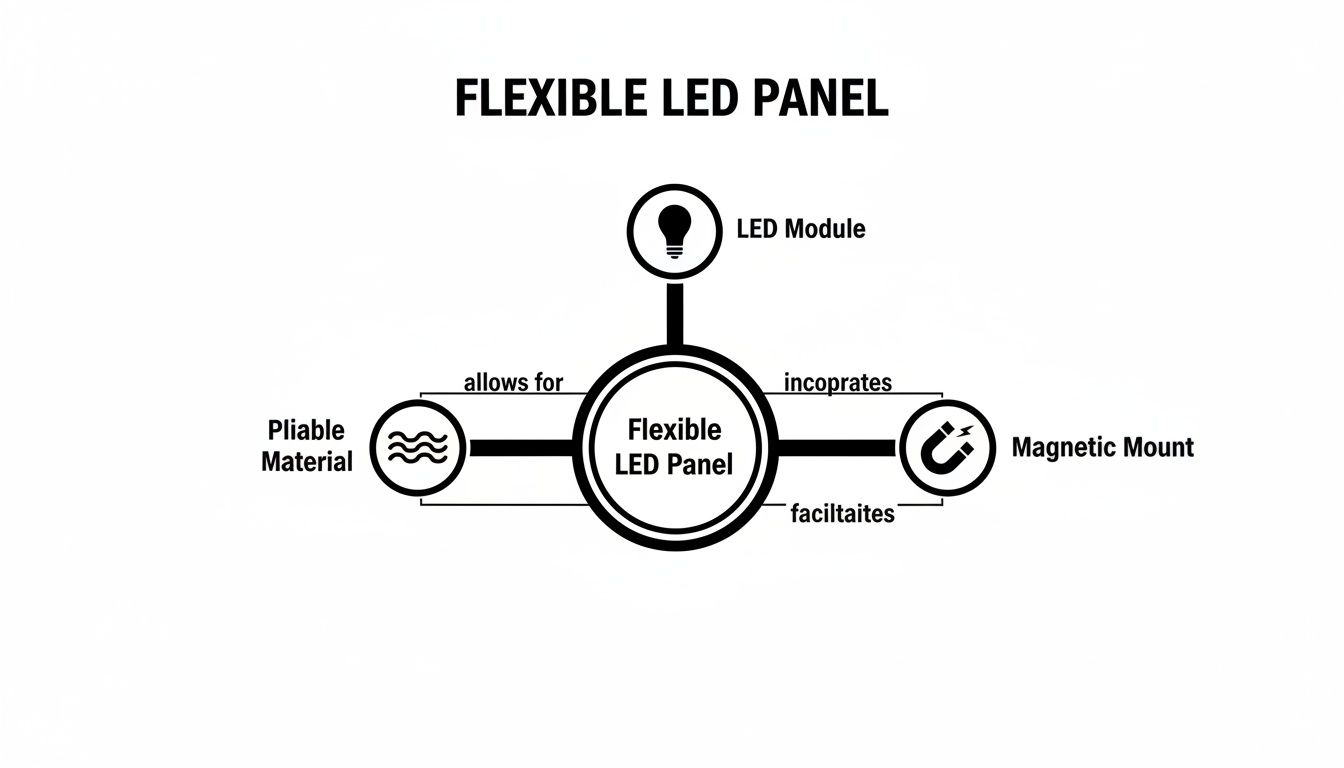
You can see how the pliable material, individual LED modules, and magnetic mounts all work in concert to give you an incredible amount of design freedom.
Not all spaces are created equal, and your panel's specs have to match where it's going to live. Two numbers are absolutely essential here: brightness and weather resistance.
Brightness (Nits): This is just a measurement of how much light a screen puts out. Indoor displays, like the kind you'd see in a corporate lobby, usually need somewhere between 800 to 1,500 nits to look vibrant. An outdoor sign, however, is fighting against direct sunlight and needs a lot more horsepower—often 5,000 nits or higher—just to be seen clearly. You can see how these specs come to life in high-quality indoor products like this direct-view LED video wall display.
IP Rating (Ingress Protection): This simple two-digit number tells you how well the panel is sealed against solids (like dust) and liquids (like rain). The first digit rates solid protection (from 0-6), and the second rates liquid protection (from 0-8). A common rating for outdoor gear is IP65. This means it’s completely dust-tight and can handle water jets from any direction—perfect for surviving most weather conditions.
When you're weighing your display options, the unique perks of a flexible LED panel often make it the obvious choice over a traditional rigid screen. These aren't just cosmetic advantages, either. They're practical solutions that change everything from the initial design and installation right down to your budget and brand presence. They give you a toolkit for creating visual experiences that are simply out of reach with flat screens.
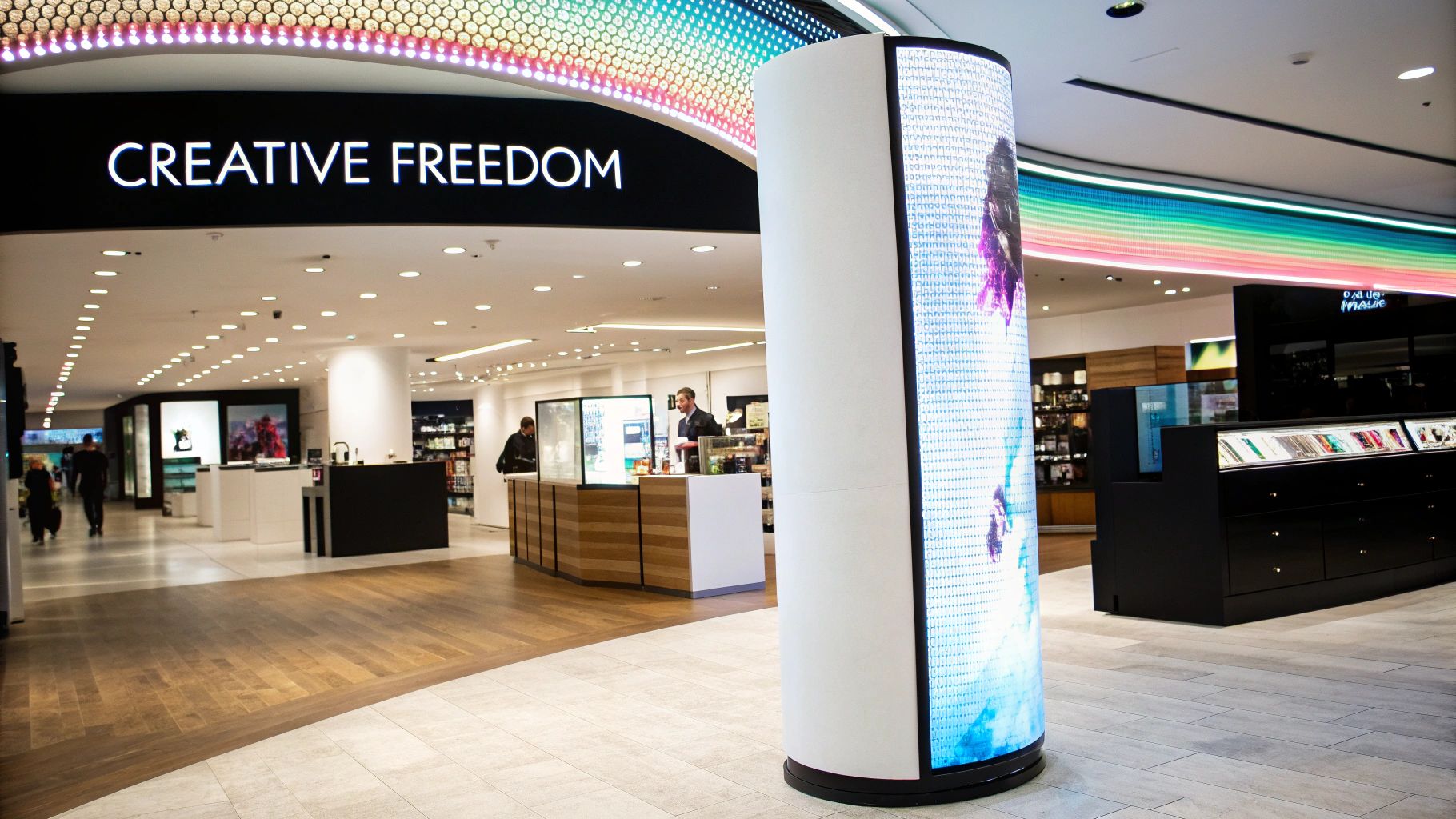
Let's break down the core advantages that give businesses a real creative and logistical leg up.
Right off the bat, the biggest win is the ability to escape the rectangle. A flexible LED panel can hug concave and convex surfaces, wrap cleanly around columns, or create stunning, wave-like patterns across a wall. This lets the display become a true part of the architecture, not just something bolted on top of it.
Think about a retail store where video content flows seamlessly along the curve of a welcome desk. Or a museum exhibit where a display winds organically down an uneven corridor. This kind of deep design integration turns static surfaces into dynamic, storytelling canvases.
Traditional rigid LED cabinets are notoriously heavy and clunky. They demand serious structural support to be installed safely, which can pile on extra costs and complexity. In some cases, the weight makes an installation flat-out impossible.
Flexible LED panels, on the other hand, are remarkably lightweight. They’re built with pliable materials like rubber and silicone instead of bulky metal frames, so they weigh significantly less per square meter.
This weight reduction has a direct impact on your budget:
The physical nature of a flexible LED panel makes the whole setup process much smoother. Many are designed with powerful magnetic backing, letting installers literally "snap" the modules onto a metal frame. This ensures perfect alignment and makes installation dramatically faster than wrestling with and bolting together heavy, rigid cabinets.
Maintenance is also a whole lot easier.
A key feature of most flexible displays is their front-serviceable design. If a module ever fails, a technician can access and swap it out from the front of the display in minutes, all without having to take the entire screen apart. This keeps downtime to a minimum and your display looking flawless.
While any digital display needs to be handled with care, flexible panels have a built-in advantage against minor impacts. Their pliable construction allows them to absorb some of the force from accidental bumps that might crack or shatter a rigid screen. The individual modules are engineered to handle the stress of bending, which also makes them more resilient in high-traffic places like retail stores, airports, and event venues.
This natural durability translates to a longer operational life and fewer headaches over minor physical damage disrupting your content.
At the end of the day, the goal of any digital display is to grab people’s attention. The unique shapes and curves you can create with a flexible LED panel are just naturally more eye-catching than a standard flat screen. Our brains are wired to notice things that break the pattern, and a curved, flowing display is a powerful way to do that.
This is how you create unforgettable brand moments that pull in foot traffic and leave a lasting impression. In a world oversaturated with flat screens, a uniquely shaped display doesn’t just stand out—it communicates innovation and instantly elevates the perceived value of your brand. It turns a simple screen into a captivating landmark.
Specs and theory are one thing, but seeing a flexible LED panel in action is what really gets the creative gears turning. This technology isn't just about swapping out flat screens; it’s about completely rethinking what a surface can be, transforming everyday environments into unforgettable experiences. Let’s dive into some of the most exciting ways these displays are making a real impact.
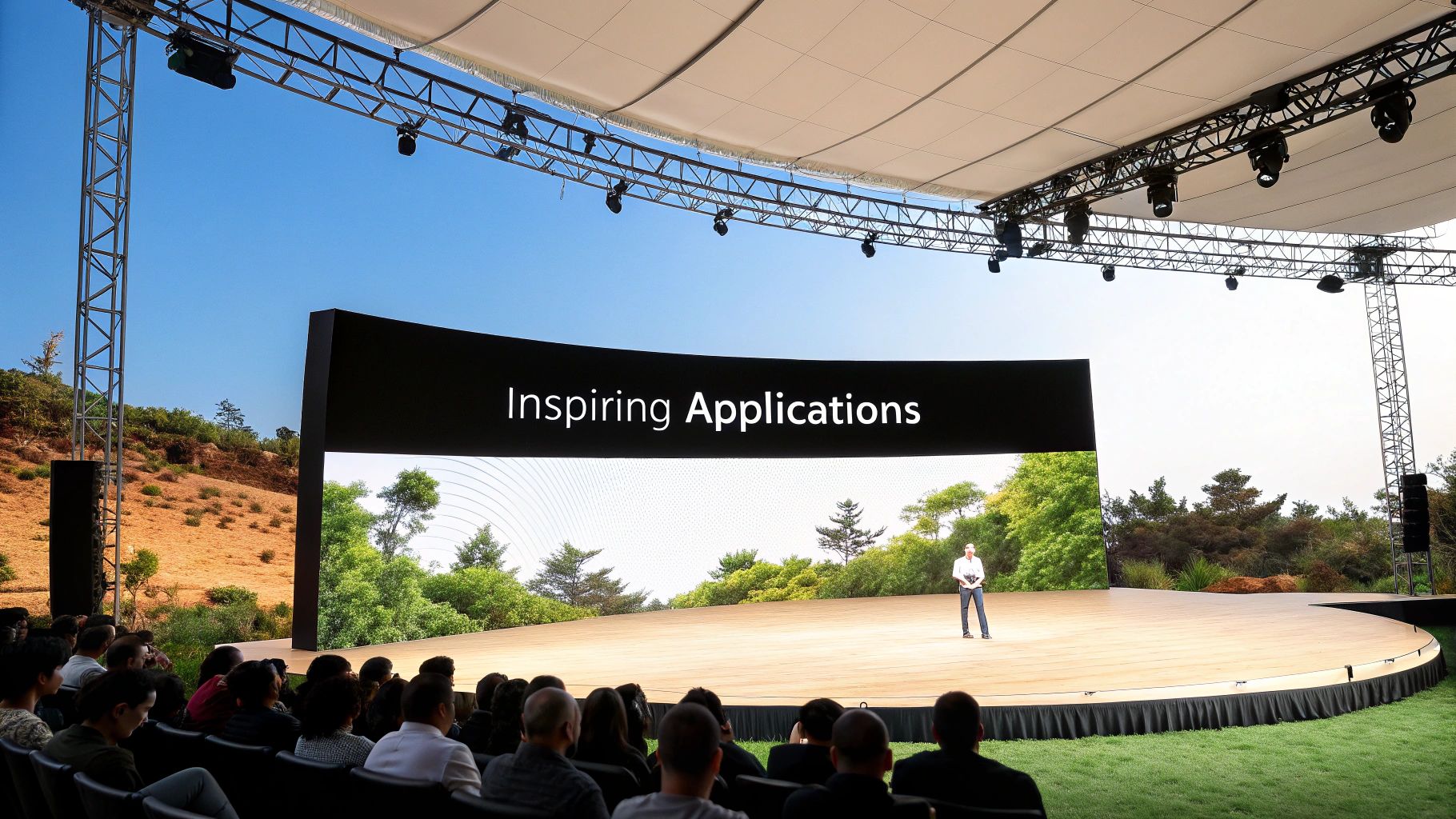
The ability to conform to almost any structure is the true superpower here. Whether it's wrapping a massive architectural column or creating a fluid, wave-like shape on a wall, flexible displays give designers and architects an incredible new tool to play with.
In the cutthroat world of retail, that first impression is everything. A flexible LED panel can turn a store's exterior from a static wall into a dynamic, can't-miss digital landmark. Picture a flagship store with a video display flowing seamlessly around a curved corner, showcasing new products with graphics that move with the building's own lines.
This isn't just advertising—it's architecture. These installations stop people in their tracks, get shared all over social media, and create an immersive brand world before a customer even walks in the door. The market shows it, too. Flexible displays are dominating the flexible electronics sector with a 54.7% market share in 2024, largely driven by these kinds of powerful applications.
For advertisers, this means turning unconventional urban surfaces into high-impact digital out-of-home (DOOH) canvases, something that was impossible with rigid screens.
By integrating the display directly into the building's design, businesses can create a visual identity that is both striking and sophisticated, ensuring they stand out on a crowded street.
On a smaller scale, homeowners are also getting creative, using flexible panels for unique modern TV feature wall installations that move beyond the typical flat screen setup.
Live events are all about creating a powerful connection with the audience. Flexible LED panels are becoming a secret weapon for stage designers, letting them build breathtaking, 360-degree backdrops that completely envelop performers and attendees. Forget a flat screen behind the band; imagine a towering, curved video wall that makes the audience feel like they're inside the performance.
These displays can be built into S-shapes, circles, or flowing waves, offering an endlessly versatile canvas for concert visuals, corporate branding, or theatrical scenery. Their lightweight design also makes rigging and setup much simpler—a huge advantage for touring productions where time is always tight.
Beyond the stage, flexible displays are popping up in corporate lobbies, museums, and transit hubs. A boring old structural pillar can suddenly become a dynamic information hub showing welcome messages, company news, or mesmerizing digital art.
Here are a few common ways they’re being used:
At a jam-packed trade show, the number one rule is to stand out. A uniquely shaped flexible LED panel is a surefire way to pull eyes away from the sea of boring rectangular booths. Exhibitors are using them to create eye-catching arches over their entrances, circular hanging signs, or product displays that physically curve around the items themselves.
This kind of creative tech application doesn't just attract visitors; it screams that a brand is forward-thinking and innovative. It turns a simple booth into a destination on the trade show floor.
To help visualize where this technology shines, we've broken down some of the most effective use cases.
| Application Area | Primary Benefit | Example Scenario |
|---|---|---|
| Architectural Wraps | Aesthetic Integration | A historic building's curved facade is transformed into a digital art canvas without altering its structure. |
| Retail Storefronts | High-Impact Branding | A flagship clothing store uses a wave-like screen to showcase its latest collection with flowing video. |
| Concert & Stage Design | Audience Immersion | A circular LED backdrop surrounds a DJ, creating a 360-degree visual experience for the crowd. |
| Trade Show Booths | Attention-Grabbing Design | A tech company builds an arched entryway to their booth made entirely of a flexible LED screen. |
| Corporate Lobbies | Modern Ambiance | A structural column in a lobby is wrapped with a screen displaying company news and welcome messages. |
| Vehicle & Mobile Displays | On-the-Go Advertising | A marketing bus is outfitted with a curved LED screen on its side for dynamic, mobile campaigns. |
This table illustrates just how versatile these panels are, fitting perfectly into scenarios where standard rigid screens simply wouldn't work or would lack the same visual punch.
Bringing a curved display to life is an exciting moment, but getting it right all comes down to the decisions you make before a single panel is ordered. Choosing the right flexible LED panel isn't just about the tech—it's about finding the perfect match for your space, your vision, and your budget. From there, a solid installation plan is what separates a good display from a truly breathtaking one that performs reliably for years.
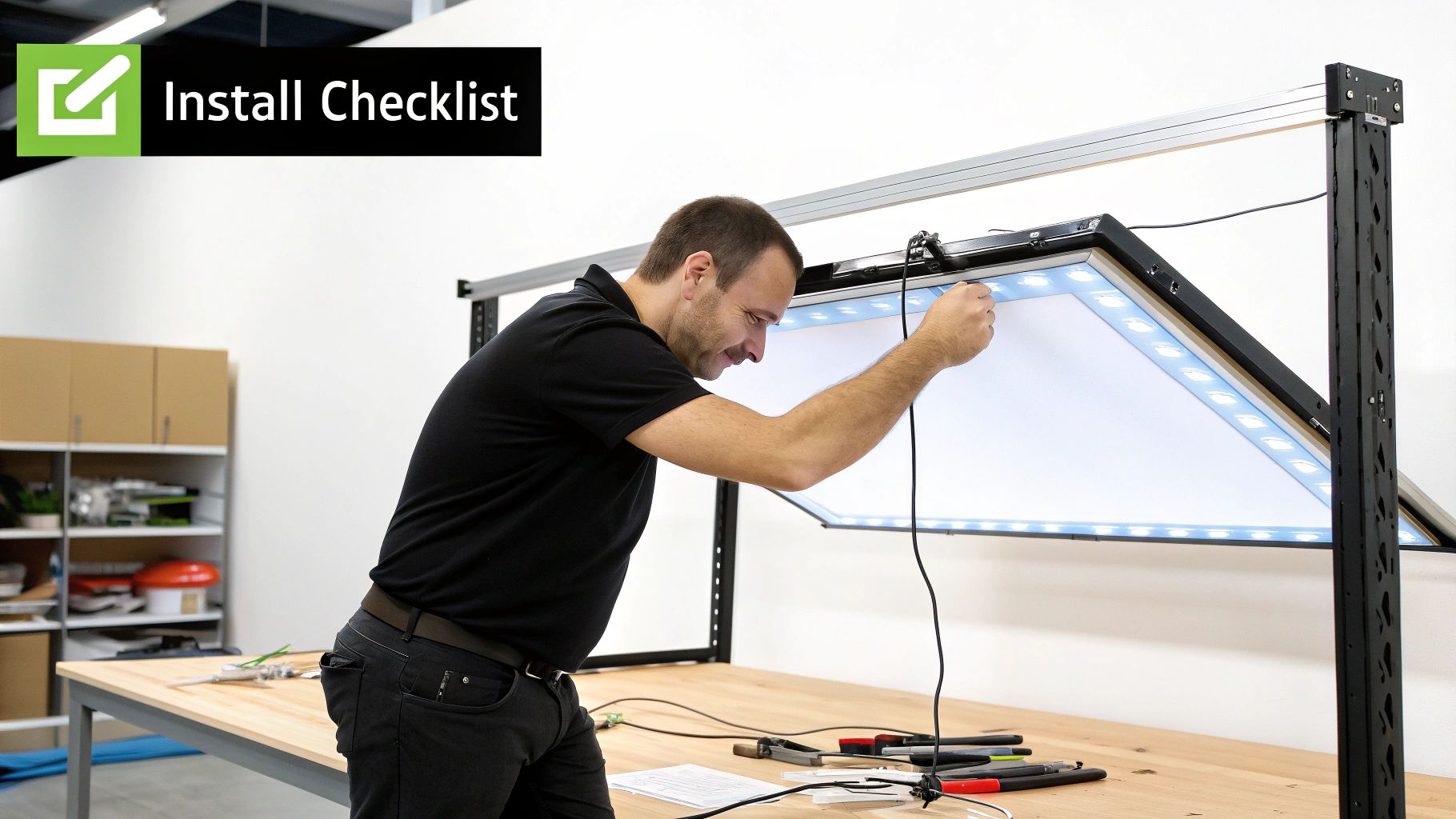
We'll walk you through the essentials, from building a pre-purchase checklist to understanding the nuts and bolts of installation and upkeep. A little planning upfront helps you sidestep common mistakes and ensures your project runs smoothly from concept to completion.
Before you start browsing products, you need to answer a few make-or-break questions. Getting clear on these points will instantly narrow your search and point you toward a panel that’s a perfect fit. Rushing this part is a recipe for a display that’s too dim for its environment, too pixelated for its viewing distance, or simply can’t achieve the curve you envisioned.
Start here:
Answering these questions first is like drawing up a blueprint. It transforms a vague idea into a solid set of technical specs, making your conversations with suppliers infinitely more productive.
Once you've zeroed in on the perfect panel, the spotlight shifts to installation. Smart planning here is what ensures that clean, professional finish and long-term performance. Unlike rigid screens, these flexible panels depend entirely on a well-made mounting frame to hold their signature curves.
You'll generally encounter two main mounting methods:
Beyond the frame itself, you can't overlook power and data. Every section of the display needs a clean power source and a data line running back to the controller. A pro installer will map all this out beforehand to keep the wiring completely hidden, delivering that seamless, floating look.
To see how all these pieces come together in the real world, check out the details of this curved LED installation in Philadelphia to get a behind-the-scenes look at the process.
The good news is that keeping your flexible LED panel looking brand new doesn't require a ton of effort. Thanks to their modular design, upkeep is surprisingly simple.
Even after you've seen the specs and imagined the possibilities, a few practical questions always pop up right before you pull the trigger. It's a big investment, and you want to be sure you have all the facts straight. It’s totally normal.
This is where we tackle those lingering what-ifs head-on. We'll cover the real-world concerns we hear all the time—from cost and longevity to repairs and performance. Think of it as the final check-in to make sure you're moving forward with total confidence.
This is probably the number one question we get, and the answer isn't a simple yes or no. You have to look at the initial price tag and the total cost of ownership. While a flexible panel might sometimes have a higher upfront cost than a rigid one, it often shakes out to be the smarter financial move in the long run.
The real savings are hidden in the logistics. First, these things are incredibly lightweight, which dramatically cuts down on shipping costs, especially if you're building something massive. Second, because they don't weigh a ton, you don't need to engineer and build a heavy-duty, super-expensive support structure. Finally, the installation is just plain faster and easier, which means lower labor costs.
When you add up the savings from shipping, structural work, and installation time, the total cost for a flexible LED panel often becomes surprisingly competitive. It’s a classic case of looking past the sticker price to see the full financial picture.
A high-quality flexible LED panel is built to be a workhorse. The industry standard for professional-grade LED modules is a lifespan of about 100,000 hours. To put that into perspective, if you ran the display 24/7 at full blast, it would still last for over 11 years.
Of course, a few things can influence that lifespan in the real world:
Bottom line? With a little bit of care and typical use, a flexible LED display is engineered to deliver stunning visuals for years and years, giving you a fantastic return on your investment.
This is one of the best parts—they are surprisingly easy to fix. The secret is their modular design. The entire screen isn't one giant piece; it's made up of smaller, individual modules that all work together. If one little section gets damaged or fails, you don't have a catastrophic, screen-wide problem.
The repair process is refreshingly straightforward. Most modern flexible panels are front-serviceable. A technician can walk right up to the display, use a magnetic tool to gently pop out the faulty module from the front, and click a new one into its place. The whole thing can be done in just a few minutes.
This modular, front-access design means minimal downtime and makes maintenance way less of a headache—and much less expensive—than dealing with a single, monolithic screen.
Absolutely, as long as you choose the right tool for the job. A flexible LED panel’s ability to compete with the sun comes down to two specs we talked about earlier: its brightness (measured in nits) and its IP rating.
For any outdoor screen to look vibrant and clear in direct sunlight, it needs to be incredibly bright—we’re talking 5,000 nits or more. This ensures the light coming from the screen is powerful enough to outshine the sun. For comparison, your indoor TV probably only puts out a few hundred nits.
On top of that, any panel living outside needs a tough IP rating, like IP65, to protect it from the elements. Rain, dust, and humidity are no joke. As long as you spec out a panel with the right brightness and weatherproofing, you’ll have a stunning outdoor display that looks brilliant day or night, rain or shine.
Ready to see how a custom flexible LED display could completely transform your space? The team at Smart LED Inc. specializes in factory-direct solutions for businesses of all sizes. Visit us online to browse our project gallery, get a free quote, and see how we can bring your most creative ideas to life.
Picture this: you take the flash and spectacle of a Times Square billboard, slap it on the back of a truck, and send it wherever
A wall of TV screens is exactly what it sounds like: a big, impressive display made by tiling multiple TVs together so they act like

Picking the right displays for shows can feel like a high-stakes guessing game. Get it right, and you create an immersive world that captivates your
"*" indicates required fields