
Uncategorized
Digital Billboard Truck: Boost Your Campaign with Mobile Ads
Picture this: you take the flash and spectacle of a Times Square billboard, slap it on the back of a truck, and send it wherever
Picture a salesperson who never clocks out, knows exactly how to upsell every single customer, and can change your daily specials in an instant. That’s what you get with modern digital signs for restaurants. They aren't just a fancy tech upgrade; they're a core part of your team, essential for standing out in today's crowded market.
Let's face it: static, printed menus are a relic of the past. They get stained, reprinting them for every price change is a constant expense, and they can't adapt on the fly during a busy lunch rush. Digital signage completely solves these headaches, acting as a silent salesperson that works 24/7 to bring in real, measurable results.
These dynamic displays do so much more than just list your offerings. They use crisp, vibrant visuals to make your food look absolutely irresistible, influencing what customers order at that critical moment of decision. Think of them as your most consistent upselling tool—one that never forgets to showcase high-margin items like drinks, desserts, and sides.
The financial upside of going digital is impossible to ignore. The U.S. restaurant industry is massive—projected to hit $1.5 trillion in sales by 2025—and in a business of razor-thin margins, digital menu boards are a true game-changer. Restaurants that make the switch often see a sales lift of up to 10%, which adds up to a serious boost in annual profit.
But it's not just about the numbers. Digital signs cultivate a sleek, professional atmosphere that feels modern and clean. By displaying engaging content, they can even reduce perceived wait times by up to 35%, making the entire ordering process smoother and creating a genuinely better experience for your guests.
Digital signage isn't just about showing a menu; it's about crafting an environment. It’s a tool that broadcasts your brand's personality, spotlights your best dishes, and makes the customer journey seamless from the second they walk through the door.
The operational perks are just the start. At their core, these displays are powerful communication platforms that tackle multiple challenges at once.
Beyond just running your restaurant more smoothly, digital signs are incredible tools to help you increase your restaurant's visibility and pull in more foot traffic. This guide is your practical roadmap, showing you exactly how this smart investment can transform your restaurant's bottom line.
Picking the right digital sign for your restaurant is a bit like choosing the right knife for a kitchen job. You wouldn't use a delicate paring knife to chop through bone, right? Similarly, a sleek indoor screen won't last a day in a thunderstorm, and a dim outdoor sign will be completely invisible in the bright afternoon sun.
The first big decision you’ll make is between an indoor and an outdoor display. Each one is built for a totally different world.
Indoor digital signs are designed for controlled environments. These are your vibrant digital menu boards that get orders moving faster, your immersive video walls that create an unforgettable vibe, or the promotional screens by the counter that perfectly showcase your dessert of the day.
Outdoor signs, on the other hand, are the heavy-duty workhorses. They’re built tough to handle everything from scorching heat and torrential rain to heavy snow, all while staying bright enough to grab attention from across the street. These are essential for drive-thru menus and storefront signs that pull hungry customers right off the sidewalk.
To help you figure out which path is best, here’s a quick-glance comparison.
| Feature | Indoor Digital Signs | Outdoor Digital Signs |
|---|---|---|
| Primary Use | Digital menus, promo displays, video walls, ambiance creation | Drive-thrus, storefront advertising, curbside pickup info |
| Brightness | 350-700 nits (optimized for indoor lighting) | 2,500+ nits (built to combat direct sunlight) |
| Durability | Lower priority; protected from weather | High priority; must be weatherproof (IP65 rated or higher) |
| Cost | Generally more affordable | Higher initial investment due to rugged components |
| Best For | Controlling the customer experience inside your restaurant | Attracting new customers and streamlining outdoor service |
Ultimately, the choice depends entirely on where you need to communicate with your customers—inside your four walls or out on the street.
When you bring a sign indoors, the game changes. You're no longer fighting the sun, so brightness and clarity take on a new meaning. Think about looking at your phone screen on a normal day versus trying to use it in direct sunlight—you have to crank the brightness just to see anything outside. Indoor signs don't have that problem.
Brightness is measured in nits, and an indoor sign usually sits comfortably in the 350 to 700 nits range. That's the sweet spot—plenty bright to look crisp and vivid inside your restaurant, but not so glaring that it feels like you're dining next to a spotlight. They’re perfect for:
Still on the fence about whether digital signage is the right move to hit your sales targets? This simple decision guide helps map out how it all connects.
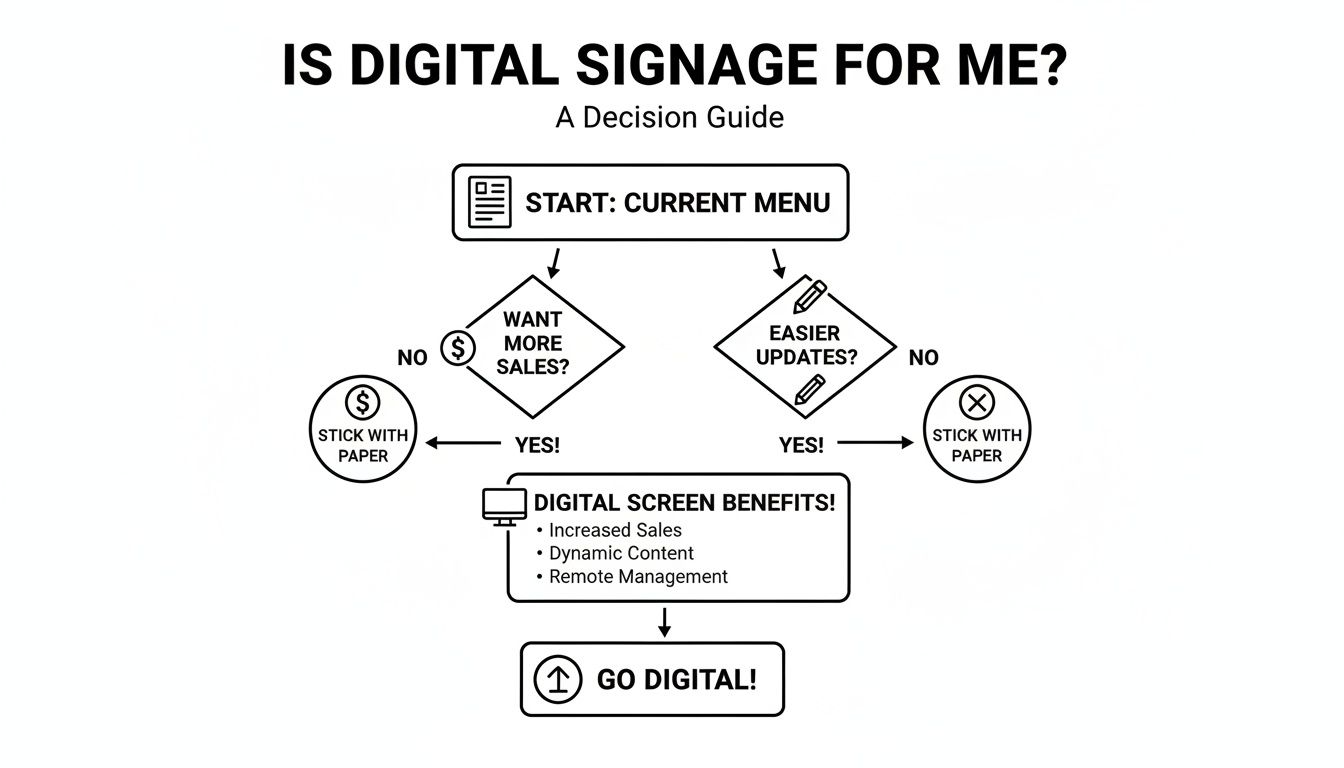
As you can see, the path from static paper menus to higher sales flows directly through a digital upgrade, making these displays a very logical investment.
Outdoor digital signs are a completely different beast, engineered from the ground up for survival and maximum impact. They have to be incredibly bright to cut through direct sunlight, which is why they typically need 2,500 nits or more to stay visible and effective. Anything less just gets washed out.
But brightness is only half the battle. Durability is absolutely non-negotiable. These signs are sealed and protected against the elements, a feature that’s measured by an Ingress Protection (IP) rating.
An IP rating is a simple two-digit code. The first digit tells you how well it’s protected against solids like dust, and the second tells you how it handles liquids like rain. A common and reliable rating for outdoor signs is IP65, which means the sign is completely dust-tight and can handle direct water jets from any direction.
This built-in toughness makes them the only choice for high-traffic, exposed locations. If you want to dig deeper into the specific options out there, you can learn more about the different kinds of LED signs for businesses that are truly built to last. For a drive-thru, curbside pickup, or your main storefront, a properly rated outdoor sign makes sure your message is always on, rain or shine.
Let's pull back the curtain on digital signage. It might seem intimidating, but the tech is actually pretty straightforward. It all comes down to two key pieces working together: the hardware (the screen itself) and the software (the brains of the operation). Nail these two, and you’ll have a system that’s powerful, reliable, and surprisingly easy to manage day-to-day.
The hardware is what your customers see, so just like a TV, image quality is everything. This brings us to a term you'll hear a lot: pixel pitch.
Think of pixel pitch as the resolution on your big-screen TV at home. It’s simply the distance between each tiny LED light on the screen, measured in millimeters. The smaller that number, the closer the lights are packed together, which gives you a sharper, more detailed image that looks fantastic up close.
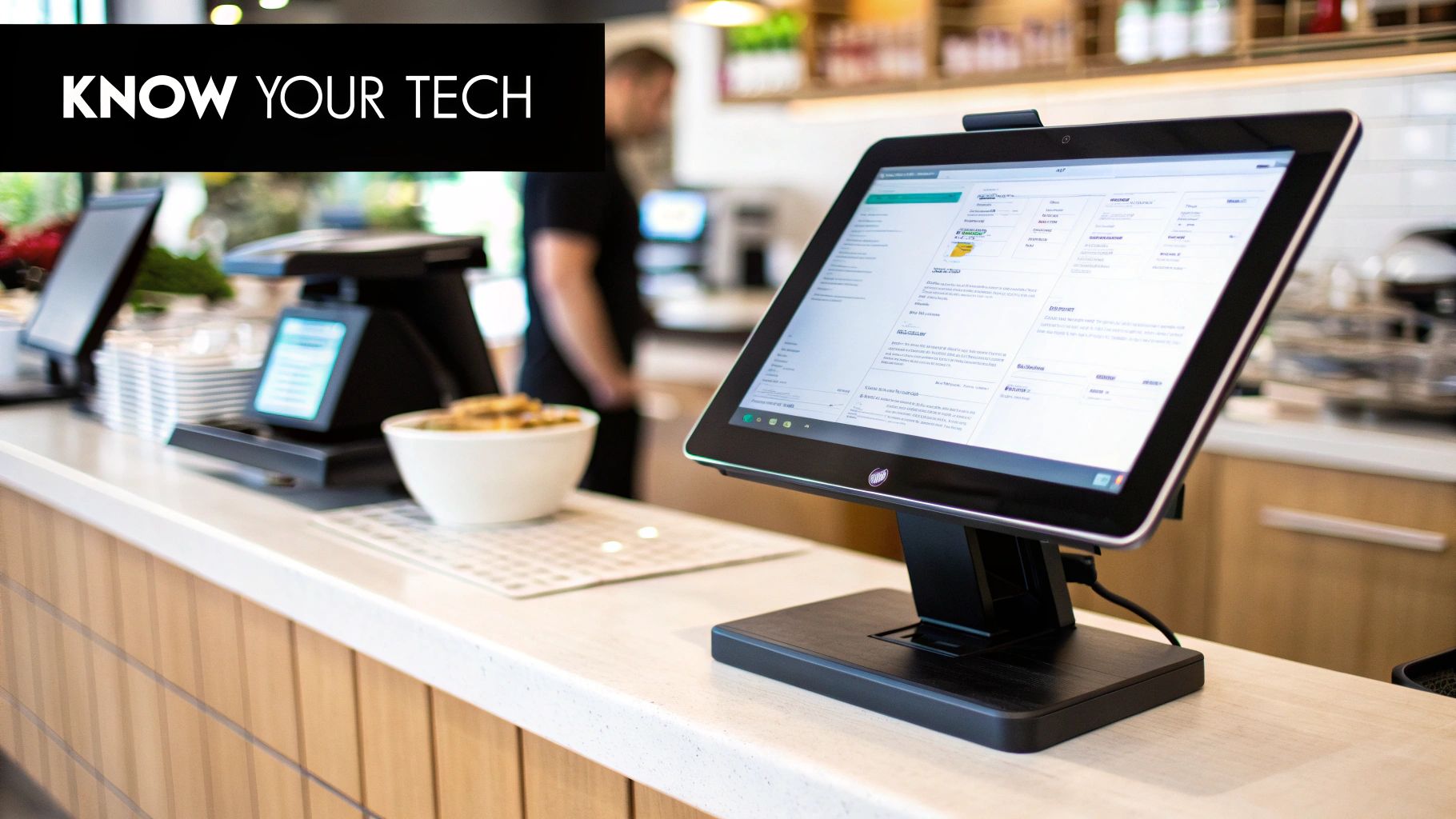
Picking the right pixel pitch is all about one thing: how far away your customers will be standing when they look at the sign. It’s a simple trade-off between viewing distance and cost, and getting it right saves you money.
Matching the hardware to its specific job ensures you’re not paying a premium for resolution you simply don't need.
If the screen is the face, then the Content Management System (CMS) is the brain. This is the software that lets you control what’s on your signs, when it shows up, and how it all looks. A good CMS makes managing your digital signs for restaurants feel effortless, even if you’re not a tech guru.
A powerful yet simple CMS is your command center. It transforms your digital signs from static displays into dynamic sales tools that you can control from a laptop or phone, anywhere with an internet connection.
This is where the real magic happens. In just a few clicks, you can update your entire menu across multiple locations, schedule a happy hour promo to run from 4-6 PM, or create fun, engaging content that shows off your brand’s personality. For example, you can set your breakfast menu to automatically flip over to the lunch specials at 11:00 AM sharp. No more manual updates.
The best systems take this a step further. We're seeing smart, real-time menu boards integrate directly with Point of Sale (POS) systems, which is a massive leap forward for efficiency in the $350 billion Quick Service Restaurant world. These integrations let your signs automatically 86 a sold-out item, push high-margin specials when inventory is high, or even adjust pricing based on the time of day. Restaurants using these smart systems are reporting up to 30% less food waste because they can make these changes on the fly. You can read more about how digital signs are changing the restaurant industry on blog.origindisplays.com.
At the end of the day, the right screen paired with intuitive software just makes your life easier. It gives you the power to react to the daily grind of running a restaurant, making sure your signs are always working as hard as you are to boost sales and keep customers happy.
Look, even the most gorgeous digital display on the planet won't do you any good if it's stuck in the wrong spot. Where you physically place your digital signs for restaurants is just as crucial as the delicious-looking content you put on them. A smart installation gets your message to the right customer at exactly the right moment, guiding their decisions and making their entire experience better.
Think of it like dressing a storefront window. You wouldn't shove your best-selling items in a dark corner, would you? Of course not. You’d put them right up front where nobody can miss them. The same exact logic applies here. The goal is to weave your screens into the customer's natural path through your restaurant, from the second they see your building to the final decision they make at the counter.
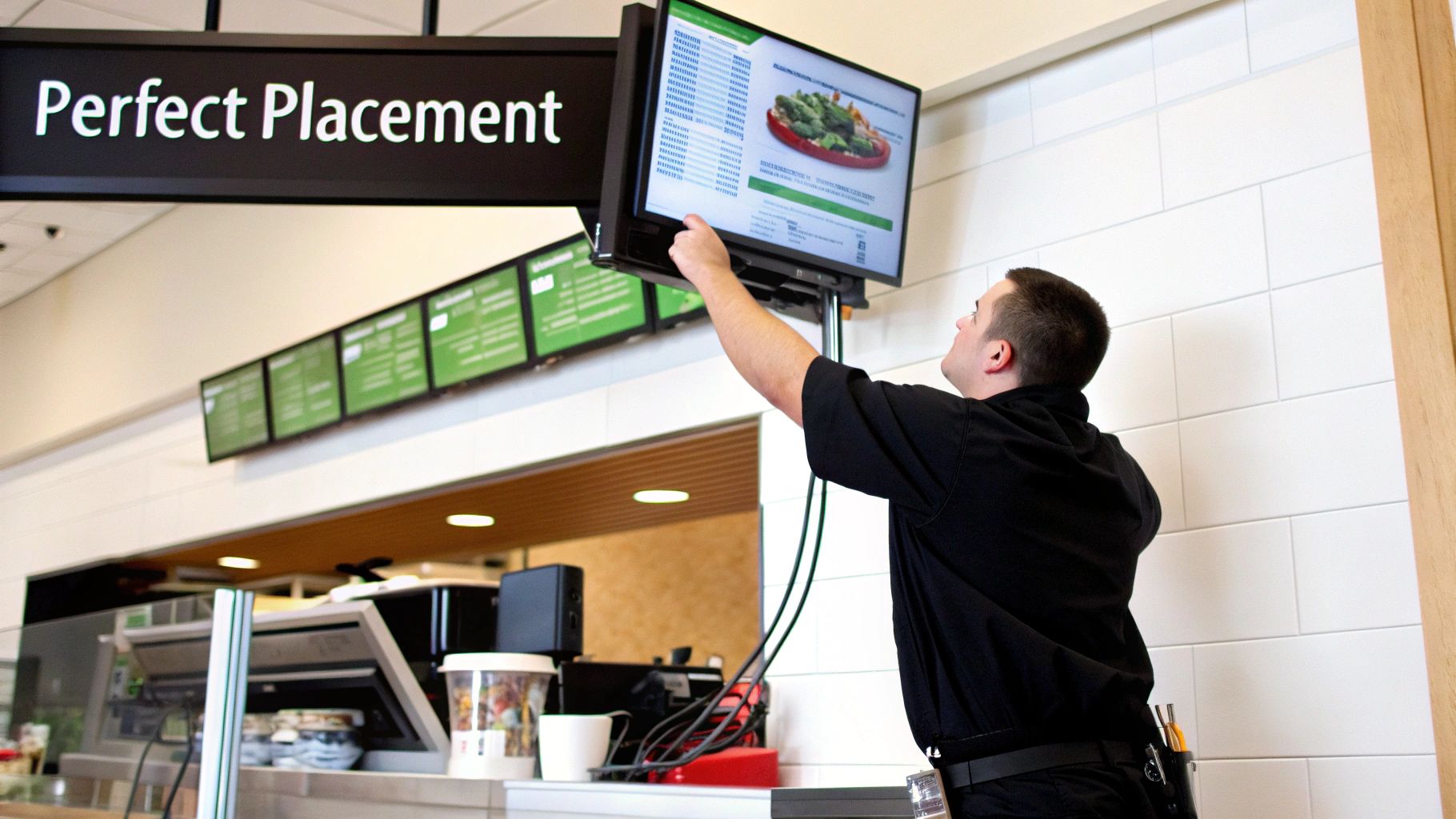
Every restaurant has its "hotspots"—key areas where a digital sign can really pack a punch. Putting screens in these zones is your secret weapon for steering customer choices and driving up sales.
And it’s not just a gut feeling; the data backs this up. Studies have found that 30% of restaurant customers say digital menu boards heavily influence what they buy. Placing them in the right spot lets you tap directly into that impulse.
Okay, so you've picked the perfect spot. Now for the technical side of things. These are the practical details that often get overlooked but are absolutely essential for a setup that’s reliable, safe, and actually works. Getting this right from day one saves you a world of headaches later.
A professional installation isn't just about screwing a screen to a wall. It's a full-circle process that covers power, connectivity, and compliance to build a system that's as dependable as it is beautiful.
First up, your power source. Every single screen needs its own dedicated, stable electrical outlet. Don't even think about using extension cords or daisy-chaining power strips. That’s just asking for a power failure or, worse, a fire hazard. A licensed electrician can make sure each sign has the clean, consistent power it needs.
Next is network connectivity. Your signs need a solid internet connection to talk to your CMS and pull down content updates. A hardwired Ethernet connection is almost always the best bet. It prevents the signal dropouts that are common with Wi-Fi in the chaotic environment of a busy restaurant. If you absolutely have to go wireless, make sure you have a rock-solid signal right at the installation point.
Finally, secure mounting is completely non-negotiable. It doesn't matter if you're hanging a screen from the ceiling, fixing it flat against a wall, or putting up a massive outdoor display—the mounting hardware must be rated for the screen's specific weight and size. Pro installers use commercial-grade mounts to ensure the sign is locked in place and angled perfectly for your customers to see. For trickier jobs, especially outdoors, you can learn more about what a pro digital outdoor signage installation involves to guarantee it lasts for years.
Before you start drilling any holes, you have to tackle the legal and accessibility stuff. These rules aren't just red tape; they're there to ensure public safety and equal access for every customer who walks through your door.
Many cities and towns require permits for outdoor signage, especially for larger signs visible from the street. You’ll need to check in with your local zoning or planning department to get the scoop on the regulations in your area. They can dictate everything from the sign’s maximum size to how bright it can be at night.
Just as important is ADA (Americans with Disabilities Act) compliance. This is a huge deal for interactive kiosks or any screens mounted low on a wall. ADA guidelines specify things like mounting height and make sure signs don't stick out in a way that could be a hazard for visually impaired guests. Following these standards isn't just about avoiding a lawsuit—it's about showing you’re committed to making every single person feel welcome.
This is where the rubber meets the road. For any restaurant owner, the two big questions that always come up with an upgrade like this are: "What's it going to cost me?" and "Is it actually going to make me money?" The secret is to stop thinking of digital signage as just another expense and start treating it like a strategic investment. That mental shift is key to unlocking its real financial power for your business.
Let’s pull back the curtain on the costs. A complete digital signage setup isn't just one thing; it's a few key pieces working together. Knowing what these components are helps you see exactly where your money is going and how each part plays a role in getting you a solid return.
The final price isn't just for the screen you hang on the wall. It’s a full package that includes the hardware, the software that makes it all work, the physical installation, and of course, the killer content that gets customers excited about your food.
Think of your digital sign investment like buying a high-performance delivery vehicle. You've got the cost of the vehicle itself (hardware), the fuel and regular maintenance to keep it on the road (software), and the skilled driver who actually gets the food to the customer (content). You need all three for the system to pay for itself.
Okay, now for the fun part: how this investment starts putting money back in your pocket. The ROI on digital signs for restaurants is about so much more than just looking cool and modern. It delivers real, tangible financial wins that show up directly on your bottom line.
One of the first places you'll see a financial gain is by killing your recurring printing costs. Just think for a second about what you spend every year designing, printing, and shipping paper menus, posters, and table tents every single time a price changes or you run a new special. For many restaurants, that adds up to thousands of dollars a year—a cost that digital signs completely eliminate.
But this isn't just about saving money; digital displays are proven revenue-builders. Like we've touched on, dynamic visuals and smartly placed promotions grab customers' attention and influence their decisions right at the point of purchase. If you want to get a clearer picture of the numbers for your own place, you can even calculate your potential savings and ROI to model it out.
That boost in sales gets even better when you consider how much more efficient your staff becomes. A crystal-clear, easy-to-read digital menu answers a ton of customer questions before they even have to ask. That frees up your team to focus on faster service and more important tasks, not just explaining what comes on the side. That kind of operational smoothness leads to faster table turnover and happier customers who come back more often.
One of the biggest levers you can pull to manage your upfront cost is who you buy from. Going factory-direct with a manufacturer like Smart LED Inc. can dramatically lower your initial investment because you're cutting out the middlemen—the distributors and resellers who all add their own markup. This approach gets you access to top-tier hardware for a much better price, making a strong ROI easier and faster to achieve. For a more detailed breakdown, our guide to understanding outdoor LED sign cost is packed with insights to help you build a smarter budget from day one.
All the tech specs and theory in the world are great, but seeing what digital signs can actually do for a restaurant is where the magic happens. The real power here isn’t just the fancy screens; it’s about how they solve real, everyday headaches and open up new ways to grow.
Let's move past the hypothetical and look at a few stories of how different restaurant owners put this technology to work and saw some serious results. These examples show how a smart investment in digital displays can completely change the game, from fixing operational bottlenecks to boosting sales on your most profitable items.
Picture a classic quick-service burger joint. Every day, the lunch rush was a nightmare. The drive-thru line would snake around the building, orders were slow, and mistakes were common thanks to an old, cracked static menu that was hard to read. The owner had had enough and decided to swap it out for a set of bright, all-weather digital menu boards.
The change was immediate. Customers could actually read the menu, so they decided what they wanted faster. The restaurant even scheduled the menus to automatically highlight combo meals during peak hours, gently nudging customers toward higher-ticket, more profitable choices.
The outcome was incredible. In just a few months, they slashed their average drive-thru wait times by a full 20%. Not only did this make for happier, less frustrated customers, but it also meant they could serve more cars every hour, directly bumping up their daily revenue.
A popular sit-down restaurant was looking for a way to increase its average check size. They knew their appetizers were a hit once people tried them, but sales were flat. The problem? On the paper menu, these delicious, high-margin dishes were just boring lines of text.
Their solution was to install a big, beautiful video wall in the main dining area. Instead of just listing the appetizers, they started showing mouth-watering, high-definition videos of sizzling fajitas, gooey mozzarella sticks, and perfectly crispy calamari.
By turning a simple menu item into a visual experience, the restaurant tapped directly into their customers' impulses. The result was a remarkable 15% increase in appetizer sales in the first quarter alone, proving that showing is always more powerful than telling.
This one move turned a passive waiting and dining area into an active selling space, influencing orders before the server even arrived at the table and adding a significant boost to the bottom line without any extra work.
Finally, think of a small, independent coffee shop on a busy street with tons of morning foot traffic. The owner was struggling to get noticed, sandwiched between the big-name chains just a few doors down. Her little A-frame sign on the sidewalk was completely invisible to commuters rushing to work.
She decided to invest in a single, ultra-bright LED sign and mounted it right in her front window, facing the street. She used it to run eye-catching animations and promote a daily "Morning Commuter Special" with a design so bold you couldn't miss it.
The result was a total game-changer. The bright, moving content was impossible to ignore, grabbing the attention of people who used to walk by without a second thought. That one sign helped the cafe increase its morning foot traffic by an incredible 30%, turning anonymous pedestrians into loyal, paying customers.
Jumping into digital signage is a big move, and even after seeing all the benefits, it's natural to have a few final questions. It’s smart to get every detail ironed out before you pull the trigger. We've been there, so we've pulled together the most common things restaurant owners ask to give you that last bit of clarity.
Our goal here is to tackle any lingering uncertainties so you can move forward feeling confident and ready to completely elevate your restaurant's game.
This is a huge question for anyone thinking about budget, and the answer is usually a pleasant surprise. Commercial-grade digital signs are built like tanks, designed for the long haul. A quality indoor screen is typically rated for 50,000 hours of use. To put that in perspective, that’s over five straight years of running 24/7 without a break.
Outdoor signs, which are built to handle everything from blazing sun to freezing rain, are even tougher. Many of these workhorses last up to 100,000 hours or more. The secret is simple: always go for commercial-grade hardware, not a consumer TV from a big-box store. They’re engineered from the ground up for constant operation and real-world durability.
Any provider worth their salt will stand firmly behind their products. The industry standard for a hardware warranty is usually somewhere between three to five years, covering any defects that might pop up from the manufacturing process. Think of it as a crucial safety net for your investment.
But a warranty is only half the story. You also want a team that offers rock-solid technical support. This means real people who can help with setup, walk you through troubleshooting, and answer software questions. Having a dedicated support team to call or email when you hit a snag is priceless, especially when you're just getting everything up and running.
A good warranty and support plan is basically business insurance for your tech. It ensures a small technical hiccup doesn’t snowball into a major headache that takes your signs offline and stops them from selling.
Absolutely! In fact, this is one of the best parts. You don't need a degree in graphic design to create content that looks sharp and professional. Modern Content Management Systems (CMS) are built for busy restaurant owners, not tech wizards. Most come loaded with user-friendly tools and templates made just for food service.
This level of control is a game-changer. You can 86 a sold-out item from the menu in seconds or launch a flash sale for a slow Tuesday afternoon—all without calling (and paying) a designer. It puts you in the driver's seat.
This is the easiest part—it all happens in the background without you having to lift a finger. Modern digital signage software is cloud-based, meaning the provider pushes out all the updates automatically. You’ll never have to manually download or install anything to get the newest features, security patches, or bug fixes.
It's a true "set it and forget it" system. This ensures your signs are always running on the most stable and secure software, letting you focus on what you do best: running your restaurant.
Ready to see how high-impact digital displays can transform your restaurant's sales and customer experience? The team at Smart LED Inc. provides factory-direct pricing on top-tier indoor video walls and rugged outdoor LED signs, cutting out the middleman to give you the best value. Explore our solutions and get a personalized quote today!
Picture this: you take the flash and spectacle of a Times Square billboard, slap it on the back of a truck, and send it wherever
A wall of TV screens is exactly what it sounds like: a big, impressive display made by tiling multiple TVs together so they act like
Picking the right displays for shows can feel like a high-stakes guessing game. Get it right, and you create an immersive world that captivates your
"*" indicates required fields