
Uncategorized
Digital Billboard Truck: Boost Your Campaign with Mobile Ads
Picture this: you take the flash and spectacle of a Times Square billboard, slap it on the back of a truck, and send it wherever
Digital signage in restaurants does more than just replace paper menus. It transforms them into dynamic, engaging displays that you can update in a flash. Think of it as your secret weapon for boosting sales, streamlining your day-to-day, and creating a modern, captivating vibe that keeps customers coming back for more.
Imagine your traditional menu is a silent film, while digital signage is an IMAX movie. One simply lists your offerings; the other creates an immersive experience that pulls people in. That contrast really captures the shift happening in the restaurant world. Dynamic displays are no longer just a cool gimmick—they're a core ingredient for success, giving you a real competitive edge in a crowded market.
Making the switch to digital isn't just about looking tech-savvy; it's about getting real, tangible results. When you swap out those static signs for vibrant screens, you suddenly have the power to change your messaging on the fly. You can highlight high-margin items with mouth-watering videos, automatically switch from breakfast to lunch menus, and push daily specials without ever thinking about printing costs again.
The real magic of digital signage is its versatility. It’s a multi-purpose tool that elevates the entire customer journey, from the moment a guest walks through the door to the second they leave.
There’s a reason this technology is taking off. Digital signage is especially crucial in fast-paced environments like quick-service restaurants, where getting orders up quickly and promoting deals is everything. You can learn more about specific quick-service restaurant solutions that are built around this tech.
The global restaurant digital signage market is on track to double, jumping from $0.80 billion in 2024 to an expected $1.6 billion by 2034. This explosion in growth sends a clear signal: the industry is all-in on smarter, more dynamic customer communication.
This surge is overwhelmingly driven by quick-service restaurants (QSRs) that have seen huge benefits firsthand. The market's incredible growth confirms that investing in digital signage isn't a fleeting trend—it's a smart, strategic move to future-proof your restaurant's operations and marketing for years to come.
Picking the right digital signage for your restaurant can feel a lot like outfitting a brand-new kitchen. Just like a chef needs the right knife for a specific cut, your restaurant needs the right kind of display to hit its goals. Get this right, and you'll squeeze every drop of value from your investment without overpaying for features you'll never use.
The very first decision you need to make is a big one: will the screen be inside or outside? That single choice changes everything from a technical standpoint. An indoor menu board gets to live in a comfortable, climate-controlled world, while a drive-thru screen has to tough it out through rain, snow, and the glaring summer sun.
Indoor displays are your go-to for menu boards above the counter, promotional screens in the waiting area, or even massive video walls that completely transform the vibe of your dining room. They’re designed for stable indoor environments and are generally the more affordable option.
Outdoor displays, on the other hand, are built like tanks. We're talking weatherproof casings, internal heating and cooling systems to handle extreme temperatures, and ultra-bright screens that cut through direct sunlight. This kind of durability is non-negotiable for drive-thru menus, window-facing promotions, and curbside pickup signs.
This decision tree nails it: moving from a static paper menu to a digital one immediately puts you on the path to high-impact customer engagement.
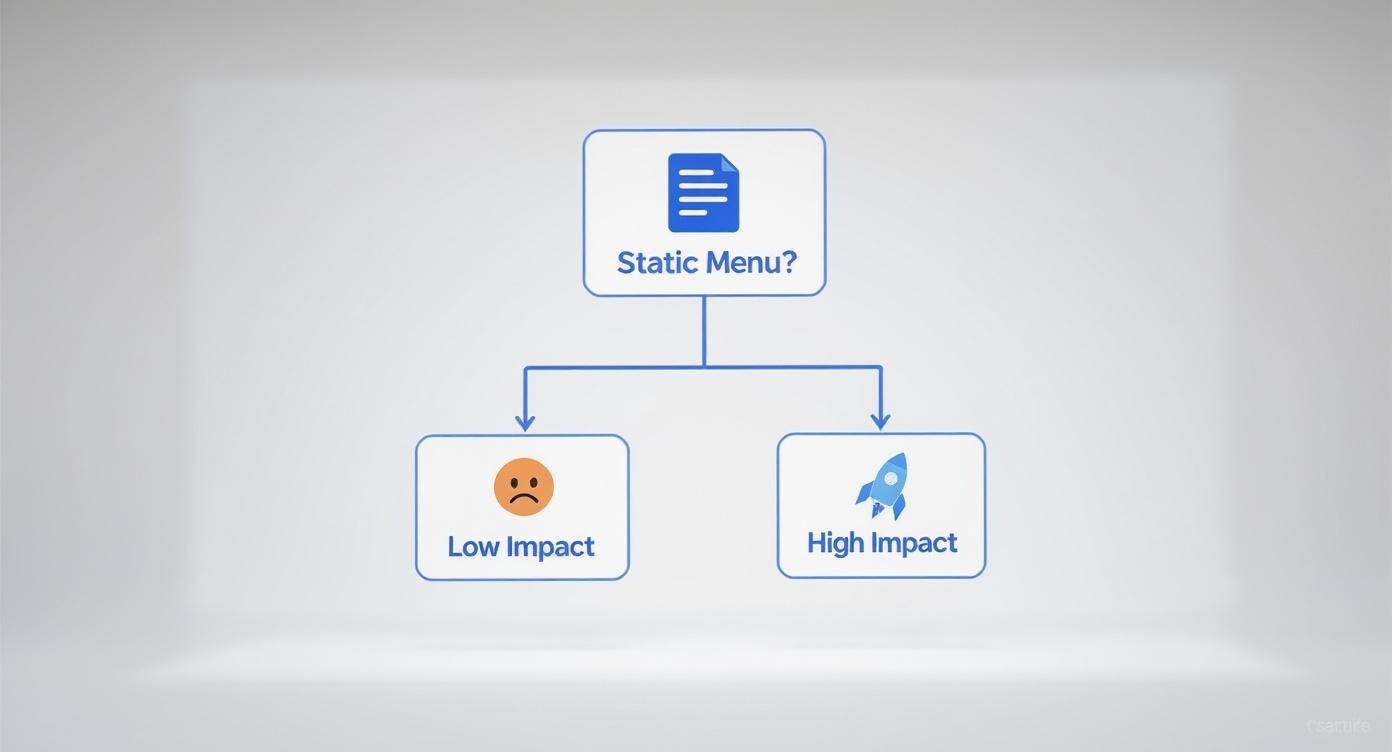
As you can see, sticking with paper is a low-impact game. Going digital opens up a whole new world of dynamic, high-impact possibilities.
To make the indoor vs. outdoor decision easier, here's a quick breakdown of what specs matter most for your restaurant's specific needs.
| Specification | Indoor Displays (e.g., Menu Boards) | Outdoor Displays (e.g., Drive-Thru) | Why It Matters for Restaurants |
|---|---|---|---|
| Brightness (Nits) | 350-700 nits | 2,500+ nits | An outdoor screen needs to be 5-7x brighter to fight sun glare. Too dim, and your drive-thru customers can't read the menu. |
| Weatherproofing | None | IP65 or higher rating | Essential for protecting electronics from rain, dust, and humidity, preventing costly failures and downtime. |
| Operating Temp. | 32°F to 104°F | -22°F to 122°F | Outdoor screens have internal climate control to survive freezing winters and scorching summers without shutting down. |
| Durability | Standard glass/plastic | Vandal-resistant, tempered glass | Protects your investment from accidental bumps in a busy dining room or potential vandalism in an unsecured outdoor location. |
| Cost | Lower initial investment | Higher initial investment | The robust engineering for outdoor use (brightness, climate control, casing) comes at a premium but is critical for reliability. |
This table shows it's not just about putting a screen outside; it’s about choosing a piece of hardware specifically engineered for that environment to ensure it performs day in and day out.
Once you've settled on an indoor or outdoor setup, you’ll run into a few technical terms. Don't let them intimidate you—they're pretty straightforward once you know what they mean.
Screen Brightness (Nits): Think of nits as the horsepower behind a screen's brightness. Inside, with normal restaurant lighting, 350-500 nits will do the job perfectly. But for a screen facing a sunny window or sitting outside, you need 2,500 nits or more to keep your content from looking washed out.
Commercial vs. Consumer Grade: It’s so tempting to grab a cheap TV from a big-box store, but it’s a rookie mistake. Commercial-grade displays are built to run 16-24 hours a day, 7 days a week. They also have better warranties and are designed to be mounted vertically (portrait mode) without issues, giving you far more reliability and flexibility.
Screen Resolution: This is all about clarity. How sharp do your images and text look? Full HD (1920×1080 pixels) is the industry standard for most restaurants and looks fantastic for menus and promo videos. If you're going for a giant video wall that customers will see up close, 4K Ultra HD might be worth it for that extra wow factor.
The real difference isn't just about brightness or a tougher shell. Commercial displays are truly engineered for the marathon of continuous business operations. A consumer TV in that role will burn out fast, and you can bet its warranty will be void.
Beyond the specs, the physical form of your hardware shapes how customers will use it. Each type has a specific job to do in your restaurant.
By thinking through your restaurant's unique needs—from its physical location and lighting down to the kind of experience you want for your guests—you can pick hardware that doesn't just look good, but actively works to grow your bottom line.
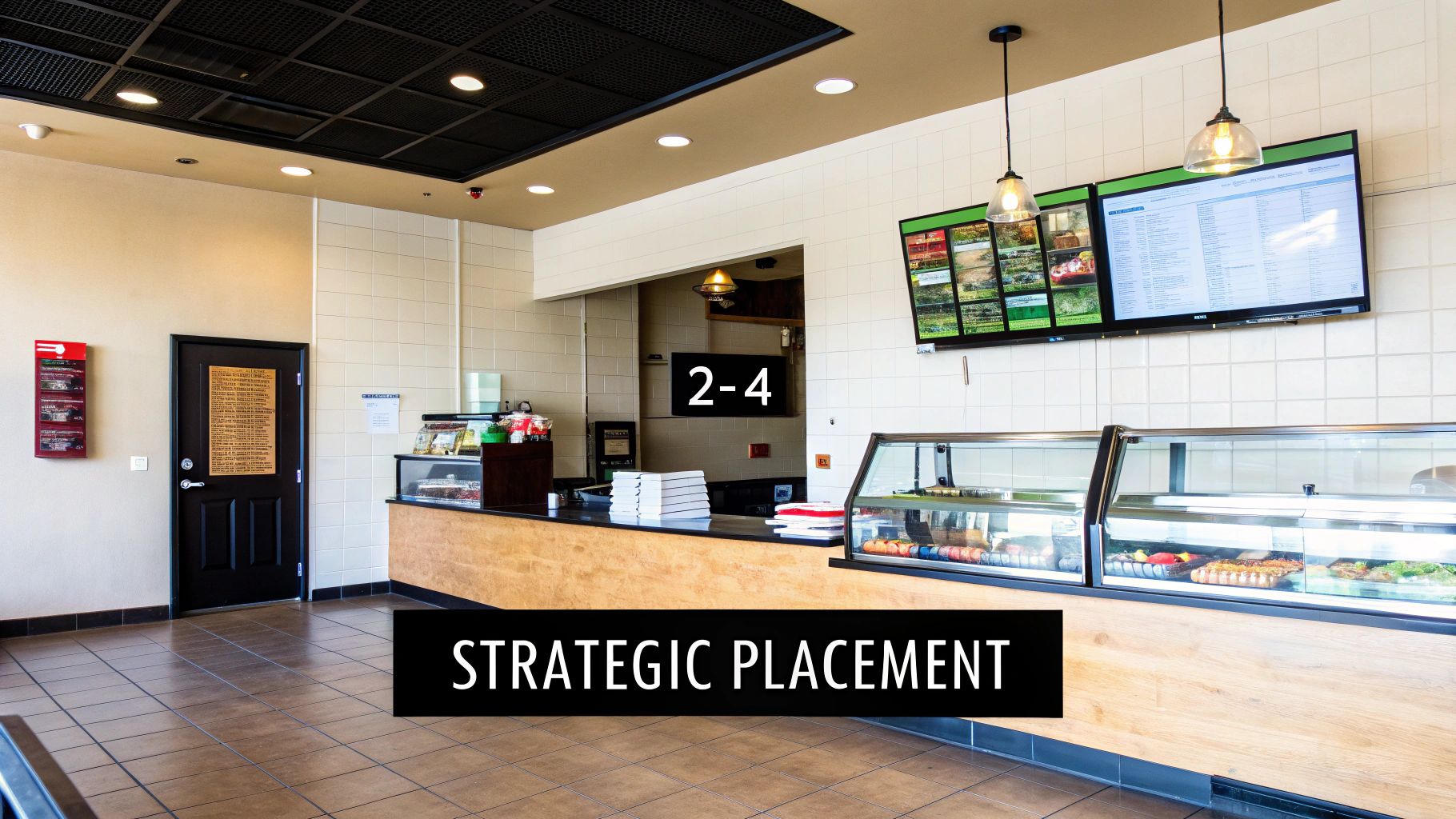
Having the best digital signage hardware is only half the battle. If you don't place it strategically, even the brightest, sharpest screen becomes little more than expensive wall art. The real magic happens when you understand the flow and psychology of your guests—placing your message exactly where it will have the biggest influence.
Think of your restaurant as a journey with key moments. Every spot where a customer pauses, waits, or makes a decision is a golden opportunity. Pinpointing these hotspots is the first step toward creating a signage network that actively guides guests and, most importantly, drives sales.
Every restaurant has its own unique high-traffic zones. By putting screens in these areas, you make sure your content is seen by the most people at the moments it matters most. It’s all about matching the message to the location.
Strategic screen placement isn't just about visibility; it's about context. The right message in the right place at the right time feels like a helpful guide, not a pushy ad. That subtle difference is everything when it comes to influencing decisions without being intrusive.
Once you've mapped out your hotspots, it’s time to get technical. Poor mounting, awkward viewing angles, or a mess of visible cables can completely ruin the professional look you're going for. A clean, seamless installation makes the technology feel like a natural part of your restaurant's design.
To make sure your setup is both effective and professional right from the start, a little planning goes a long way. A simple checklist can help you cover all your bases before a single bracket touches the wall.
Walk through these steps to ensure a smooth, pro-level installation that gets the most out of your digital signage.
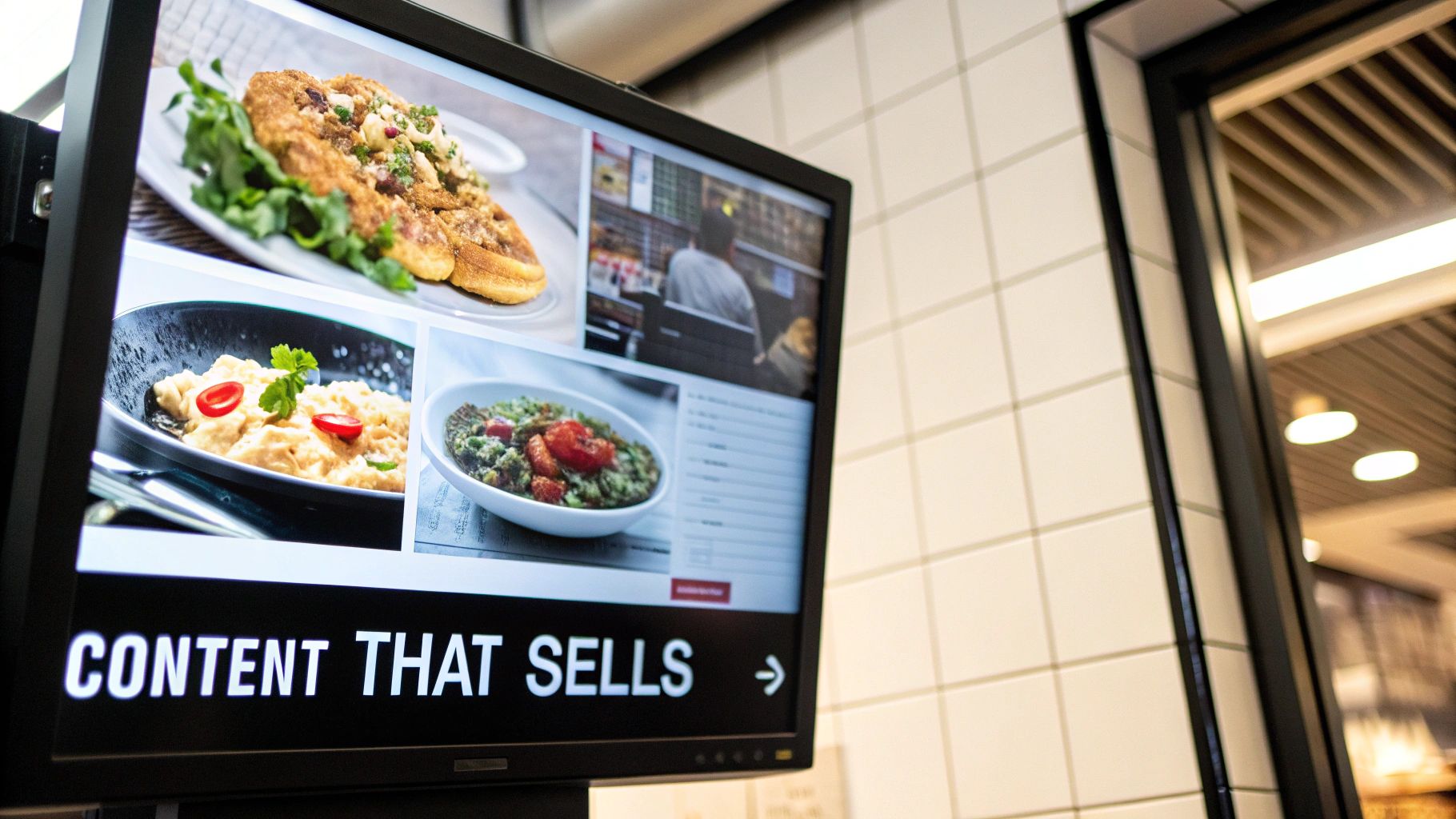
Your screens are a stage, and your content is the star of the show. While great hardware and smart placement set the scene, it’s a killer content strategy that actually captivates your audience and drives sales. This is where you move beyond a simple list of menu items and turn your digital signs into an active, persuasive member of your sales team.
Think of it as telling the right story to the right person at exactly the right time. Instead of a single, static menu, you’re creating a dynamic show that changes throughout the day, automatically shifting to meet your customers' cravings and your business goals.
One of the most powerful tools in your digital signage playbook is dayparting—scheduling different content to run at specific times of the day. It sounds simple, but the impact on relevance and sales is huge. A customer popping in for breakfast needs something completely different from someone looking for a late-night snack.
Your content needs to match that rhythm. Forget the old days of manually swapping out signs. With modern software, you can plan and schedule your content weeks in advance, creating a perfectly timed, automated experience.
This kind of automated scheduling makes sure your message is always on point, letting your signs work smarter, not harder. To make this happen seamlessly, consider leveraging a cloud content management system to manage all your content and schedules from anywhere.
Let's be honest: visual appeal is everything. We all eat with our eyes first, and digital signage gives you a brilliant canvas to show off your food in the best possible light. Static images are good, but high-quality video is a complete game-changer.
Imagine a short, slow-motion clip of an epic cheese pull on a slice of pizza. Or steam rising from a perfectly cooked steak. This is that "food porn" style content that is incredibly persuasive and can make your highest-margin items impossible to resist.
A well-crafted content strategy does more than just display prices; it tells your brand's story. Use your screens to introduce your staff, share the origin of your ingredients, or highlight community involvement. This personality is what builds loyalty beyond just the food.
The impact here isn't just a gut feeling; it’s backed by hard data. Digital menu boards have a proven track record of boosting sales and directly influencing what customers order. Studies show restaurants with digital menus see sales lifts from 8% to as high as 37%. Even more telling, 80% of viewers admit to making an unplanned purchase based on something they saw promoted on a digital screen.
Your screens are also a direct line to your community. Integrating social media feeds is a fantastic way to display user-generated content, turning your happy customers into your best brand ambassadors. Create a unique hashtag, encourage guests to post photos of their meals, and feature the best shots right on your screens.
This strategy gives you an endless stream of authentic, free content and builds a powerful sense of community around your brand. It shows you're listening and creates a fun, interactive vibe.
Finally, use your screens to tackle one of the biggest headaches in any restaurant: the wait. Engaging content can make perceived wait times feel much shorter. Instead of staring at a wall, customers can watch fun videos, read interesting facts about your restaurant, or see your social media feed in action. It’s a simple distraction that keeps guests happy and makes any delay feel like no time at all, improving the entire experience from the moment they walk in.
Truly smart digital signage doesn't just sit on a wall—it talks to the other technology in your restaurant. Think of it less like a standalone TV and more like the central hub for all the tools you rely on every single day. When you connect your screens to your other systems, they stop being passive displays and become an intelligent, automated part of your operation that actively boosts efficiency and drives sales.
The single most important connection you can make is with your Point of Sale (POS) system. By linking your signage directly to your POS, you unlock a level of speed and agility that just isn't possible otherwise. Suddenly, manual updates are a thing of the past, and your staff is free to focus on what actually matters: taking care of your guests.
Picture this: it's the middle of a chaotic lunch rush, and you've just sold the last of your signature brisket. With an integrated system, the moment a team member 86es that item in the POS, it vanishes from every digital menu board in the building. Instantly. No one has to scramble for a roll of tape or awkwardly tell a customer they can't have what they just saw on the menu. That kind of real-time inventory management is a total game-changer.
But this connection does a lot more than just manage what's in stock.
This isn't just about convenience. It’s about running a tighter, smarter, and more profitable restaurant where all your technology works together seamlessly.
So, how do you know if your awesome new content is actually making a difference? Integration is the key. When you connect your signage system to analytics software, you can finally stop guessing and start making data-driven decisions. This gives you a direct line of sight into what grabs your customers' attention and, more importantly, what convinces them to spend more.
Advanced systems can track performance indicators that directly tie what's on your screen to what's happening at the cash register. For example, you could see exactly how a promotion for a high-margin dessert impacts its sales figures during the hours it's displayed. Knowing which visuals and offers truly move the needle is everything. The right studio-grade LED video processor makes sure that high-performing content is delivered with incredible clarity.
By analyzing how long customers look at certain parts of your menu and linking that to POS data, you can see which items or promos don't just get views—they get sales. That data is how you calculate a clear, defensible return on your investment.
This data-backed approach lets you constantly fine-tune your strategy, doubling down on what works and ditching what doesn't. The move toward this kind of integration is happening globally, especially in markets with solid digital infrastructure. For instance, China and other Asia-Pacific markets are way ahead in adopting digital signage for restaurants, mostly because of deep integration with mobile payment platforms like WeChat Pay and Alipay that cater to a very tech-savvy crowd. You can learn more about these global market trends and findings. It all goes to show how a connected tech ecosystem creates a far better and smoother experience for the customer.
Jumping into the world of digital signage can feel like a big step, often bringing up questions about cost, complexity, and how much work it’ll all be. If you’re thinking about making the upgrade but still have some nagging concerns, you’re definitely not alone. This section is here to give you clear, straight-ahead answers to the most common questions we hear from restaurant owners, cutting through the jargon so you can make a smart decision.
Think of this as a quick, practical chat. We'll cover everything from the initial investment and how easy these systems really are to use, to what kind of upkeep is needed and what else you can do with your screens besides just showing the menu.
Let’s get right to it: the bottom line. The cost for a digital signage setup can swing pretty widely, but it’s often more affordable than people think. The final price really comes down to a few key things: the quality of the screens you choose, the features in your software, and how complex the installation is.
For a basic, single-screen setup in a small café or bistro—think one commercial-grade display, a media player, and the software subscription—you could be looking at a starting price around $1,500 to $3,000. If you're planning a more involved multi-screen digital menu board, that range might climb to $5,000 to $10,000.
It helps to stop thinking of this as just a cost and start seeing it as an investment in a powerful sales tool. Many owners we work with begin with a modest setup, see the return in higher sales and better efficiency, and then strategically expand from there.
Just remember to account for both the upfront hardware and any ongoing software fees, which are usually monthly or annual. Those subscriptions are crucial—they're what let you manage your content, schedule promos, and keep everything running without a hitch.
The thought of wrangling another piece of tech can be draining, but modern systems are built for busy restaurant owners, not IT pros. The days of needing to call in an expert just to change a price are long gone. Today’s digital signage is designed to be incredibly user-friendly.
Most systems operate on a cloud-based Content Management System (CMS). That’s just a fancy term for a website you log into from any computer or tablet to make your changes and hit "publish." Honestly, if you can update a Facebook page, you can manage this.
Here’s what that actually looks like:
And if you integrate your digital signage with your Point of Sale (POS) system, it gets even easier. In that case, menu updates can happen automatically, meaning zero extra work for you or your staff.
This is another area where modern tech makes your life easier. Unlike your kitchen equipment, digital displays are surprisingly low-maintenance, especially if you invest in commercial-grade screens from the get-go. These aren't just big TVs; they’re built to handle the heat and long hours of a restaurant environment without breaking a sweat.
Your main job will be keeping them clean. A simple wipe-down with a soft, dry cloth every so often is usually all it takes to keep the screens free of dust and looking crisp.
Beyond that, just keep two things in mind:
Plus, any quality commercial display will come with a multi-year warranty, which gives you serious peace of mind and protects your investment down the road.
Absolutely—and you really should! This is where digital signage leaves static signs in the dust. Just using your screens as a digital price list is a huge missed opportunity. They are dynamic, powerful marketing channels sitting right in your restaurant.
The best strategy is to create a schedule, or "playlist," that rotates different types of content throughout the day. This turns your displays from a simple utility into a core part of the dining experience, one that’s actively working to build your brand and your sales.
Think about all the things you can weave into your content loop:
When you mix up your content like this, you turn a passive screen into an active part of the atmosphere. Your displays become a tool for upselling, brand building, and creating a vibe that makes people want to come back again and again.
Ready to see how digital signage can transform your restaurant's atmosphere and boost your sales? The team at Smart LED Inc. specializes in creating high-impact visual solutions tailored for businesses just like yours. Explore our range of indoor and outdoor displays and start building your perfect setup today. Visit us at https://smartledinc.com to learn more.
Picture this: you take the flash and spectacle of a Times Square billboard, slap it on the back of a truck, and send it wherever
A wall of TV screens is exactly what it sounds like: a big, impressive display made by tiling multiple TVs together so they act like
Picking the right displays for shows can feel like a high-stakes guessing game. Get it right, and you create an immersive world that captivates your
"*" indicates required fields