
Uncategorized
Digital Billboard Truck: Boost Your Campaign with Mobile Ads
Picture this: you take the flash and spectacle of a Times Square billboard, slap it on the back of a truck, and send it wherever
So, you're thinking about a video wall. The big question on everyone's mind is always: what's this actually going to cost?
The honest answer is, it depends. A straightforward, smaller video wall system might run you anywhere from $25,000 to $75,000. But for the big leagues—we're talking massive, super-sharp displays for large venues or critical command centers—the investment can easily climb north of $100,000, sometimes reaching $300,000 or more.
The final price tag is a mix of a few key ingredients: the sheer size of the wall, its resolution (what we call pixel pitch), and all the extras like professional installation and ongoing support.
Getting a handle on a realistic budget is ground zero for any video wall project. That initial quote isn't just for the LED panels. It’s an all-in number that covers the hardware, the mounting system to hold it all together, and the brains (the processor) needed to make your vision a reality. Nailing down this financial snapshot early saves a lot of headaches and ensures your expectations are locked in with what's possible.
The two biggest levers that move the price up or down are the wall's physical size and its pixel pitch.
Think of pixel pitch as the screen's sharpness. A smaller number means the individual pixels are packed closer together, creating a razor-sharp image that looks incredible up close—but it also costs more. A giant screen in an airport, viewed from a distance, can get away with a wider pitch. But for a corporate lobby where people are walking right past it, you’ll want a much finer pitch.
Let's put this into a real-world context. A modest video wall for a company's reception area will have a completely different budget than a colossal screen built for a sports arena. That lobby wall needs to be flawless from just a few feet away, which demands a premium, fine-pitch display. In contrast, the arena screen is seen from hundreds of feet out, so it can use a more budget-friendly, lower-resolution panel and still deliver a huge impact.
This chart gives you a ballpark idea of how pricing plays out for different applications.
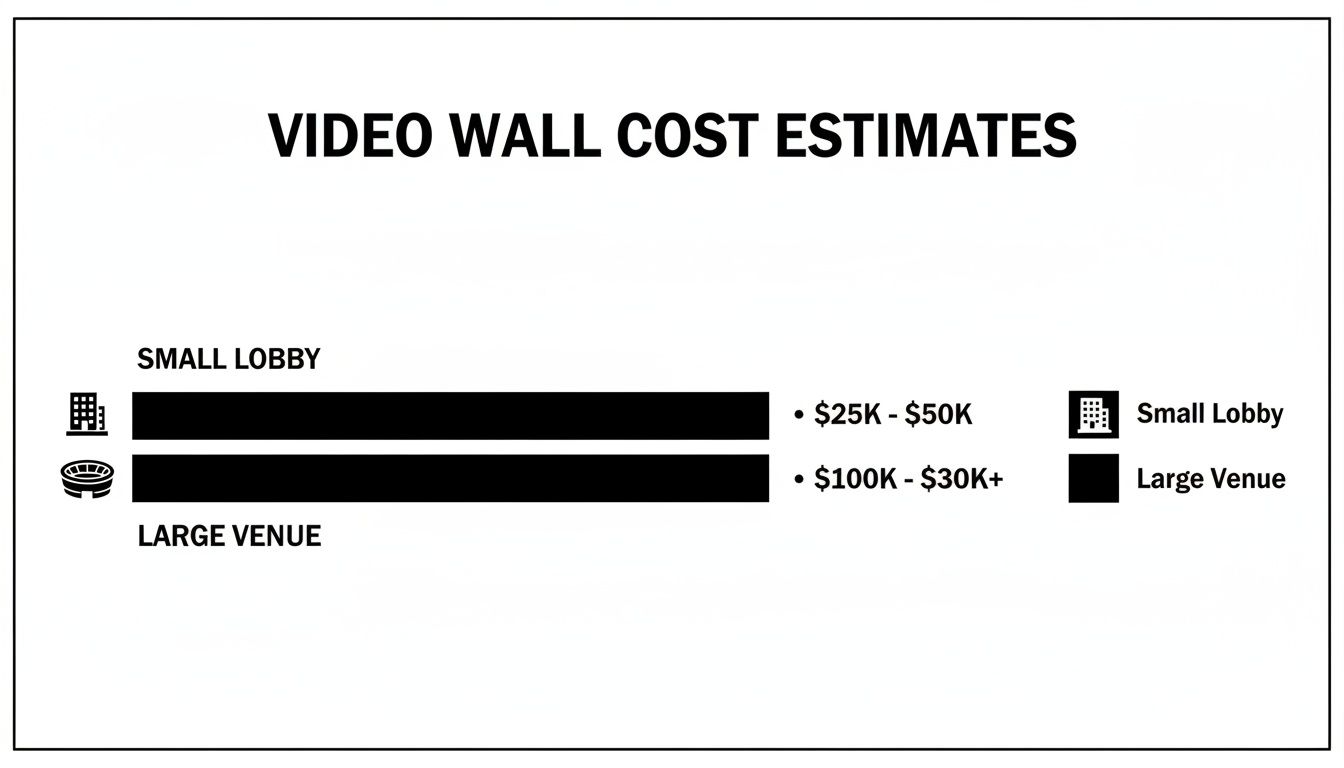
As you can see, the investment scales pretty dramatically depending on where the screen is and who's looking at it.
Here's a pro tip: Understanding the link between viewing distance and the resolution you actually need is the single best way to manage your budget. Paying a premium for ultra-high resolution that your audience will never be close enough to appreciate is just burning money.
The goal is always to find that sweet spot between breathtaking visual performance and what your budget can handle. A great first step is to explore the different options for an LED video wall for sale to see for yourself how different specs affect the final cost. Once you grasp these core ideas, you can build a budget that truly reflects your goals and financial reality, setting your project up for success from day one.
To really get a handle on your video wall’s price, you have to look under the hood. The final number on your quote isn’t just pulled out of thin air; it’s a sum of several high-tech parts, and each one plays a huge role in how the system performs—and how much it costs.
Knowing what these components are does more than just satisfy your curiosity. It empowers you to have smarter conversations with vendors and make confident decisions about where to put your money.
The biggest chunk of the cost is almost always the display technology itself, meaning the individual LED or LCD panels that make up the screen. This is where the magic happens, but it’s also where the specs can make the price swing wildly.
Think of pixel pitch like the thread count on high-end bedsheets. A higher thread count means the threads are woven tighter, creating a smoother, more luxurious feel. It’s the same with pixel pitch. A smaller pitch means the tiny LED lights are packed more densely, which creates a sharper, higher-resolution image that looks absolutely stunning, even when you're standing just a few feet away.
But that density comes at a price. More LEDs per square foot means more raw materials, a more complex manufacturing process, and higher power consumption—all things that drive up the cost. It’s why a 1.5mm pitch wall for a corporate boardroom is worlds apart in price from a 3.9mm pitch wall for a concert stage, even if they’re the exact same size.
The rule of thumb is simple: the closer your audience gets, the smaller (and more expensive) your pixel pitch needs to be. Trying to use a wide-pitch screen in a close-up setting is a recipe for a pixelated, unprofessional mess.
Choosing the right pixel pitch for your viewing distance is the single most important decision you can make to control your video wall's price. There's no sense in paying a premium for a super-fine pitch if your audience will never be close enough to tell the difference.
The choice between LED and LCD technology also plays a massive role in the final cost. People often use the terms interchangeably, but they are fundamentally different technologies.
While LCD might have a lower initial price tag, the market has clearly picked its favorite. The LED video wall sector was valued at USD 24.37 billion and is expected to more than double by 2032, thanks to its unbeatable brightness and seamless look. This explosive growth has also made the technology more affordable; the cost of fine-pitch LED modules has dropped by over 50% in recent years, making those massive, high-impact walls more accessible than ever. You can dig into these trends on 360iResearch.com.
If the panels are the face of your video wall, the video processor is the brain. This powerful box is what takes all your content—from a simple laptop display to multiple live camera feeds—and intelligently scales it to fit perfectly across the entire screen. It’s the crucial component that makes sure everything is perfectly synchronized and seamless.
Basic processors are fine for simple, full-screen layouts. But if you need to manage multiple windows, create complex arrangements, or handle ultra-high-res 4K or 8K content, you'll need a more advanced (and pricier) unit. The complexity of what you want to show directly determines the level of processor you need, making it another key factor in your total video wall price. If you want to see how these components fit together in a real-world product, you can explore the specs of a 2.5mm LED video wall product line.
Finally, you need a way to hold it all together. Specialized mounting hardware is absolutely critical, not just for safety but for achieving that perfect, polished look. A precision-engineered mounting system is what guarantees that every single panel aligns perfectly, creating that flawless, single-screen illusion you’re paying for.
The cost of the mount can change based on a few things:
It might feel like a background component, but skimping on the mounting system is a huge mistake. A high-quality mount protects your investment, ensures a professional finish, and saves you from the headache of costly misalignments and future repairs.
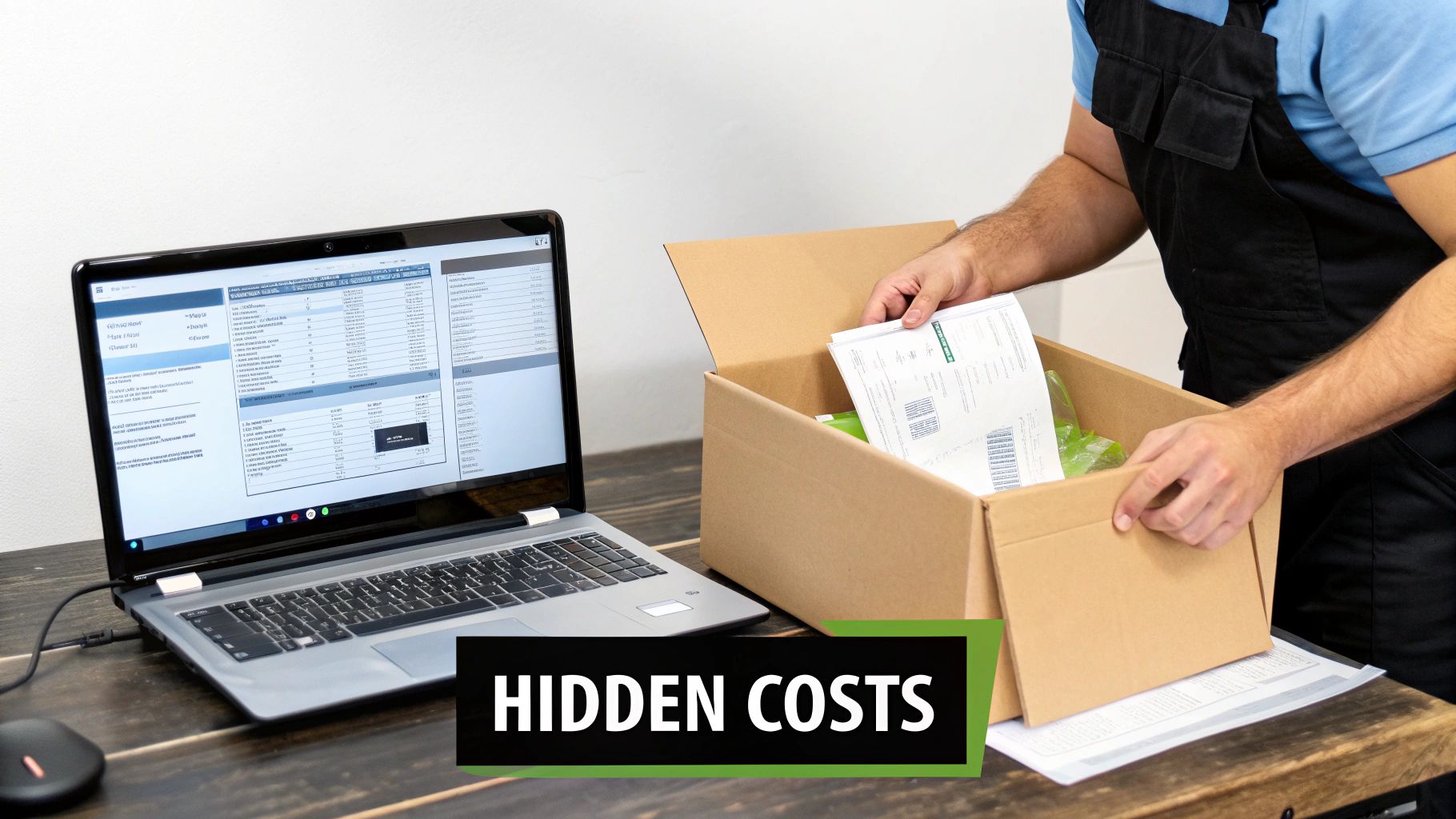
The initial quote for your video wall hardware is a big number, but it's almost never the final one. Thinking that hardware quote covers the complete video walls price is one of the most common pitfalls we see. To build a budget that won’t give you any nasty surprises, you have to account for all the other services and fees that turn a pallet of panels into a show-stopping digital centerpiece.
These aren't "hidden" costs in a deceptive sense; they're essential services that guarantee your investment works perfectly right from the start. By understanding what they are and planning for them, you can dodge frustrating budget overruns and keep your project sailing smoothly.
Let’s pull back the curtain on these often-overlooked expenses.
The biggest additional cost is almost always professional installation. This is far from a DIY weekend project. It’s a highly technical process that demands specialized skills for perfect panel alignment, secure structural mounting, and safe electrical work. And the cost can swing wildly depending on how complex your site is.
Think about what installers have to deal with:
A straightforward, ground-level installation might add 10-15% to your hardware cost. But a complex project? That could easily tack on 30% or more.
A professional site survey before you sign off on a quote is non-negotiable. It lets the installation team spot any potential headaches—from uneven walls to electrical shortcomings—and give you an accurate, all-in price for the job.
LED panels are delicate, expensive pieces of electronics. They don't just get dropped in the mail. They require specialized freight services to make sure they arrive without a scratch. Shipping costs will depend on the system's total weight, the distance it has to travel, and the kind of delivery you need.
Remember to budget for:
These logistics can easily add several thousand dollars to your final bill, a nasty shock if you weren't expecting it. The same logic applies to outdoor projects, and you can get a better feel for those numbers by looking into the factors that influence outdoor LED sign cost.
Your video wall is only as good as the content you put on it. The software that runs the show, usually called a Content Management System (CMS), often involves ongoing subscription fees. These can be monthly or annual and vary based on how many screens you have and what features you need.
Then there's the cost of the content itself. You might be able to handle simple images and videos in-house, but for professional, dynamic content, you’ll likely need graphic designers or video producers. Beyond the hardware and installation, recurring costs can pop up from software licenses and content creation. If you're planning on really dynamic visuals, it's a good idea to explore pricing models for advanced AI content creation tools to get a handle on potential future expenses.
Right out of the box, individual LED panels can have tiny variations in color and brightness. Initial system calibration is the crucial step where a technician uses specialized gear to make every panel identical. This ensures your entire wall displays a perfectly seamless, color-accurate image—it's what separates an amateur look from a professional one.
Finally, while most video walls come with a standard manufacturer's warranty (usually 2-3 years), many businesses choose to get extended service contracts. These plans buy you peace of mind, covering parts, labor, and on-site support for a longer stretch. It’s your best defense against unexpected repair bills and a great way to minimize downtime for your high-impact display.
The final quote for your hardware and installation isn’t the end of your investment—it's just the beginning. To really understand the video walls price, you have to look past the initial purchase and calculate the Total Cost of Ownership (TCO). This approach gives you the full financial picture by adding up all the ongoing expenses that come with running a powerful digital display over its entire lifespan.
Thinking in terms of TCO isn't just about uncovering hidden fees; it's a strategic move. It lets you compare different systems on a true apples-to-apples basis and ensures your budget is built for the long haul, protecting you from surprise operational costs down the road.
Once you have a firm grasp of the total cost, the conversation can finally shift from expense to value by zeroing in on your Return on Investment (ROI).
Think of buying a video wall like buying a company vehicle. You wouldn’t just budget for the sticker price. You'd also have to account for fuel, insurance, and regular maintenance. A video wall is no different. Its TCO is simply the initial investment plus all the recurring operational costs.
These ongoing expenses typically include a few key things:
Projecting these costs over a five- or seven-year period gives you a much more realistic view of the true financial commitment, taking you far beyond the day-one price tag.
To illustrate, here’s a simple TCO projection for a typical mid-sized retail video wall over five years. This example helps visualize how ongoing expenses contribute to the overall investment.
Sample 5-Year Total Cost of Ownership (TCO) Projection
| Cost Category | Year 1 Cost | Years 2-5 Annual Cost | 5-Year Total |
|---|---|---|---|
| Hardware & Installation | $55,000 | $0 | $55,000 |
| Electricity | $2,400 | $2,400 | $12,000 |
| CMS Software License | $1,200 | $1,200 | $6,000 |
| Maintenance Contract | $0 (covered) | $2,000 | $8,000 |
| Content Creation | $3,000 | $3,000 | $15,000 |
| Total | $61,600 | $8,600 | $96,000 |
As you can see, the initial $55,000 purchase grows into a $96,000 total investment over five years. Budgeting for the TCO from the start prevents these predictable costs from becoming painful surprises.
While TCO tells you what you’ll spend, ROI tells you what you’ll get back. A video wall isn’t just a piece of tech; it's a powerful business tool designed to hit specific goals. Measuring its ROI is all about connecting your investment to tangible, positive business outcomes.
The global video wall market is expected to skyrocket to USD 101.0 billion by 2033. This massive growth is being driven by businesses that see the technology's powerful ROI potential, with payback periods in high-traffic retail or venue settings often clocking in under 18 months. As the tech gets better and costs come down, these systems are becoming a no-brainer investment for a wider range of companies. You can dive deeper into these trends in this detailed report on the video wall market.
The key to a strong ROI is strategy. A video wall installed without clear objectives is just an expensive, pretty screen. But one deployed with a specific purpose—to drive sales, boost engagement, or generate ad revenue—becomes a strategic asset that pays for itself.
Calculating ROI means you have to define what success looks like and then figure out how to measure it. The metrics you track will depend entirely on your goals.
By setting these metrics before you even install the wall, you create a clear roadmap for success. This proactive approach transforms the video walls price from a daunting expense into a calculated investment in your organization's future.
Getting a high-impact video wall doesn't have to mean draining your entire capital budget. The real key to managing your video walls price is making smart, informed decisions before you sign on the dotted line. When you understand where the costs are really coming from, you can put your money where it counts and stop overspending on features you simply don’t need.
One of the most powerful moves you can make to lower your initial investment is to work with a factory-direct supplier like Smart LED Inc. This completely cuts out the middlemen—the distributors and resellers who each add their own markup along the way. Buying direct means you get premium technology without paying for multiple layers of profit, which often translates into major savings.
This model also just makes everything simpler. You get a single point of contact for the entire project, from design and sourcing to long-term support. It streamlines communication and ensures you’re getting expert advice straight from the source.
Honestly, the single biggest mistake that inflates a video wall budget is paying for a resolution your audience will never even notice. As we’ve covered, a tighter pixel pitch creates a sharper image, but it also costs a lot more. The secret is picking a pitch that’s perfectly matched to the average viewing distance in your space.
It’s a simple but crucial calculation:
Just by doing a quick site analysis to figure out how far away most people will be, you can avoid overpaying for pixel density you don't need. This one decision can have the biggest impact on your total video walls price.
If the upfront cost of your dream video wall feels like a hurdle, remember you don't have to build it all at once. A phased rollout lets you start with a smaller, foundational display and expand it over time as your budget allows. This is only possible with modular LED technology, where new panels can be seamlessly added to an existing wall.
This strategy gets your project off the ground and starts delivering value right away, all while spreading the total investment over several budget cycles. It's a practical way to achieve a large-scale vision without the massive initial expense.
A phased approach gives you the flexibility to grow your digital canvas organically. You can start by making an impact in a key area and build upon that success as your needs and resources evolve.
Finally, don't forget that a direct purchase isn't your only path forward. Many suppliers offer financing or leasing programs that can turn a large capital expenditure into manageable monthly payments. This can make even a high-end system much more accessible without disrupting your cash flow.
Leasing is especially useful if you want to keep your technology fresh, as it often includes options to upgrade your system at the end of the term. By exploring these strategies—from buying direct to smart specification and flexible financing—you can make your video wall project a financial reality without compromising on quality or impact.
The video wall industry never sits still. As technology races forward, the landscape of what's possible—and what it costs—is constantly being redrawn. Looking at these trends helps you see the long-term value of your investment. Think of the video walls price not just as a one-time purchase, but as a strategic entry point into a powerful and evolving communication platform.
The biggest shift we're seeing? The relentless march toward greater accessibility. Thanks to manufacturing breakthroughs and fierce competition, video walls are moving out of the luxury boardroom and into the mainstream. What was once reserved for global corporations is now a realistic option for mid-sized businesses, churches, and even schools.
Looking over the horizon, two game-changing innovations are poised to define the next generation of video walls: MicroLED and Artificial Intelligence.
MicroLED technology is the heir apparent, promising even better brightness, insane contrast levels, and greater energy efficiency than what we have today. It's still a premium choice, but production is ramping up. As manufacturing matures and becomes more widespread, MicroLED will become the new gold standard. And the best part? That will likely push the price of today's high-end LED tech down, making it even more affordable.
At the same time, AI is making these displays a whole lot smarter. The video walls of tomorrow will use AI to do some incredible things:
These intelligent features will completely change how we calculate ROI, moving beyond simple ad revenue to measure deeper engagement and true personalization.
As technology advances, the focus will shift from the hardware itself to the experiences it can create. The true value will lie in how these dynamic canvases can adapt, interact, and deliver personalized messages on a massive scale.
This forward momentum is fueling some serious market growth. The global video walls market is projected to surge to USD 27.8 billion by 2035, growing at a healthy 10.5% each year. This boom shows how production scale is making prices more attainable, with the cost of some entry-level systems dropping by 15-20% annually in recent years. Hardware advancements are still leading the charge, making up the biggest piece of the revenue pie. You can find more insights on this growth from industry analysts like Future Market Insights.
Ultimately, the future of video walls is brighter, smarter, and more connected than ever. The constant downward pressure on the video walls price, combined with huge leaps in what they can do, makes one thing clear: now is an excellent time to invest in a technology platform built for whatever comes next.
Even after you've got the basics down, you're probably still left with a few specific questions. That's completely normal. Getting clear, straightforward answers is what helps you budget accurately and feel confident pulling the trigger on such an important investment.
Let's dive into some of the most common questions we hear from buyers trying to figure out the real cost of a video wall.
Hands down, the single biggest element that drives the price of a video wall is its pixel pitch.
Think of it like the thread count on a set of sheets. A smaller pitch means the individual LEDs are packed much closer together, creating a denser, higher-resolution picture that looks incredibly sharp, even when you're standing just a few feet away. But that density requires more hardware and a more intricate manufacturing process, which is why a fine-pitch 1.5mm wall for a boardroom costs significantly more than a 3.9mm wall you'd see on a concert stage.
The key to managing your budget is matching the pitch to your primary viewing distance. Don't pay for resolution you don't need.
This is a big one. As a solid rule of thumb, plan to set aside an additional 15-30% of the hardware cost to cover all the other essentials—things like professional installation, shipping, software, and training.
Of course, that percentage can swing depending on how complex your project is. A simple, flat-wall installation in a room with easy access? You'll probably be on the lower end of that range. But if you're dreaming up a complex curved wall that needs specialized lifts and structural engineering, you'll be pushing closer to that 30% mark.
Always, always ask your vendor for a quote that breaks out these "soft costs" separately. It’s the best way to avoid sticker shock later on.
On paper, an LCD video wall often looks cheaper upfront. This can be true for smaller, indoor setups where you can live with the visible seams (we call them bezels) between the screens.
However, the moment you start thinking about large-scale, truly seamless, or outdoor displays, LED technology quickly becomes the superior—and often more cost-effective—choice in the long run.
LED walls just bring more to the table:
So while the initial price tag for a high-res LED system might be higher than a comparable LCD setup, its incredible performance, easy scalability, and lower maintenance needs often lead to a much better total cost of ownership.
At Smart LED Inc., our factory-direct model cuts out the middleman markups, making sure you get the best possible price without ever compromising on quality. We have the tools and the expertise to help you build the perfect video wall for your budget and your vision. Start planning your project with us today.
Picture this: you take the flash and spectacle of a Times Square billboard, slap it on the back of a truck, and send it wherever
A wall of TV screens is exactly what it sounds like: a big, impressive display made by tiling multiple TVs together so they act like

Picking the right displays for shows can feel like a high-stakes guessing game. Get it right, and you create an immersive world that captivates your
"*" indicates required fields

We have sent a 6-digit verification code to your email. Please enter it below to continue.