
Uncategorized
Digital Billboard Truck: Boost Your Campaign with Mobile Ads
Picture this: you take the flash and spectacle of a Times Square billboard, slap it on the back of a truck, and send it wherever
Digital LED signage is what happens when the classic billboard or storefront poster gets a massive, high-tech upgrade. Instead of static ink on paper, it uses brilliant Light Emitting Diodes (LEDs) to create a dynamic display. We’re talking everything from crisp, static text to full-motion, high-definition video, giving businesses the power to change their message on a dime.
Picture this: you're walking down a busy street lined with shops. One store has a simple paper sign taped to the window announcing a sale. The one right next to it, however, has a bright, moving display that’s impossible to ignore. It’s not just showing the sale; it’s running videos of its products in action, flashing customer testimonials, and featuring a countdown timer that creates a real sense of urgency.
Which one do you think is going to pull you in? That’s the raw power of digital LED signage.
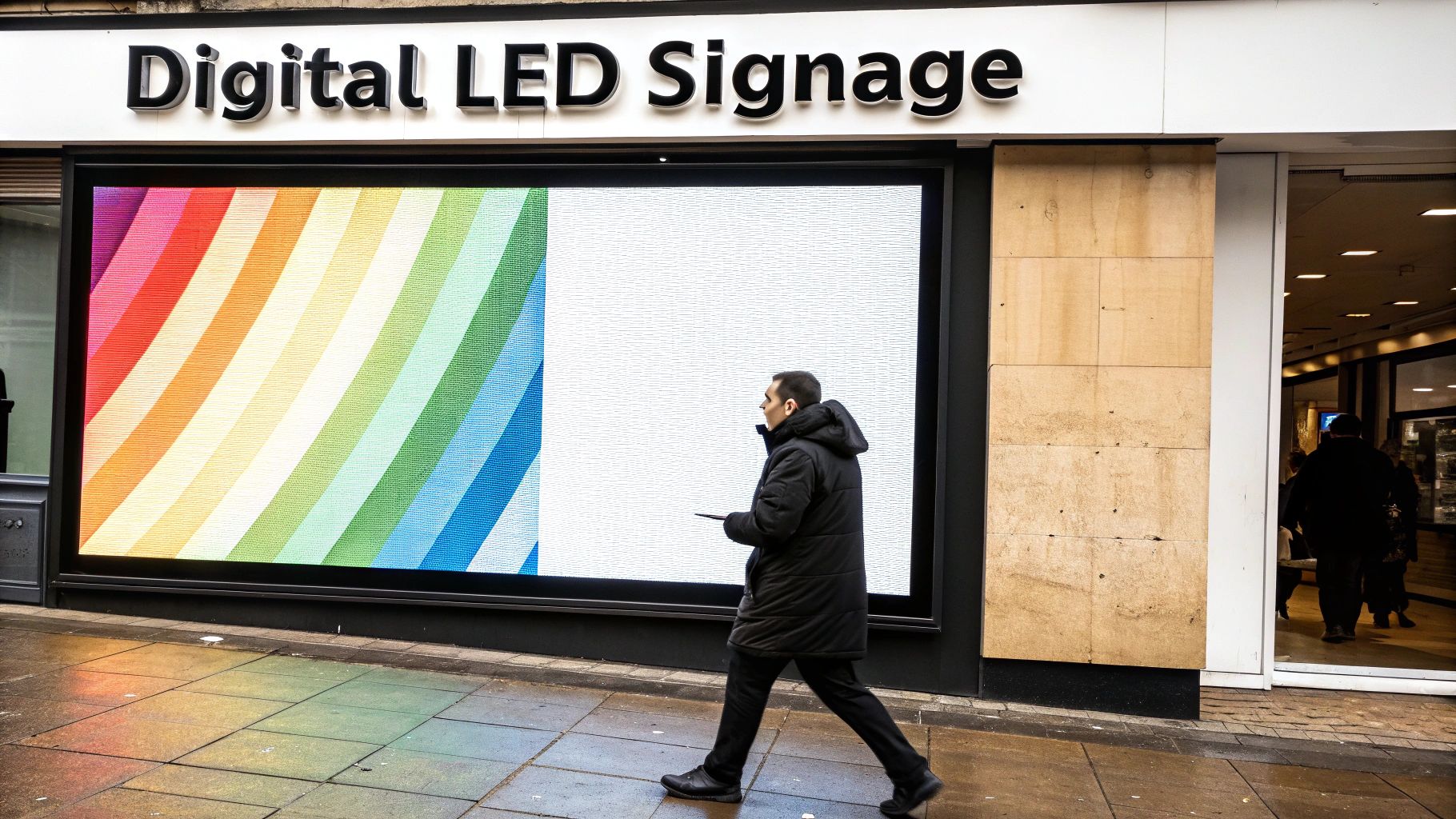
Unlike old-school static signs—which cost a fortune and take ages to replace—digital displays give you incredible flexibility. A restaurant can showcase its breakfast specials in the morning, switch to lunch deals in the afternoon, and then promote happy hour in the evening. All of this happens on the same screen, managed with just a few clicks.
This shift from print to pixels isn't just a fleeting trend; it's a massive market movement. The LED digital signage market was already valued at a staggering USD 30.1 billion in 2024 and is on track to hit USD 51.65 billion by 2031. This explosive growth is all thanks to the technology's incredible image quality, energy efficiency, and sheer durability for both indoor and outdoor environments.
If you think of digital LED signage as just a fancy electronic poster, you're missing the bigger picture. This is a direct, real-time line of communication with your audience.
Digital LED signage transforms a physical location into a dynamic communication hub. It’s no longer about just identifying a business; it’s about creating an experience, delivering timely information, and driving immediate action.
This technology allows businesses to be incredibly relevant and responsive. For instance, a retail store can instantly pivot its display to react to a sudden change in weather—promoting umbrellas during a downpour or sunglasses the moment the sun comes out. That kind of agility is completely impossible with printed materials. For any business ready to tap into this power, understanding the different types of LED signs for businesses is the perfect place to start.
When you stack digital LED signage against traditional static signs, the advantages become crystal clear. It's not just about looking modern; it's about driving real results across key business metrics.
This table breaks down the core differences, showing why so many businesses are making the switch.
| Feature | Digital LED Signage | Traditional Static Signage |
|---|---|---|
| Content | Dynamic, updatable in real-time | Fixed, costly to change |
| Visibility | High-impact, grabs attention | Easily ignored, blends in |
| Cost Over Time | Higher initial cost, zero reprint fees | Lower initial cost, recurring print/install fees |
| Management | Centralized, remote control | Manual, on-site updates |
| Engagement | Interactive, drives action | Passive, informational only |
The bottom line is that while static signs serve a purpose, digital displays offer a level of engagement and return on investment that traditional media simply can’t match. They work harder for your business, 24/7.
Here’s a simple truth: not all digital LED signage is created equal. The technology is incredibly adaptable, which means a display built for a highway billboard would be completely wrong for a corporate boardroom. Getting your head around the key differences is the first step toward finding the perfect fit for your space and your goals.
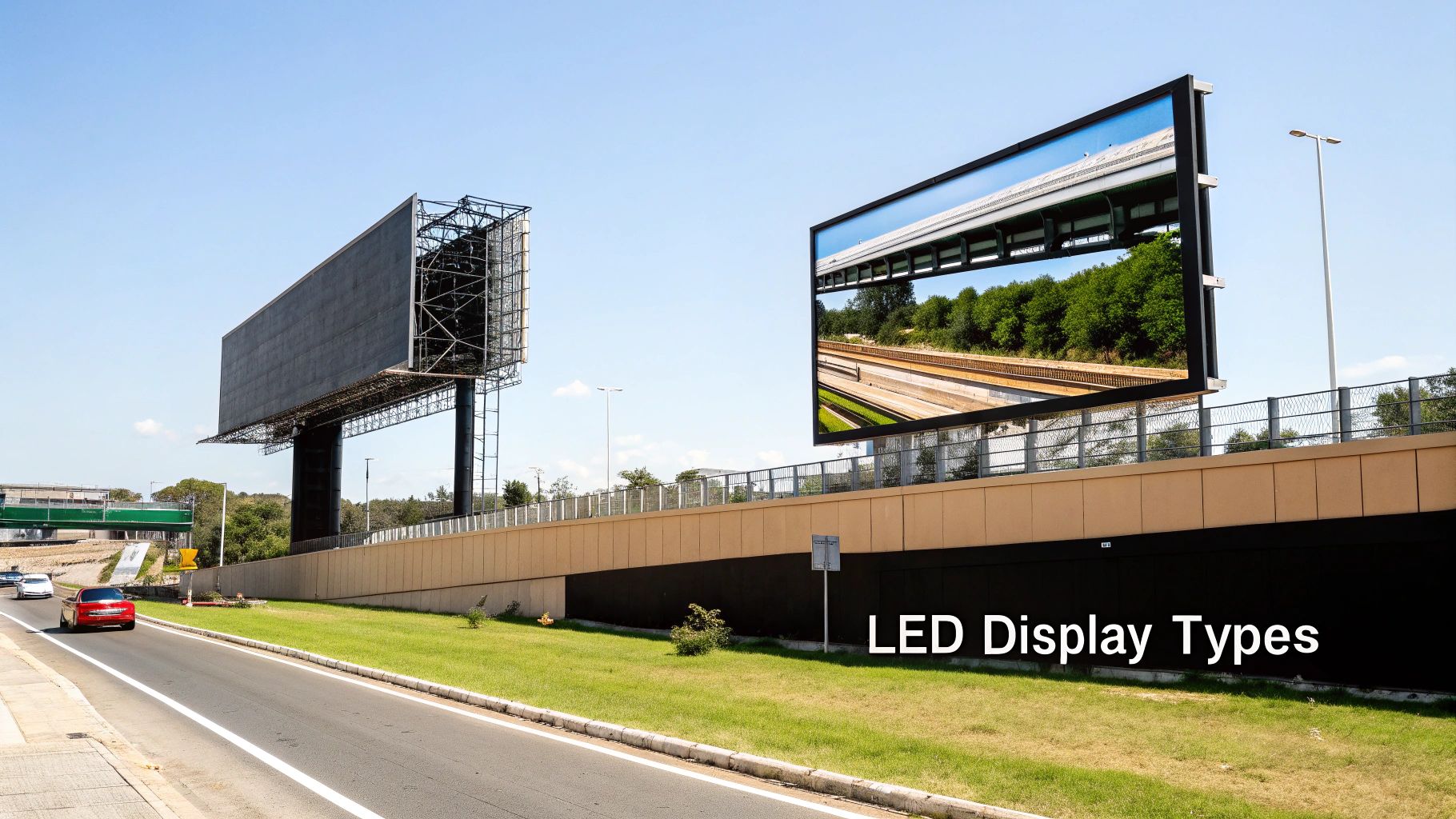
Think of it like choosing a vehicle. You wouldn't use a sports car to haul lumber, and you wouldn't take a semi-truck on a scenic backroad drive. In the same way, the right LED display depends entirely on where it’s going and what you need it to do.
Let's break down the main categories you'll run into, each engineered for a very distinct purpose.
When you see a massive, vibrant advertisement blazing along the highway, you're looking at a classic outdoor LED sign. These displays are the absolute workhorses of the digital signage world, built from the ground up to withstand whatever nature throws at them.
They really come down to two defining features:
The goal here is simple: mass communication from a distance. Think digital billboards, massive stadium screens, and the eye-catching signs you see at big shopping centers. It’s all about grabbing attention from far away with bold, unmistakable messaging.
The moment you move indoors, the whole game changes. Viewers are now much closer to the screen, so the focus shifts from raw power to refined, crisp detail. Indoor displays are perfect for places like retail stores, corporate lobbies, airport terminals, and houses of worship.
An indoor LED display transforms a space. It’s about creating an atmosphere, delivering information, and building a truly immersive brand experience. The goal is to engage people up close, where every single pixel counts.
These screens don't need the brute-force brightness of their outdoor cousins. Instead, they focus on higher resolution and a much smaller pixel pitch—that’s the tiny distance between each individual LED. A smaller pitch means the pixels are packed tightly together, creating a smooth, seamless image that looks absolutely stunning, even when you're standing just a few feet away. For more on creating these visuals, see how you can set up Smart LED indoor LED wall panels.
Taking indoor displays to the next level, you have fine-pitch LED video walls. These represent the absolute peak of high-resolution display technology. You'll find them in broadcast studios, high-stakes command centers, and premium boardrooms where clarity is everything.
A "fine-pitch" display typically has a pixel pitch of 2.5mm or less. This allows for seamless, almost photorealistic images that feel more like a giant, vibrant television than a traditional sign. By combining multiple panels, you can create massive, completely bezel-free video walls of any size or shape you can imagine.
These installations are perfect for:
Diving into a spec sheet for digital LED signage can feel like trying to read a foreign language. You see terms like "pixel pitch" and "nit brightness" thrown around, but what do they actually mean for your project? Getting a handle on these key metrics is the difference between investing in the perfect display and making a very costly mistake.
Let’s translate the tech-speak into practical terms. Think of this as your decoder ring for LED displays, built to give you the confidence to read any spec sheet and know exactly what you’re looking at.
If there’s one spec that matters most for image clarity, it's pixel pitch. Put simply, it’s the distance in millimeters from the center of one tiny LED light to the center of the next one. The smaller the number, the closer the LEDs are packed together.
Think about the screen on your 4K TV or smartphone. The picture is incredibly sharp because millions of pixels are crammed into a small space. Digital LED signage operates on the exact same principle.
Choosing the wrong pixel pitch is like getting glasses with the wrong prescription. An indoor sign with a pitch that’s too high will look blocky and pixelated up close. On the other hand, putting an ultra-fine pitch on a highway billboard is just burning money for detail no one will ever see.
The right pixel pitch all comes down to viewing distance. A great rule of thumb is that the minimum viewing distance in meters is about the same as the pixel pitch in millimeters. So, a P10 (10mm) sign looks best from 10 meters (about 33 feet) back. If you’re aiming for that flawless, up-close clarity indoors, exploring options like the FX2 2.5mm LED video wall product lines is a fantastic place to start.
Next up is brightness, measured in a unit called nits. Ever tried to use your phone under the blazing summer sun? If the screen isn’t bright enough, it’s almost impossible to see. Your LED display faces the exact same battle.
Brightness isn't just about being seen; it’s about having enough power to cut through the ambient light and deliver a message with rich, vibrant colors. Outdoor signs are in a constant war with the sun, which is why they need a much higher nit rating to win.
Have you ever pointed your phone’s camera at a computer monitor and seen those weird flickering bands scroll across the screen? That’s the effect of a low refresh rate. Measured in Hertz (Hz), this spec tells you how many times per second the display redraws the entire image.
For a static sign showing a simple logo, the refresh rate isn't a huge deal. But if you plan on showing any video or fast-moving graphics, a high refresh rate is non-negotiable for a smooth, professional look. A low rate creates motion blur and that distracting flicker that just screams "cheap."
A refresh rate of 1920Hz is a solid baseline for most applications, but for truly flawless, broadcast-quality video, premium displays will boast 3840Hz or higher.
Finally, let’s talk about durability. An IP Rating (which stands for Ingress Protection) is a simple two-digit code that tells you how well a display’s enclosure is sealed against solids (like dust and dirt) and liquids (like rain and snow). Think of it as the sign's technical weatherproof jacket.
Each digit tells a different story:
For any sign that’s going to live outdoors, you should never settle for less than IP65. The "6" guarantees it’s completely sealed off from dust, while the "5" means it can handle powerful jets of water from any direction. That’s more than enough to stand up to torrential downpours and even a pressure washer during cleaning.
Putting it all together, these specifications help you match the technology to your real-world needs. To make it even clearer, here’s a quick guide to what you should be looking for based on common applications.
| Application | Typical Pixel Pitch (mm) | Recommended Brightness (Nits) | Minimum IP Rating |
|---|---|---|---|
| Indoor Retail Storefront | 2.5mm – 5mm | 800 – 1,500 | N/A (Indoor) |
| Corporate Boardroom/Lobby | 1.2mm – 2.5mm | 500 – 800 | N/A (Indoor) |
| Outdoor Roadside Billboard | 8mm – 16mm | 6,000+ | IP65 |
| Stadium/Arena Scoreboard | 6mm – 10mm | 7,000+ | IP65 |
| Home Theater Video Wall | 0.9mm – 1.8mm | 400 – 600 | N/A (Indoor) |
This table is a great starting point, but remember that every project is unique. The key is to balance performance with your budget to find the perfect display that will capture attention and deliver results for years to come.
All the technical specs in the world don't mean much until you see what an LED display can actually do for your business. It's easy to get lost in the details, but the real magic happens when we shift from features to results. Think of it less as an expense and more as a powerful engine for grabbing attention, connecting with customers, and driving real, measurable growth.
Right out of the gate, the most obvious benefit is simply getting noticed in a world full of noise. A static sign can easily become part of the background scenery, but a bright, moving LED display? It’s practically impossible to ignore. That newfound visibility translates directly into more feet walking through your door, as you can flash eye-catching promotions and video content that actively pull people in.
But it’s about more than just getting eyeballs. A modern LED screen instantly elevates how people see your brand. It sends a clear message: you’re current, professional, and you care about quality. That modern touch builds trust and helps you stand out from the competition still using yesterday's static signs.
One of the most compelling arguments for going digital is the incredible return on investment (ROI). Sure, the upfront cost is more than a printed banner, but the long-term financial upside is huge. The math is pretty simple: you just weigh the initial investment against the money you save and the new money it brings in.
Think about all the recurring costs you’ll slash with traditional advertising:
On top of the savings, digital signage can become a money-maker all on its own. Many businesses cover their initial costs (and then some) by selling ad space to nearby, non-competing companies. Just like that, your sign flips from a marketing expense into a steady stream of income.
The numbers don't lie. North America is leading the charge, holding over 37.2% of the global market share in 2024. The retail world, in particular, is seeing a massive transformation, with the digital signage market expected to leap from USD 6.4 billion to a whopping USD 21.2 billion by 2034. This explosion is being driven by innovations like smart shelves, which have been proven to boost sales by 20-30%.
A great digital sign doesn’t just sit there and advertise; it performs. It becomes your best salesperson—working 24/7 to pull in customers, show off your value, and drive sales. The impact on your bottom line is direct and undeniable.
This flowchart breaks down the core technical concepts that make all these benefits possible.
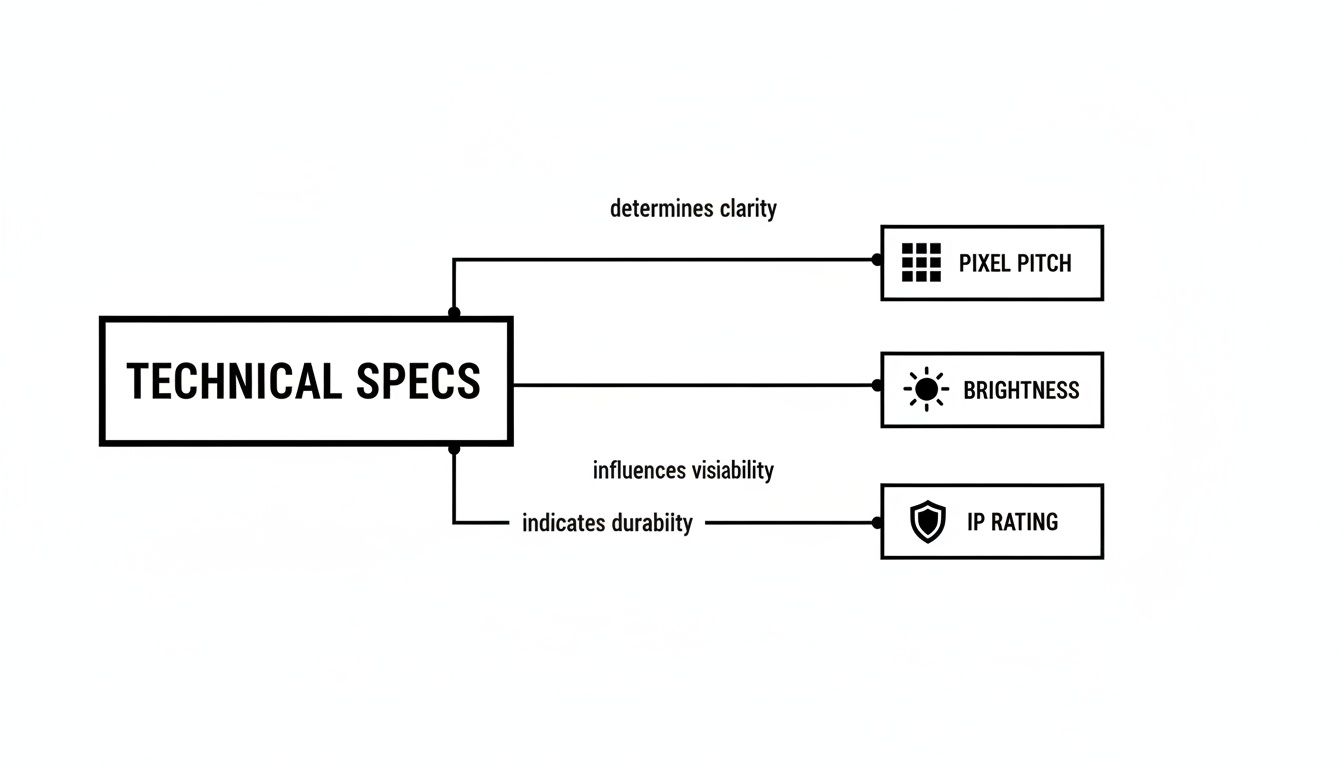
Getting a handle on how pixel pitch, brightness, and IP rating play together is the key to picking a sign that will actually deliver. To really crank up your ROI, it's smart to build effective strategies for video marketing in ecommerce into your content plan. When you pair amazing video with a high-performance display, you create a powerhouse for engaging customers and driving conversions, making sure your investment pays you back for years to come.
Jumping into the world of digital LED signage can feel like a lot to take in. But the secret to getting it right isn't buried in tech specs—it starts with a single, simple question: what are you trying to accomplish?
Your answer is the compass for this whole journey. It guides every choice you make, from the type of screen you pick to the final budget you set.
Are you a retailer on a mission to stop passersby in their tracks with dazzling, can't-miss promotions? Maybe you're outfitting a corporate lobby and need something that screams sophistication and high-tech elegance. Or perhaps the goal is purely practical, like helping people find their way through a massive convention center.
Each of these goals demands a totally different display. The screen that works wonders for a bustling fast-food menu board would feel completely out of place in a serene luxury hotel. Nail down your primary purpose first, and you’ll have a clear roadmap for your investment.
Once your goal is crystal clear, it’s time to look at the physical environment. This is where the big picture meets reality, and where you’ll figure out which type of digital LED signage will actually perform in your specific location.
Think about these three make-or-break factors:
Getting these answers right from the start prevents those costly mistakes, like buying a sign that’s too dim for your sunny storefront or overspending on a super high-resolution screen that no one will be close enough to appreciate.
Let's be honest: a brilliant display is just an expensive black box without great content. Before you even think about finalizing a purchase, you need a rock-solid plan for how you’re going to create, manage, and schedule the videos and graphics your digital led signage will showcase.
Who's in charge of content? Do you have a savvy in-house marketing team ready to pump out stunning visuals? Or will you need to partner with a creative agency? This decision directly impacts your long-term operational costs.
A classic misstep is pouring the entire budget into the hardware while forgetting about the ongoing need for fresh, compelling content. Your content strategy is just as vital as the screen itself.
Just as important is the software that runs the show, typically called a Content Management System (CMS). A good, user-friendly CMS lets you upload new media, build playlists, and schedule content to run at specific times of day. A restaurant, for instance, could automatically switch from its breakfast promotions to its lunch menu without anyone lifting a finger. Make sure the system you choose is one your team can actually use without pulling their hair out.
Finally, let’s talk money—the total cost of ownership. The sticker price on the screen is just the beginning. A truly realistic budget accounts for the entire lifecycle of your digital signage investment, so you don't get hit with nasty surprises later.
Your complete budget should cover a few key areas:
By mapping out all these expenses from day one, you’re not just buying a screen—you’re making a smart, future-proof investment that will pay off for years.
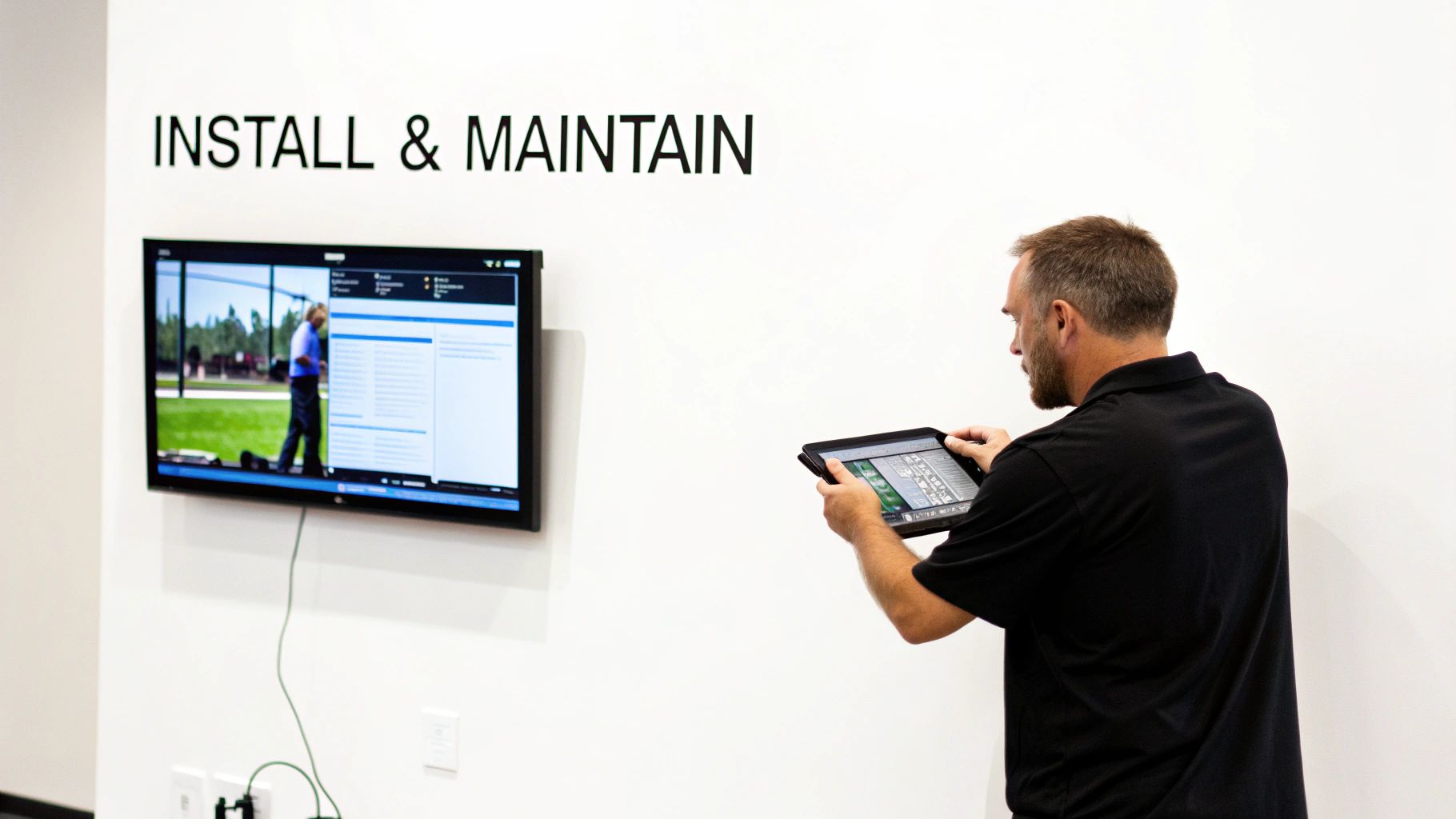
A brilliant LED sign is a long-term powerhouse for your business, but only if it's set up and cared for properly from day one. It's tempting to cut corners, but skimping on professional installation is a huge mistake that can cost you dearly down the road.
Getting a certified team to handle the job is non-negotiable. They do more than just hang the sign; they manage secure mounting, structural assessments, precise electrical work, and system calibration. This expert setup ensures safety, peak performance, and the longevity of your investment, heading off problems before they even start.
Once your sign is lighting up your storefront, a simple, consistent maintenance routine is all it takes to keep it looking fantastic. This isn't a huge time commitment, but it makes a world of difference. Think of it as the basic upkeep you'd give any critical piece of equipment to make sure it delivers day in and day out.
A stunning screen is only as good as the content you put on it. To truly squeeze every drop of value out of your digital led signage, you have to create visuals that are clear, engaging, and designed to grab attention instantly. This is where your message comes alive and starts driving real results.
First things first: always use high-resolution media. Nothing cheapens your brand faster than a pixelated, blurry video playing on a beautiful, crisp LED screen. Your content’s resolution should match the native resolution of your display for that sharp, professional look.
The cardinal rule of digital signage content is clarity over complexity. Your message has to land in the few seconds you have a viewer's attention. Think bold fonts, high-contrast colors, and short, punchy text.
Finally, get strategic with your scheduling. Don't just let the same content loop run 24/7. Tailor your messages to the time of day and the specific audience you expect to see them. A restaurant, for instance, should be promoting coffee specials during the morning commute and dinner deals in the evening.
Smart content delivery is a massive part of a winning digital signage strategy, and tools like Meraki Digital Signage Feeds can help optimize this process. When you align your content with real-world audience behavior, your sign transforms from a static display into a responsive, intelligent communication tool.
Of course. Here is the rewritten section, crafted to sound like an experienced human expert, following the specific style and tone from your examples.
Jumping into the world of digital LED signage is a big move, and it’s completely normal to have a few questions before you pull the trigger. We get it. You want to be sure you're making a smart investment.
Think of this as your final checklist. We'll tackle the most common, real-world questions we hear from people just like you, so you can move forward with total confidence.
This is usually the first thing people ask, and for good reason. A quality digital sign is a serious asset, and you need it to go the distance. The good news is, most modern LED signs are built like tanks, rated for an incredible 100,000 hours of use.
Let’s put that in perspective: that’s over 11 years of running your sign 24/7 without a break. This isn't just a fluke; it's a result of incredibly durable LEDs and tough, weather-ready construction. With a bit of basic upkeep, your display will stay bright and effective for well over a decade, delivering a powerful return on your investment year after year.
Here’s where the fun begins. The beauty of a digital sign is its chameleon-like ability to display just about anything you can dream up. You're not stuck with one static message. You've got a whole toolbox of media to grab attention.
You can run:
This flexibility means your sign is never outdated. It can pivot with your marketing campaigns and keep your messaging fresh and relevant.
The bottom line is, you’re in the driver's seat. A modern LED sign handles almost any media format you throw at it, giving you the creative freedom to build a content strategy as dynamic as your brand itself.
The power consumption question is a valid one, but you might be surprised. LED technology is shockingly efficient. Yes, a giant outdoor billboard will use more power than a small sign in a lobby, but the cost is almost always far lower than people brace for—especially when you compare it to old-school neon or fluorescent signs.
A few things affect the power draw: the sign’s size, its brightness level, and even the content you display. A screen showing mostly black will sip power, while a bright, all-white background will use more. But smart technology helps here, too. Most modern displays come with features like automatic brightness sensors that dial down the intensity at night and scheduling tools to conserve energy, ensuring you get maximum impact without a scary utility bill.
Ready to make a real visual impact? The team at Smart LED Inc. is here to help you figure out the perfect outdoor sign or indoor video wall for your space. Check out our factory-direct LED displays and let’s get started!
Picture this: you take the flash and spectacle of a Times Square billboard, slap it on the back of a truck, and send it wherever
A wall of TV screens is exactly what it sounds like: a big, impressive display made by tiling multiple TVs together so they act like
Picking the right displays for shows can feel like a high-stakes guessing game. Get it right, and you create an immersive world that captivates your
"*" indicates required fields

We have sent a 6-digit verification code to your email. Please enter it below to continue.