
Transforming an underutilized basement into a dedicated home cinema is a project that redefines home entertainment. The dark, controlled environment of a subterranean space provides the perfect canvas for a truly immersive audio-visual experience, free from the ambient light and sound compromises of other rooms. This guide moves beyond conventional setups to explore ten specific, technology-forward basement movie theater ideas designed for discerning enthusiasts, custom integrators, and luxury homeowners. We will explore everything from premium LED video wall installations that deliver unparalleled brightness and clarity to specialized, gaming-optimized theaters with ultra-low latency.
This is not just a list of concepts; it's a practical blueprint. We will detail the unique benefits of each idea, including multi-wall surround configurations, modular systems designed for future expansion, and smart home automation that integrates lighting, audio, and video into one seamless interface. For those looking to transform their unused basement space into an entertainment hub, consider detailed guides on creating a stunning home theater in your basement. Whether you're a content creator needing a color-calibrated reference theater or a homeowner seeking a flexible, multi-purpose entertainment zone, this roundup provides the actionable insights necessary to plan and execute a state-of-the-art cinematic sanctuary. Prepare to discover how specific layouts, acoustic treatments, and advanced display technologies can turn your basement into the ultimate destination for film, gaming, and media.
For the ultimate in visual fidelity and a truly cinematic experience, a premium LED video wall stands as a top-tier basement movie theater idea. Unlike traditional projection systems that can be affected by ambient light and lose brightness over time, a direct-view LED wall offers unparalleled contrast, vibrant colors, and consistent performance. This technology involves assembling multiple seamless LED panels to create one large, brilliant display, delivering a stunning visual centerpiece for any dedicated home theater.
This approach is ideal for homeowners who demand the absolute best in image quality and want a "wow" factor that projectors cannot match. LED walls excel in rooms with some ambient light, maintaining deep blacks and vivid colors without needing a completely dark environment. They also boast an incredibly long lifespan with stable color accuracy, ensuring your investment looks as good in year ten as it did on day one. High-end residential installations, such as those featured in luxury homes or corporate screening rooms, often utilize this technology for its superior dynamic range and brightness.
Proper planning is crucial for integrating a large-scale LED display. Consider these actionable steps:
Pro-Tip: Leverage professional expertise. Companies specializing in this technology offer consultation services to help you determine the optimal resolution, size, and configuration for your specific room dimensions and viewing distance. This ensures your final setup is perfectly tailored to your space. You can learn more about indoor LED wall panels from Smart LED to see how these advanced systems are designed for home theater applications.
For those seeking to push the boundaries of home entertainment, an immersive multi-wall surround configuration represents a revolutionary basement movie theater idea. This cutting-edge approach uses LED video walls on multiple surfaces, such as the front and side walls, to create a wraparound visual environment. This setup moves beyond a traditional single-screen experience, extending cinematic content, gaming worlds, or ambient visuals to envelop the viewer completely.
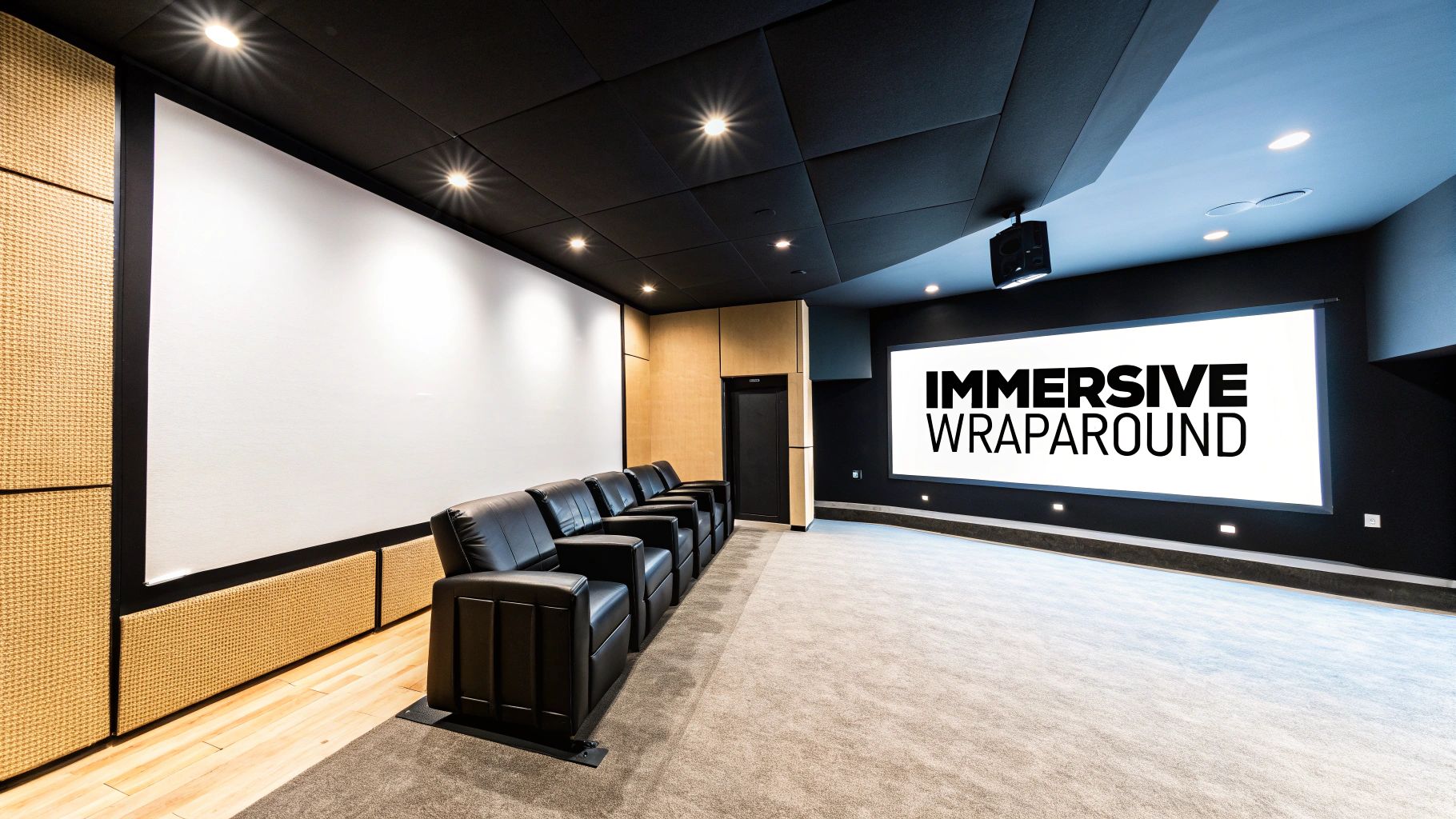
This advanced configuration is ideal for homeowners who want to create an unparalleled sense of immersion, particularly for gaming and interactive media. High-end residential game rooms and luxury entertainment spaces use this technology to make the user feel like they are truly inside the digital environment. It offers an engaging experience that a single screen cannot replicate, transforming a passive viewing session into an active, all-encompassing event. This concept, adapted from professional stage technology, is now making its way into custom luxury homes.
Executing a multi-wall setup requires meticulous technical planning and professional integration. Consider these critical steps for a successful installation:
Pro-Tip: Start with a high-quality front wall as your primary display and plan for future expansion. This phased approach allows you to build the core of your theater first while ensuring your infrastructure is ready to support side panels later, making the upgrade process smoother and more manageable.
For those seeking a high-end visual experience without the immediate upfront cost of a massive display, a modular scalable LED system offers an intelligent and future-proof basement movie theater idea. This approach utilizes individual LED panels that can be assembled to create a screen of any size. The core benefit is the ability to start with a smaller, more budget-friendly setup and incrementally expand it over time, adding more panels as your needs or budget grow.
This strategy is perfect for homeowners who plan their basement in phases or anticipate future upgrades. It allows you to invest in core high-quality technology now and scale the physical size of your screen later without replacing the entire system. For example, a family might begin with a 135-inch screen focused on gaming and family movies, then expand it to a cinematic 165-inch or larger display a few years later. This phased approach aligns your investment with your evolving entertainment priorities.
A successful scalable system relies on forward-thinking planning. Ensure a smooth expansion process with these tips:
Pro-Tip: Engage with a direct supplier early in the process to create a multi-phase implementation plan. This ensures hardware consistency and helps you budget effectively for each stage of your theater's growth. You can explore the different sizes available in these indoor LED wall screen kits from Smart LED to visualize how a system can be designed for future expansion.
For a sophisticated and unique take on basement movie theater ideas, consider a control room aesthetic anchored by an ultra-wide 21:9 aspect ratio display. This setup moves away from the traditional 16:9 screen, embracing the wider format used for many epic films and immersive video games. The result is a professional, command-center-style environment that provides a truly panoramic viewing experience, eliminating the black bars seen on standard screens when watching cinematic content.
This approach is perfect for cinephiles who want to watch films in their native theatrical aspect ratio and for simulation gamers seeking maximum peripheral vision. The ultra-wide format creates an engaging, professional-grade atmosphere ideal for executive screening rooms, high-end gaming setups, or for content creators needing an expansive digital workspace. It delivers a distinctive look that sets your home theater apart from conventional designs, offering a more intense and immersive field of view.
Successfully creating a control room-style theater requires careful planning around its central ultra-wide feature. Consider these practical steps:
Pro-Tip: Embrace the aesthetic with complementary design choices. Incorporate industrial-style lighting, acoustic paneling that mimics sound baffles, and ergonomic, professional-looking seating to complete the control room or creator studio vibe. This cohesive design enhances the overall immersive experience. You can explore Smart LED's 21:9 control room displays to see how these specialized systems are built for mission-critical and high-end entertainment applications.
Transforming your basement into a truly immersive cinema involves more than just a great screen and sound; it requires seamless control. An integrated smart home theater automation system is one of the most sophisticated basement movie theater ideas, synchronizing all components into one cohesive, user-friendly experience. This setup allows you to control lighting, audio-video sources, motorized seating, and even climate with a single command from a tablet, remote, or voice assistant, creating a professional-grade theater ambiance instantly.
This approach is perfect for homeowners who prioritize convenience, elegance, and a highly polished user experience. Instead of juggling multiple remotes and manually adjusting lights, an automation system orchestrates every element for you. High-end residential projects often feature systems from Crestron or Control4 to manage complex AV setups, ensuring that starting a movie is as simple as pressing one button. It removes the technical friction, allowing you and your guests to focus purely on the entertainment.
A successful automation project hinges on meticulous planning and professional integration. Consider these critical steps:
Pro-Tip: Partner with a certified professional AV integrator specializing in home automation. Their expertise is invaluable for designing a reliable system, programming custom scenes, and ensuring all your devices communicate flawlessly. They can recommend the best control interface, such as a dedicated in-wall touchscreen or a high-end universal remote, to complete your streamlined setup.
For filmmakers, video editors, and professional content creators, a basement movie theater can transcend entertainment and become a critical workspace. A color-calibrated reference theater is a specialized setup designed for precise content validation and quality assurance. This idea involves using professional-grade displays, like Smart LED walls, meticulously calibrated to industry standards such as DCI-P3, allowing creators to see their work exactly as the final audience will. It serves the dual purpose of being a premium viewing environment and a professional color-grading suite.
This approach is essential for anyone whose work depends on color accuracy. Independent filmmakers, commercial video editors, and high-end YouTubers need a reliable environment to ensure their creative vision translates perfectly across different screens. Unlike standard consumer displays that often oversaturate colors, a reference theater provides a controlled, standardized canvas for post-production tasks like color grading and final quality checks, ensuring content meets the strict requirements of streaming platforms and commercial distributors.
Achieving reference-level accuracy requires meticulous attention to detail and professional-grade equipment. Consider these actionable steps:
Pro-Tip: True reference-grade performance starts with a powerful video processor capable of handling the immense data required for accurate color reproduction. Partnering with specialists for the initial setup ensures your system is calibrated correctly from day one. You can learn more about studio-grade video processors from Smart LED to understand how these components are vital for achieving professional color accuracy in a home environment.
For enthusiasts who demand elite performance for both cinema and gaming, a gaming-optimized low-latency LED theater setup transforms a basement into a versatile entertainment powerhouse. This idea centers on using a direct-view LED wall specifically engineered for high-refresh-rate content and minimal input lag. Unlike standard displays, these systems prioritize the fast response times and visual fluidity essential for competitive gaming on next-generation consoles and high-end PCs, without sacrificing the stunning picture quality needed for movies.
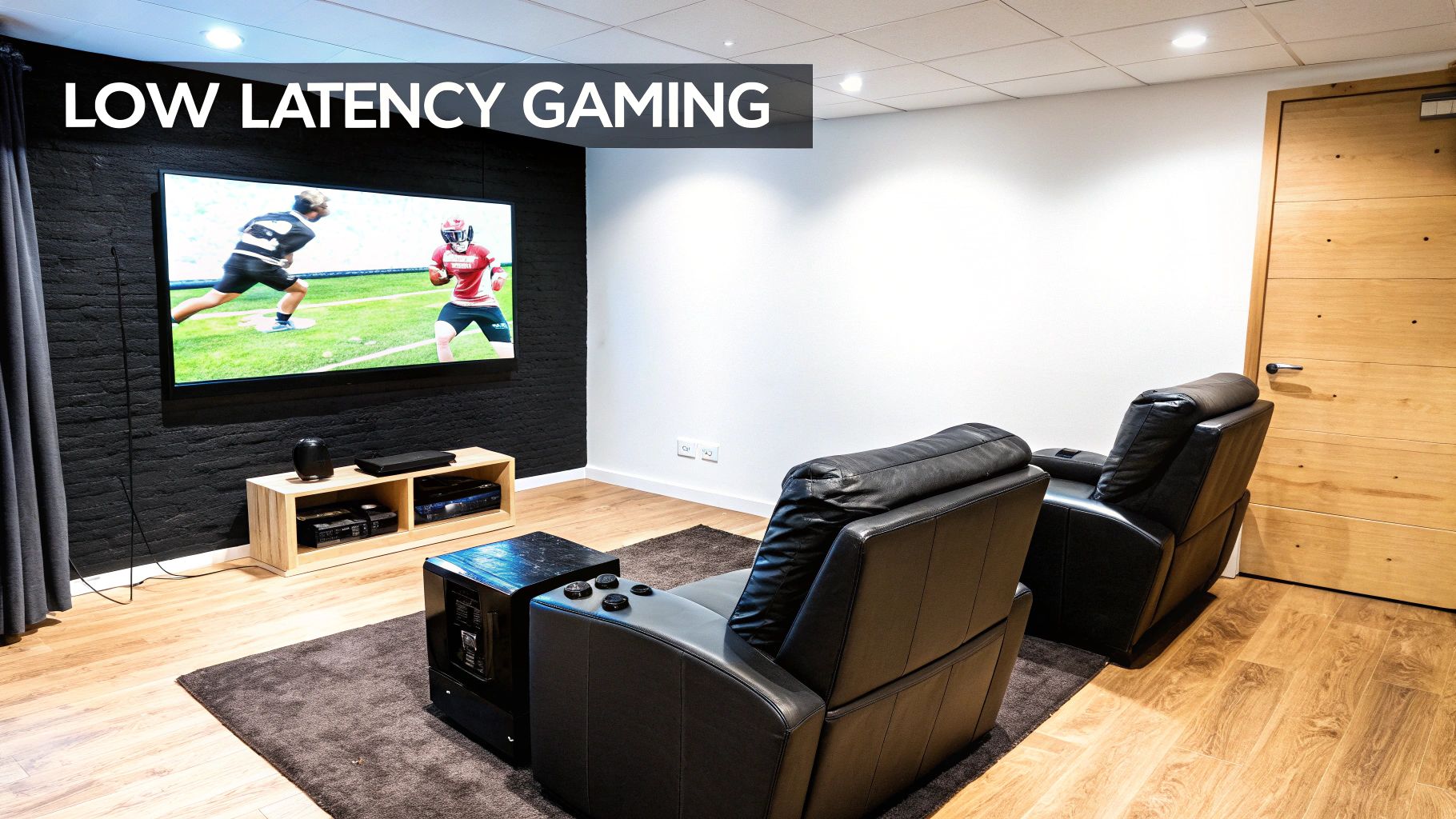
This approach is perfect for homeowners who refuse to compromise between a cinematic experience and a competitive gaming edge. Traditional projectors and many consumer TVs suffer from higher input latency, which can be a significant disadvantage in fast-paced games. An LED wall with features like a 120Hz+ refresh rate and variable refresh rate (VRR) technology delivers the smooth, tear-free visuals that modern gaming hardware demands. This makes it an ideal solution for esports training spaces, dedicated content creator studios, or family entertainment rooms where both blockbuster films and intense gaming sessions are on the menu.
Successfully creating a gaming-centric theater requires careful component matching and configuration. Consider these critical steps:
Pro-Tip: Engage with your LED wall provider to discuss your specific gaming hardware. A specialist can confirm GPU and console compatibility requirements, helping you select the right processor and panel configuration to guarantee a seamless, ultra-responsive experience for all your entertainment needs.
For an experience that rivals a professional cinema, one of the most impactful basement movie theater ideas is to integrate a stunning LED display within a fully engineered acoustic environment. This approach goes beyond simply adding a screen and speakers; it involves designing the room itself as a critical component of the audio-visual system. The result is a space where every sound is crisp, clear, and perfectly balanced, complementing the visual brilliance of a direct-view LED wall.
This holistic method is for the discerning enthusiast who understands that immersive audio is just as important as a breathtaking picture. By coordinating acoustic treatments like absorbers, diffusers, and bass traps with the physical placement of the LED wall and speakers, you eliminate common issues like echo, standing waves, and muddy dialogue. This is ideal for luxury home theaters, dual-purpose music and movie rooms, and anyone seeking a truly reference-level performance where the room itself disappears, leaving only the content.
Achieving acoustic harmony requires a coordinated effort between design and technology. Consider these essential steps for success:
Pro-Tip: Remember that the hard, reflective surface of an LED wall can present acoustic challenges. Work with your integrator to plan for specific acoustic treatments on the ceiling and side walls nearest the screen to absorb first reflections, ensuring dialogue clarity and a precise soundstage. This proactive planning is key to a successful acoustic-optimized theater.
Not every basement can be a single-purpose sanctuary. For those needing their space to serve multiple functions, this basement movie theater idea transforms a room into a versatile entertainment hub. It leverages modular Smart LED panels to create a dynamic centerpiece that adapts to various activities, from immersive movie nights and high-energy gaming sessions to virtual fitness classes and lively social gatherings. The modular design allows the display to be reconfigured or used in zones, maximizing the utility of the space.
This approach is perfect for modern families whose basement must accommodate diverse needs, like a playroom for kids, a workout area for adults, and an entertainment space for everyone. A modular LED setup provides a high-impact visual for cinematic experiences while offering the flexibility to display fitness instructors, video game worlds, or ambient visuals for a party. This adaptability makes it a smart investment for multi-generational households or anyone looking to get the most value and function from their basement renovation.
A successful multi-purpose zone relies on thoughtful planning that balances aesthetics with functionality. Consider these actionable steps:
Pro-Tip: Plan for integrated storage from the beginning. Custom cabinetry or built-in shelving can neatly conceal gaming consoles, fitness equipment, and other accessories, allowing the room to quickly transform from a gym back into a polished theater without clutter. This maintains a clean aesthetic for every use case.
For those seeking to create an unparalleled entertainment sanctuary, the luxury boutique theater transforms a basement into an exclusive, resort-quality cinematic venue. This concept goes beyond just high-end audio and video, integrating premium amenities like climate-controlled seating, professional-grade beverage systems, and sophisticated mood lighting. The result is a holistic experience that rivals the world's most exclusive private screening rooms, offering ultimate comfort and convenience.
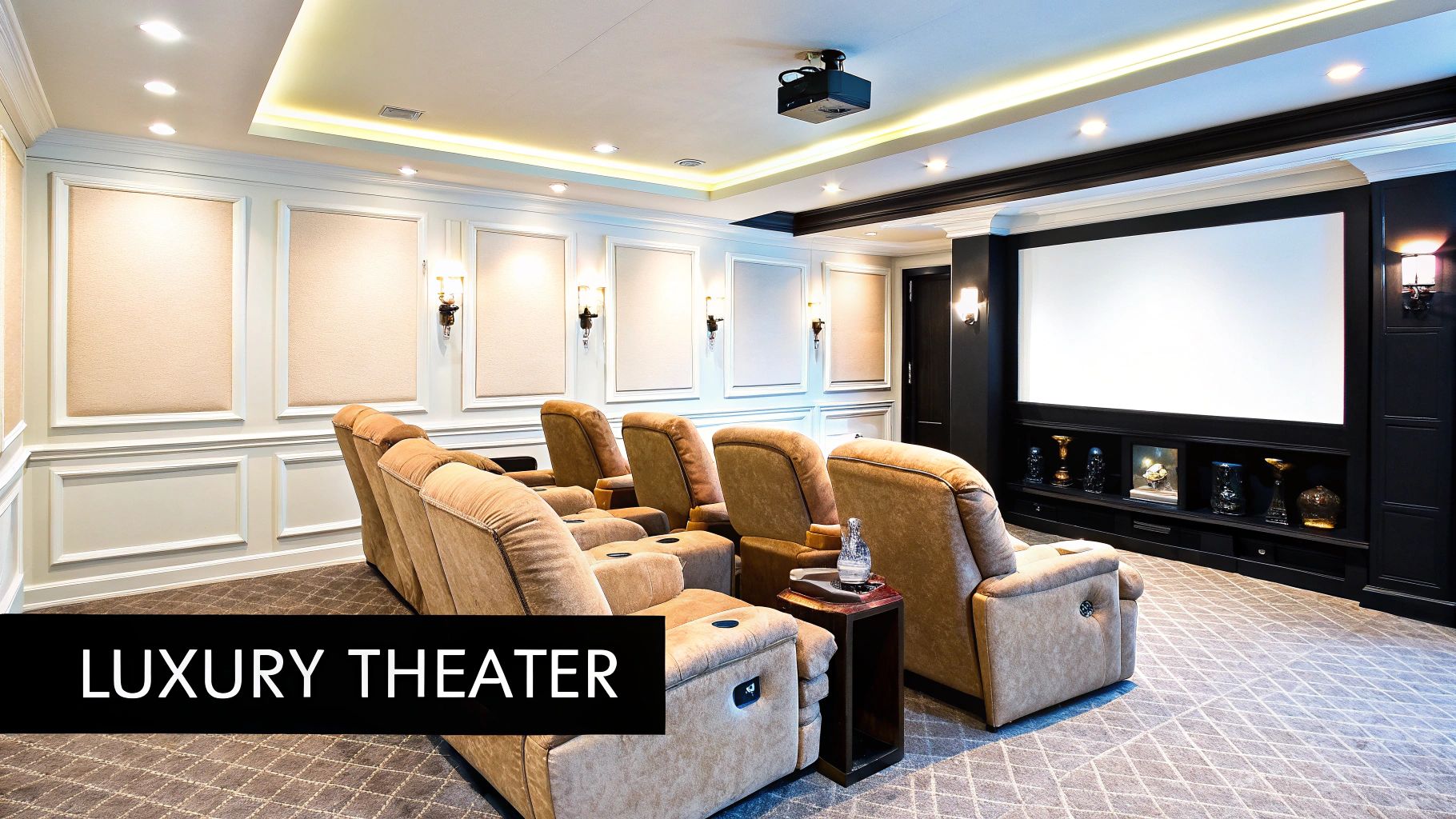
This approach is perfect for homeowners who desire a truly bespoke entertainment space and prioritize ambiance and comfort as much as technical performance. It's one of the ultimate basement movie theater ideas for those who host frequently or simply want a private escape that feels like a five-star destination. This level of detail is often seen in celebrity homes and ultra-high-net-worth properties where the goal is to create a seamless, white-glove experience for family and guests.
Achieving a cohesive luxury feel requires meticulous planning and an eye for detail. Focus on these critical steps:
Pro-Tip: Focus on timeless design elements rather than fleeting trends to ensure your investment maintains its appeal for years to come. Choose high-quality materials for seating and finishes that balance comfort with durability and ease of maintenance, ensuring the room remains pristine.
| Option | 🔄 Implementation Complexity | ⚡ Resources & Cost | ⭐ Expected Outcomes | 📊 Ideal Use Cases | 💡 Key Advantages / Tips |
|---|---|---|---|---|---|
| Premium LED Video Wall Theater Setup | High 🔄 (professional install, permanent wall) | High ⚡ (large upfront cost, power & HVAC) | ⭐⭐⭐⭐⭐ (cinema‑accurate DCI‑P3, consistent brightness/contrast) | Luxury residential cinemas, executive screening rooms | 💡 Superior image & low maintenance; match pixel pitch (2.5–4mm); plan power/HVAC |
| Immersive Multi-Wall Surround Configuration | Very High 🔄 (multi-wall sync, complex AV processing) | Very High ⚡ (multiple walls, advanced processors) | ⭐⭐⭐⭐⭐ (wraparound immersion, extreme engagement) | Wraparound gaming rooms, immersive home theaters, private screening venues | 💡 Unparalleled immersion; start with front-wall then expand; ensure content & sync hardware |
| Modular Scalable LED System with Future Expansion | Medium 🔄 (phased install, planning for growth) | Medium ⚡ (lower initial spend; planned expansion costs) | ⭐⭐⭐⭐ (scalable performance; future-proofing) | Budget-phased upgrades, evolving basement projects | 💡 Flexible growth; plan electrical/infrastructure and document specs for later matching |
| Control Room Aesthetic with Ultra-Wide 21:9 Display | High 🔄 (custom proportions, layout & furniture) | High ⚡ (specialized ultra‑wide panels, custom integration) | ⭐⭐⭐⭐ (distinctive panoramic experience; great for widescreen content) | Cinephiles, simulation gamers, executive/command-room style spaces | 💡 Unique professional look; verify content libraries and optimize room proportions |
| Integrated Smart Home Theater Automation System | High 🔄 (integration, programming, network) | High ⚡ (automation controllers, robust network) | ⭐⭐⭐⭐ (seamless one‑touch UX; energy-efficient scenes) | Luxury smart homes seeking convenience and automation | 💡 Choose compatible platforms; work with AV integrator; create scene presets |
| Color-Calibrated Reference Theater for Content Creators | High 🔄 (professional calibration, controlled environment) | High ⚡ (reference gear, calibration tools, ongoing maintenance) | ⭐⭐⭐⭐⭐ (reference‑grade DCI‑P3 accuracy for grading/validation) | Filmmakers, colorists, post‑production suites, content validation | 💡 Invest in colorimeter & calibration software; enforce blackout and stable room conditions |
| Gaming-Optimized Low-Latency LED Theater Setup | Medium‑High 🔄 (low‑latency tuning, cabling & settings) | High ⚡ (high‑refresh panels, HDMI2.1/GPUs, power) | ⭐⭐⭐⭐⭐ (very low input lag, high refresh fluidity) | Esports basements, next‑gen console/PC gaming rooms | 💡 Verify HDMI2.1/GPU compatibility; test multiple game types; balance gaming vs cinematic calibration |
| Acoustic-Optimized Room Design with LED Integration | Very High 🔄 (AV + acoustics coordination, construction) | Very High ⚡ (acoustic engineering, materials, specialist labor) | ⭐⭐⭐⭐⭐ (true theater‑grade A/V; supports Atmos/DTS:X) | High‑end home theaters, recording studios doubling as screening rooms | 💡 Hire acoustician; use acoustic modeling; integrate treatments into design |
| Flexible Multi-Purpose Entertainment Zone with Modular LED | Medium 🔄 (layout planning, multi-input routing) | Medium ⚡ (modular panels, flexible furniture & storage) | ⭐⭐⭐⭐ (high utility and ROI; moderate pure‑theater fidelity) | Family basements, multipurpose fitness/entertainment/social zones | 💡 Design activity zones; invest in flexible furniture and storage; create lighting scenes |
| Luxury Boutique Theater Experience with Premium Amenities | Very High 🔄 (luxury finishes, multiple subsystems) | Very High ⚡ (elite seating, bar, concierge automation, maintenance) | ⭐⭐⭐⭐⭐ (five‑star, exclusive private cinema experience) | Ultra‑high‑net‑worth residences, celebrity homes, showcase properties | 💡 Work with luxury designers; choose durable timeless materials; integrate HVAC and service plans |
We've explored a comprehensive landscape of basement movie theater ideas, moving far beyond the simple concept of a projector and a screen. From the unparalleled visual punch of a Premium LED Video Wall to the strategic flexibility of a Modular Scalable System, the modern home cinema is a testament to personalized design and technological innovation. Your journey from a cold, empty basement to a captivating entertainment sanctuary is not about following a single blueprint; it's about crafting an experience tailored precisely to your needs.
The key takeaway is that a truly exceptional home theater is a sum of its parts. It’s the intentional fusion of cutting-edge display technology, meticulously planned acoustics, intelligent automation, and a layout that serves your primary use case, whether that's cinematic immersion, competitive gaming, or versatile family entertainment.
The difference between a good idea and a great home theater lies in the execution. As you move forward, the most critical step is to translate your inspiration into a concrete plan. This involves a clear-eyed assessment of your space, budget, and long-term goals.
Here are the pivotal considerations to guide your next phase:
Define Your Primary Purpose: Is this a color-accurate creative suite, a low-latency gaming haven, or a multi-purpose family room? Your primary use will dictate every subsequent decision, from screen choice to seating arrangement. The Control Room Aesthetic with a 21:9 display, for instance, is perfect for ultra-wide movies and productivity but may not be ideal for a space shared with young children.
Prioritize the Foundation: Visuals and Sound: The visual centerpiece, whether a direct-view LED wall or another display technology, sets the standard for the entire room. Don't compromise here. Simultaneously, remember that what you hear is just as important as what you see. Integrating acoustic treatments, as highlighted in our Acoustic-Optimized Room Design, isn't a luxury; it's a necessity for achieving true immersion.
Plan for Infrastructure: Success is in the details. Before the first wall is framed or the first seat is installed, your plan must account for dedicated electrical circuits, low-voltage wiring for audio and control, and a robust HVAC solution that manages heat load and maintains quiet operation. Future-proofing at this stage saves immense cost and effort later.
Investing in a dedicated basement theater is more than a home improvement project; it's an investment in your lifestyle. It creates a powerful magnet for family and friends, offering a shared escape from the everyday. It provides a distraction-free environment to fully appreciate the art of filmmaking, the thrill of gaming, or the excitement of a live sporting event.
By thoughtfully combining the basement movie theater ideas we've discussed, you're not just building a room with a big screen. You are architecting a destination-a bespoke environment where memories are made, stories come to life, and the magic of the big screen is always just a few steps away. The ultimate home cinema experience is within your reach, waiting to be brought to life in the space right beneath your feet.
Ready to make a professional-grade LED video wall the stunning centerpiece of your home theater? The experts at Smart LED Inc. specialize in designing and delivering custom residential LED display solutions that bring cinematic vision to life with breathtaking clarity and color. Explore their gallery and start a consultation today at Smart LED Inc. to build the ultimate viewing experience.
Welcome to our website. We are dedicated to providing quality content and services to our visitors. yellowbet
Welcome to our website. We are dedicated to providing quality content and services to our visitors. yellowbet
"*" indicates required fields
We have sent a 6-digit verification code to your email. Please enter it below to continue.